The Food Additive Hiding in Your “Healthy” Foods: Carrageenan, Leaky Gut, and Insulin Resistance
💡 Key Takeaways
View on Amazon →
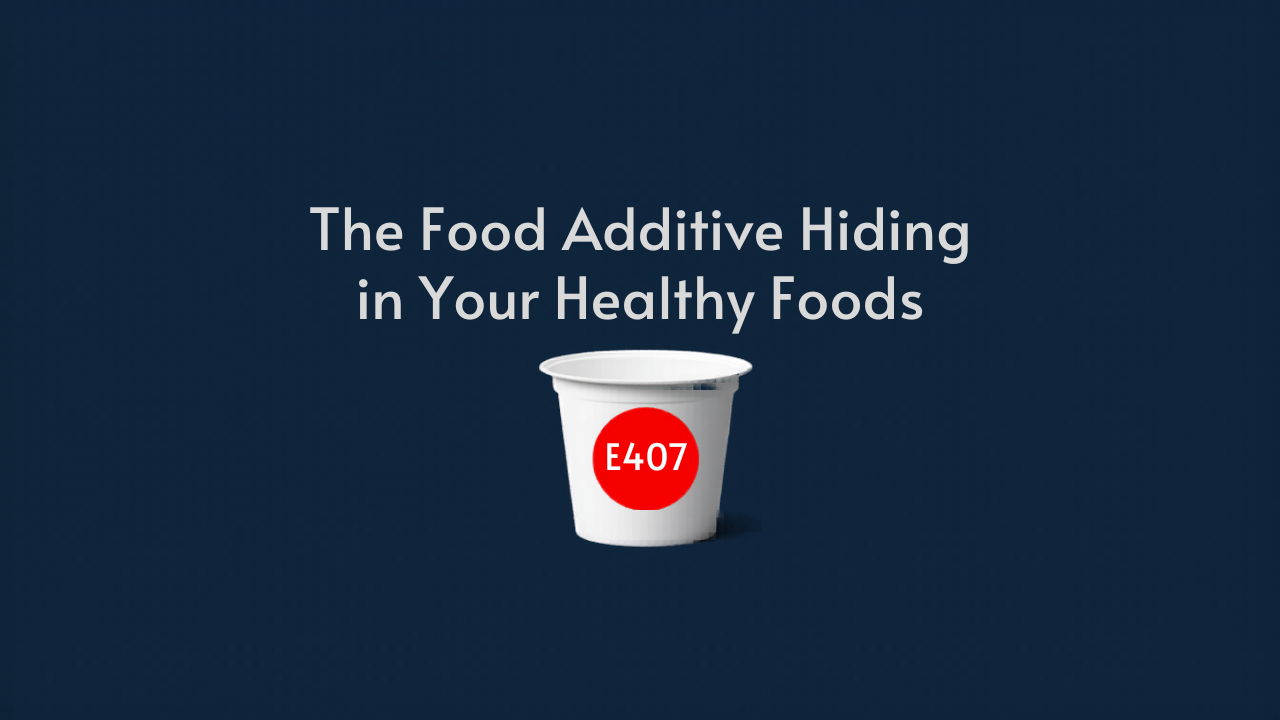
- Carrageenan (E407) is a food additive in dairy, low-fat, and plant-based products — including “organic” ones
- A 2024 randomized double-blind human trial showed it increases intestinal permeability and raises zonulin
- In overweight participants, carrageenan worsened whole-body and hepatic insulin resistance and elevated CRP and IL-6
- The FDA considers it “generally regarded as safe” — but clinical human data was largely absent until this trial
- Gut-supportive strategies (butyrate, Akkermansia, removing carrageenan) may help reduce this risk
What Carrageenan Actually Is
It comes from red seaweed. The food industry uses it to thicken, emulsify, and gel — especially in dairy products, processed meats, plant-based milks, and low-fat alternatives. If you eat yogurt, ice cream, chocolate milk, deli turkey, or any “diet” version of a dairy product, there’s a reasonable chance you’ve consumed it regularly for years. The EU labels it E407. In the US, it appears on ingredient lists as “carrageenan.” Average daily intake in Western diets has climbed from 45mg in the 1970s to over 250mg today. The FDA classifies carrageenan as GRAS — generally recognized as safe. That classification was based largely on animal data and in vitro studies, with very limited rigorous human trials. That gap was part of what made a 2024 study notable.What the 2024 Human Trial Actually Found
Wagner et al. (BMC Medicine, 2024) ran a randomized, double-blind, placebo-controlled crossover trial at a university hospital metabolic center — 20 healthy young men, BMI 18.5–29.9, no chronic disease. Each participant received either 250mg carrageenan or placebo daily for two weeks, then crossed over after a washout period.What I Use
BodyHealth Tributyrin (200mg)
Butyrate/tributyrin supplement for gut lining and intestinal barrier support, relevant to the carrageenan/gut permeability findings above.
Disclosure: affiliate link. I earn a small commission at no additional cost to you if you purchase through this link.
The primary outcome — overall whole-body insulin sensitivity — did not show a statistically significant difference between carrageenan and placebo when all participants were grouped together. This matters for context: carrageenan is not acutely toxic in healthy, lean young adults at this dose. But two findings stood out. Intestinal permeability increased. The lactulose-mannitol test, the clinical standard for measuring gut barrier function, showed significantly higher lactulose absorption during carrageenan intake (p = 0.03). Plasma zonulin — a protein that regulates tight junctions in the gut lining — also trended higher with carrageenan (p = 0.05). Leaky gut, in the clinical sense, was measurably worse. In overweight participants, metabolic effects emerged. When the researchers looked at how BMI interacted with treatment, a clear pattern appeared. Participants with higher BMI showed:- Lower whole-body insulin sensitivity during carrageenan (OGTT-based Matsuda index, p = 0.04)
- Higher fasting insulin resistance, HOMA2-IR (p = 0.01)
- Lower hepatic insulin sensitivity (p = 0.04)
- A trend toward higher hypothalamic inflammation (p = 0.06)
- Elevated CRP (p = 0.02) and IL-6 (p = 0.02)
Where Carrageenan Hides
It’s not just junk food. The additive appears in products that health-conscious people eat regularly:- Dairy: ice cream, chocolate milk, flavored yogurts, cream, whipped cream in cartons
- Low-fat products: “diet” yogurt, reduced-fat cheese, low-fat dairy beverages (carrageenan replaces fat texture)
- Plant-based milks: almond milk, oat milk, coconut milk (many brands use it as an emulsifier)
- Processed meats: deli turkey, ham, sausages
- Infant formula: some brands include it
What the Immune Data Showed
Separate from the metabolic findings, the researchers tested how carrageenan affected immune cells directly. In vitro, carrageenan triggered activation of CD19+ B cells and CD56+ NK cells, and induced pro-inflammatory cytokines including IL-6, IL-13, IL-17, TNF-beta, and GMCSF. In the in vivo arm of the trial, there were trends toward persistent B cell activation during carrageenan exposure. This suggests carrageenan has direct immunostimulatory properties independent of gut barrier disruption — both pathways may contribute to its metabolic effects. Akkermansia Probiotic: gut microbiome support for metabolic healthWhy “Generally Regarded as Safe” Is a Lower Bar Than It Sounds
GRAS status under FDA rules doesn’t require pre-market clinical trials in humans. It means that qualified experts, typically reviewing animal data and historical use, have concluded that the substance is safe under intended conditions of use. Carrageenan’s GRAS designation predates robust human metabolic trials. The 2024 RCT is one of the first randomized controlled trials in humans specifically designed to measure carrageenan’s effect on insulin sensitivity and gut function. The authors note that clinical studies on carrageenan’s glycemic effects simply had not been done before. That’s not a scandal — it’s how the regulatory framework works. The challenge is that GRAS doesn’t mean absence of harm. It means absence of evidence, which is different.What You Can Realistically Do
Eliminate carrageenan from your regular diet. Read ingredient labels. It’s straightforward to avoid if you know what to look for. Yogurt without carrageenan exists (Siggi’s, Fage, Stonyfield Organic plain are examples without it). Many plant-based milks now come in carrageenan-free formulations. Support your gut barrier. If you’ve been consuming carrageenan regularly, supporting intestinal lining integrity is reasonable. Tributyrin (a more bioavailable form of butyrate) has evidence for supporting tight junction integrity. L-glutamine is an amino acid used as fuel by intestinal epithelial cells. Prioritize Akkermansia for metabolic gut health. Akkermansia muciniphila is a gut bacterium associated with gut barrier integrity and insulin sensitivity. Supplemental Akkermansia products are now available (pasteurized, which maintains activity) and have early clinical data. Berberine HCl: insulin sensitivity support Consider berberine if you’re managing insulin resistance. Berberine has a well-documented effect on glucose metabolism and insulin sensitivity — mechanistically distinct from carrageenan’s effects, but relevant if gut-derived inflammation is worsening your metabolic picture.Limitations of the Study
The trial enrolled only young, healthy men (mean age 27). Effects in older adults, women, or people with established metabolic syndrome may differ — potentially worse, potentially more nuanced. Two weeks is a short exposure window. Long-term carrageenan intake effects on liver fat, progression to pre-diabetes, or cumulative gut barrier damage weren’t measured. The overall insulin sensitivity result was negative (no significant effect in the full group). The overweight-specific findings came from post hoc interaction analyses, which are hypothesis-generating rather than confirmatory. This is a single trial with 20 participants. It’s a signal, not a verdict. But it’s the strongest human signal we have, and the mechanistic plausibility is solid.Realistic Expectations
Eliminating one food additive won’t reverse insulin resistance. But the evidence that carrageenan increases gut permeability in humans is statistically significant and mechanistically coherent. The metabolic signal in overweight individuals is biologically plausible and consistent with what animal data predicted. For people who are already managing metabolic risk, removing a regular source of gut barrier disruption and systemic inflammation is a reasonable, low-cost step.FAQ
What foods contain carrageenan? Dairy products (ice cream, flavored yogurt, cream), plant-based milks (almond, oat, coconut milk), processed deli meats, some infant formulas, and low-fat food products that use carrageenan as a fat substitute. Is organic food carrageenan-free? Not necessarily. Carrageenan is permitted in some organic foods in the US. Check the ingredient list even on certified organic products. Does carrageenan cause diabetes? The 2024 trial doesn’t support that conclusion. Short-term exposure in healthy, lean individuals didn’t significantly affect whole-body insulin sensitivity. In overweight participants, it worsened metabolic markers — but this is one trial, two weeks, 20 subjects. It’s a risk signal, not a proven cause. Can butyrate or Akkermansia reverse carrageenan damage? There’s no human trial specifically testing that. The logic is plausible: butyrate supports intestinal tight junctions; Akkermansia supports gut barrier integrity and correlates with better insulin sensitivity. Both have strong safety profiles. Should children avoid carrageenan? Several regulatory bodies have raised questions about carrageenan in infant formula. If concerned, reading labels and choosing carrageenan-free infant formula is a reasonable precaution while the evidence develops.References
- Wagner R et al. Carrageenan and insulin resistance in humans: a randomised double-blind cross-over trial. BMC Medicine. 2024;22:558. DOI: https://doi.org/10.1186/s12916-024-03771-8
- Bhattacharyya S et al. Exposure to the common food additive carrageenan leads to glucose intolerance, insulin resistance and inhibition of insulin signalling in HepG2 cells and C57BL/6J mice. Diabetologia. 2012;55(1):194–203. PMID: 21984436.
- Bhattacharyya S et al. Exposure to common food additive carrageenan alone leads to fasting hyperglycemia. J Diabetes Res. 2015;2015:513429. PMID: 25821830.
- Salame C et al. Food additive emulsifiers and the risk of type 2 diabetes. Lancet Diabetes Endocrinol. 2024;12(5):339–49. PMID: 38554706.
- Tobacman JK. Review of harmful gastrointestinal effects of carrageenan in animal experiments. Environ Health Perspect. 2001;109:983–94. PMID: 11675262.
Free Weekly Newsletter
Want the weekly version of this?
Every Saturday, I send one longevity study, one practical takeaway, and one update from the protocol. No hype. No supplements to sell. Just the signal from the noise.