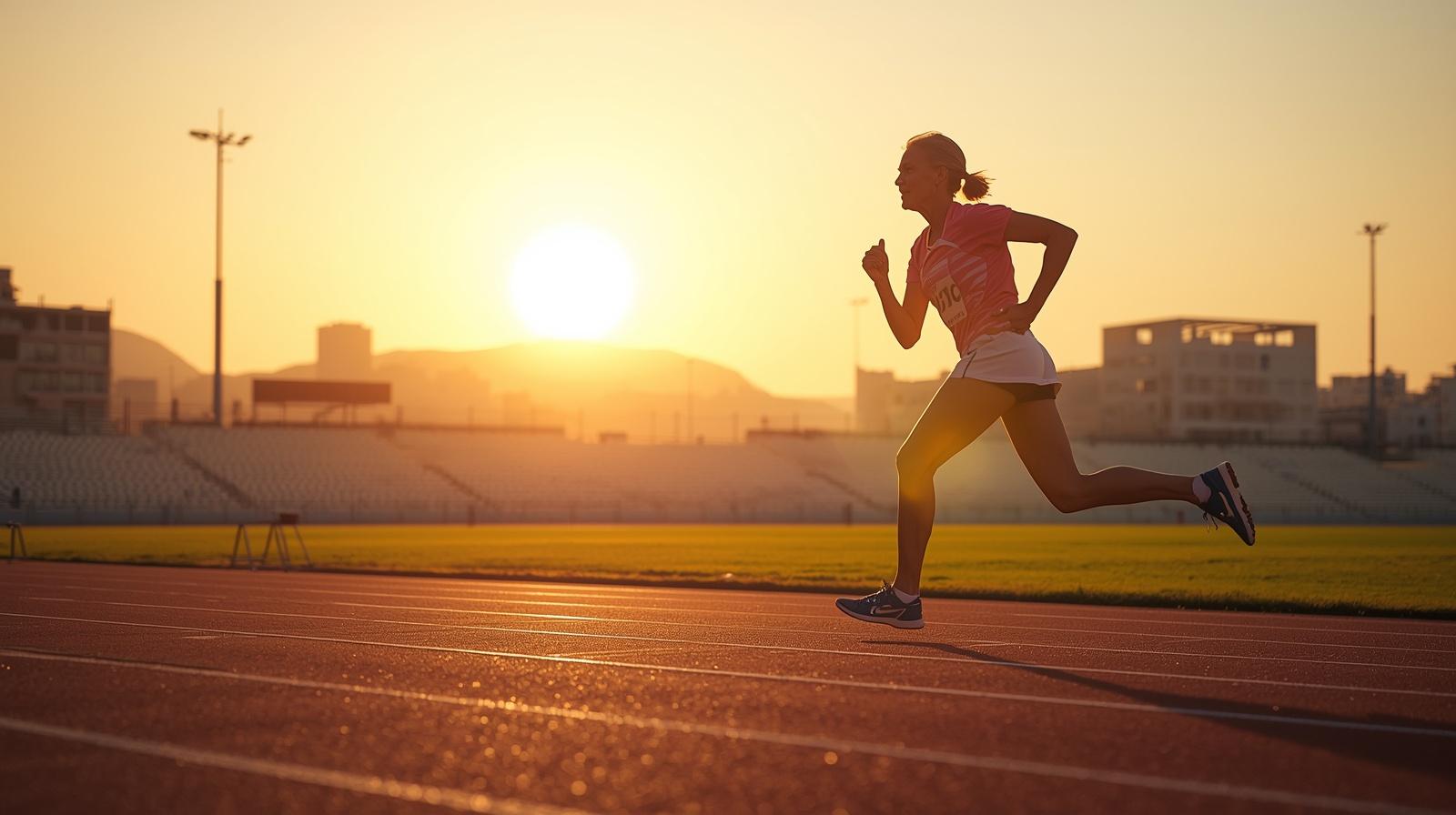
Athletic Performance Decline With Age: What Masters Athletes Reveal About Human Aging
💡 Key Takeaways
- Most measurable physical decline remains gradual until around age 70
- Masters athletes maintain elite-level function decades longer than expected
- Inactivity explains far more decline than most people realize
- Endurance and strength decline differently across the lifespan
- VO2 max decreases with age, but training dramatically slows the process
- Cultural expectations often accelerate physical decline psychologically and behaviorally
Introduction
Most people expect a steep physical collapse somewhere between 40 and 60. The evidence does not support that belief.
Research on masters athletes — competitive adults typically over age 35 — consistently shows that athletic performance decline with age is surprisingly slow through midlife and early older adulthood. In many endurance sports, measurable performance losses remain modest until the late 60s or early 70s, especially among people who continue training consistently.
That does not mean aging is irrelevant. Muscle mass changes. Recovery slows. VO2 max declines gradually. Injury risk increases. But the dramatic “I’m getting old” narrative many adults adopt in their 40s often reflects reduced activity, lower training expectations, weight gain, poor sleep, and accumulated inactivity more than unavoidable biology.
One uncomfortable implication emerges repeatedly from exercise longevity research: modern humans frequently begin behaving old long before they become biologically old.
[INSERT AFFILIATE LINK #1 HERE]
What Masters Athletes Actually Show
Masters athletes provide a useful aging model because they remove one major confounder: inactivity.
Instead of comparing older sedentary adults to younger active adults, researchers can compare highly trained adults across decades of life. The pattern is remarkably consistent.
Performance declines are usually:
- Slow through the 40s
- Noticeable but manageable through the 50s and 60s
- Sharper after approximately age 70
In endurance sports like marathon running, cycling, rowing, and distance swimming, annual declines are often surprisingly modest before late older age. Many masters competitors continue outperforming sedentary adults several decades younger.
One important nuance gets lost online: elite older athletes are not “immune” to aging. They simply preserve a much higher percentage of functional capacity.
That distinction matters.
A trained 65-year-old with a declining VO2 max may still possess dramatically better cardiovascular function than an inactive 40-year-old.
The Physiology Behind Gradual Decline
Several systems contribute to aging and physical performance changes.
VO2 Max
VO2 max — maximal oxygen uptake — declines with age due to reductions in:
- Max heart rate
- Stroke volume
- Mitochondrial efficiency
- Muscle oxidative capacity
But training status heavily influences the rate of decline.
Sedentary adults can experience accelerated cardiovascular deterioration, while trained adults preserve much more aerobic function over time.
Muscle Mass And Power
Muscle strength declines more slowly than muscle power.
This becomes important later in life because power production affects:
- Fall prevention
- Sprinting ability
- Reaction speed
- Explosive movement
Resistance training substantially slows sarcopenia and neuromuscular decline, although explosive capacity still becomes harder to maintain with advanced age.
Recovery Capacity
Recovery changes are real.
Older athletes often require:
- More sleep
- Longer deload periods
- More recovery between intense sessions
Ignoring recovery limitations is one reason some adults mistakenly conclude they are “too old” for training when the real issue is programming.
The Non-Obvious Insight Most People Miss
The biggest difference between active and inactive aging may not be peak performance.
It may be baseline function.
Many sedentary adults spend decades gradually lowering movement demands:
- fewer stairs
- less walking
- lower training intensity
- reduced mobility work
- reduced muscle loading
The body adapts downward.
This creates a misleading perception that aging itself caused the loss.
Masters athletes reveal something uncomfortable: humans appear capable of maintaining high function much longer than modern culture expects. In many cases, people stop training for performance before biology forces them to.
Practical Application
Most adults do not need elite training.
They need consistent physiological stimulus.
The evidence strongly supports several habits:
Prioritize Aerobic Fitness
Aerobic capacity strongly predicts long-term healthspan and mortality risk.
Effective options include:
- brisk walking
- cycling
- swimming
- rowing
- zone 2 cardio
- interval training
Preserve Muscle Mass Aggressively
Resistance training becomes increasingly important with age.
Focus on:
- compound lifts
- lower-body strength
- grip strength
- balance work
- power-oriented movement when appropriate
Avoid The “Middle-Age Slowdown” Trap
One major behavioral risk appears around ages 40–55.
Adults often unconsciously reduce movement because they expect decline. That expectation becomes self-fulfilling.
Maintaining standards matters psychologically and physiologically.
[INSERT AFFILIATE LINK #2 HERE]
Limitations & Risks
Masters athlete data has limitations.
These populations are unusual:
- genetically advantaged
- highly motivated
- injury-tolerant
- behaviorally disciplined
Not everyone can or should train at competitive intensity into older age.
There are also real biological ceilings.
After approximately age 70, performance decline accelerates more clearly across most systems. Recovery becomes slower. Injury consequences increase. Muscle power preservation becomes more difficult.
The goal is not permanent youth.
The goal is delayed dysfunction.
Realistic Expectations
Aging still matters.
No intervention fully prevents:
- reduced maximal heart rate
- connective tissue aging
- slower recovery
- hormonal changes
- mitochondrial decline
But the evidence strongly suggests the average trajectory is far more modifiable than most people assume.
For many adults, the largest performance drop between 40 and 65 is not caused by aging alone.
It is caused by inactivity layered on top of aging.
That distinction changes everything.
Optional: Implementation Strategy
Weekly Longevity Training Framework
2–4 days/week
Resistance training emphasizing lower body and posterior chain
3–5 days/week
Aerobic training with at least one higher-intensity session
Daily
Walking, mobility, and movement volume
Weekly Goal
Maintain capability, not just appearance
Get the Full Guide
👉 Get the full guide here
FAQ
At what age does athletic performance decline fastest?
Research suggests decline accelerates more noticeably after approximately age 70, especially for endurance capacity and explosive power.
Can people build muscle after 50?
Yes. Resistance training remains highly effective later in life, although recovery demands usually increase.
Do masters athletes age differently?
Partly. Genetics matter, but long-term training substantially preserves cardiovascular, muscular, and metabolic function.
Is endurance or strength preserved better with age?
Maximal strength often holds up better than explosive power, while endurance capacity depends heavily on continued aerobic training.
Does inactivity accelerate aging?
Strong evidence suggests inactivity contributes substantially to physical decline commonly attributed to aging itself.
References
Tanaka H, Seals DR. Endurance exercise performance in Masters athletes: age-associated changes and underlying physiological mechanisms. J Physiol. 2008;586(1):55-63. PMID: 17717011
https://pubmed.ncbi.nlm.nih.gov/17717011/
Lazarus NR, Harridge SDR. Declining performance of master athletes: silhouettes of the trajectory of healthy human ageing? J Physiol. 2017;595(9):2941-2948. PMID: 28150304
https://pubmed.ncbi.nlm.nih.gov/28150304/
Pollock ML, Mengelkoch LJ, Graves JE, et al. Twenty-year follow-up of aerobic power and body composition of older track athletes. J Appl Physiol. 1997;82(5):1508-1516. PMID: 9134903
https://pubmed.ncbi.nlm.nih.gov/9134903/
Fleg JL, Morrell CH, Bos AG, et al. Accelerated longitudinal decline of aerobic capacity in healthy older adults. Circulation. 2005;112(5):674-682. PMID: 16043637
https://pubmed.ncbi.nlm.nih.gov/16043637/
Reaburn P, Dascombe B. Endurance performance in masters athletes. Eur Rev Aging Phys Act. 2008;5(1):31-42. PMID: 24672479
https://pubmed.ncbi.nlm.nih.gov/24672479/
FINAL BLOCK
Meta Title:
Athletic Performance Decline With Age
Meta Description:
Athletic Performance Decline With Age: What Masters Athletes Reveal About Human Aging
💡 Key Takeaways
- Most measurable physical decline remains gradual until around age 70
- Masters athletes maintain elite-level function decades longer than expected
- Inactivity explains far more decline than most people realize
- Endurance and strength decline differently across the lifespan
- VO2 max decreases with age, but training dramatically slows the process
- Cultural expectations often accelerate physical decline psychologically and behaviorally
Introduction
Most people expect a steep physical collapse somewhere between 40 and 60. The evidence does not support that belief.
Research on masters athletes — competitive adults typically over age 35 — consistently shows that athletic performance decline with age is surprisingly slow through midlife and early older adulthood. In many endurance sports, measurable performance losses remain modest until the late 60s or early 70s, especially among people who continue training consistently.
That does not mean aging is irrelevant. Muscle mass changes. Recovery slows. VO2 max declines gradually. Injury risk increases. But the dramatic “I’m getting old” narrative many adults adopt in their 40s often reflects reduced activity, lower training expectations, weight gain, poor sleep, and accumulated inactivity more than unavoidable biology.
One uncomfortable implication emerges repeatedly from exercise longevity research: modern humans frequently begin behaving old long before they become biologically old.
Disclosure: affiliate link. I earn a small commission at no additional cost to you if you purchase through this link.
What Masters Athletes Actually Show
Masters athletes provide a useful aging model because they remove one major confounder: inactivity.
Instead of comparing older sedentary adults to younger active adults, researchers can compare highly trained adults across decades of life. The pattern is remarkably consistent.
Performance declines are usually:
- Slow through the 40s
- Noticeable but manageable through the 50s and 60s
- Sharper after approximately age 70
In endurance sports like marathon running, cycling, rowing, and distance swimming, annual declines are often surprisingly modest before late older age. Many masters competitors continue outperforming sedentary adults several decades younger.
One important nuance gets lost online: elite older athletes are not “immune” to aging. They simply preserve a much higher percentage of functional capacity.
That distinction matters.
A trained 65-year-old with a declining VO2 max may still possess dramatically better cardiovascular function than an inactive 40-year-old.
The Physiology Behind Gradual Decline
Several systems contribute to aging and physical performance changes.
VO2 Max
VO2 max — maximal oxygen uptake — declines with age due to reductions in:
- Max heart rate
- Stroke volume
- Mitochondrial efficiency
- Muscle oxidative capacity
But training status heavily influences the rate of decline.
Sedentary adults can experience accelerated cardiovascular deterioration, while trained adults preserve much more aerobic function over time.
Muscle Mass And Power
Muscle strength declines more slowly than muscle power.
This becomes important later in life because power production affects:
- Fall prevention
- Sprinting ability
- Reaction speed
- Explosive movement
Resistance training substantially slows sarcopenia and neuromuscular decline, although explosive capacity still becomes harder to maintain with advanced age.
Recovery Capacity
Recovery changes are real.
Older athletes often require:
- More sleep
- Longer deload periods
- More recovery between intense sessions
Ignoring recovery limitations is one reason some adults mistakenly conclude they are “too old” for training when the real issue is programming.
The Non-Obvious Insight Most People Miss
The biggest difference between active and inactive aging may not be peak performance.
It may be baseline function.
Many sedentary adults spend decades gradually lowering movement demands:
- fewer stairs
- less walking
- lower training intensity
- reduced mobility work
- reduced muscle loading
The body adapts downward.
This creates a misleading perception that aging itself caused the loss.
Masters athletes reveal something uncomfortable: humans appear capable of maintaining high function much longer than modern culture expects. In many cases, people stop training for performance before biology forces them to.
Practical Application
Most adults do not need elite training.
They need consistent physiological stimulus.
The evidence strongly supports several habits:
Prioritize Aerobic Fitness
Aerobic capacity strongly predicts long-term healthspan and mortality risk.
Effective options include:
- brisk walking
- cycling
- swimming
- rowing
- zone 2 cardio
- interval training
Preserve Muscle Mass Aggressively
Resistance training becomes increasingly important with age.
Focus on:
- compound lifts
- lower-body strength
- grip strength
- balance work
- power-oriented movement when appropriate
Avoid The “Middle-Age Slowdown” Trap
One major behavioral risk appears around ages 40–55.
Adults often unconsciously reduce movement because they expect decline. That expectation becomes self-fulfilling.
Maintaining standards matters psychologically and physiologically.
Disclosure: affiliate link. I earn a small commission at no additional cost to you if you purchase through this link.
Limitations & Risks
Masters athlete data has limitations.
These populations are unusual:
- genetically advantaged
- highly motivated
- injury-tolerant
- behaviorally disciplined
Not everyone can or should train at competitive intensity into older age.
There are also real biological ceilings.
After approximately age 70, performance decline accelerates more clearly across most systems. Recovery becomes slower. Injury consequences increase. Muscle power preservation becomes more difficult.
The goal is not permanent youth.
The goal is delayed dysfunction.
Realistic Expectations
Aging still matters.
No intervention fully prevents:
- reduced maximal heart rate
- connective tissue aging
- slower recovery
- hormonal changes
- mitochondrial decline
But the evidence strongly suggests the average trajectory is far more modifiable than most people assume.
For many adults, the largest performance drop between 40 and 65 is not caused by aging alone.
It is caused by inactivity layered on top of aging.
That distinction changes everything.
Optional: Implementation Strategy
Weekly Longevity Training Framework
2–4 days/week
Resistance training emphasizing lower body and posterior chain
3–5 days/week
Aerobic training with at least one higher-intensity session
Daily
Walking, mobility, and movement volume
Weekly Goal
Maintain capability, not just appearance
FAQ
At what age does athletic performance decline fastest?
Research suggests decline accelerates more noticeably after approximately age 70, especially for endurance capacity and explosive power.
Can people build muscle after 50?
Yes. Resistance training remains highly effective later in life, although recovery demands usually increase.
Do masters athletes age differently?
Partly. Genetics matter, but long-term training substantially preserves cardiovascular, muscular, and metabolic function.
Is endurance or strength preserved better with age?
Maximal strength often holds up better than explosive power, while endurance capacity depends heavily on continued aerobic training.
Does inactivity accelerate aging?
Strong evidence suggests inactivity contributes substantially to physical decline commonly attributed to aging itself.
References
Tanaka H, Seals DR. Endurance exercise performance in Masters athletes: age-associated changes and underlying physiological mechanisms. J Physiol. 2008;586(1):55-63. PMID: 17717011
https://pubmed.ncbi.nlm.nih.gov/17717011/
Lazarus NR, Harridge SDR. Declining performance of master athletes: silhouettes of the trajectory of healthy human ageing? J Physiol. 2017;595(9):2941-2948. PMID: 28150304
https://pubmed.ncbi.nlm.nih.gov/28150304/
Pollock ML, Mengelkoch LJ, Graves JE, et al. Twenty-year follow-up of aerobic power and body composition of older track athletes. J Appl Physiol. 1997;82(5):1508-1516. PMID: 9134903
https://pubmed.ncbi.nlm.nih.gov/9134903/
Fleg JL, Morrell CH, Bos AG, et al. Accelerated longitudinal decline of aerobic capacity in healthy older adults. Circulation. 2005;112(5):674-682. PMID: 16043637
https://pubmed.ncbi.nlm.nih.gov/16043637/
Reaburn P, Dascombe B. Endurance performance in masters athletes. Eur Rev Aging Phys Act. 2008;5(1):31-42. PMID: 24672479
https://pubmed.ncbi.nlm.nih.gov/24672479/