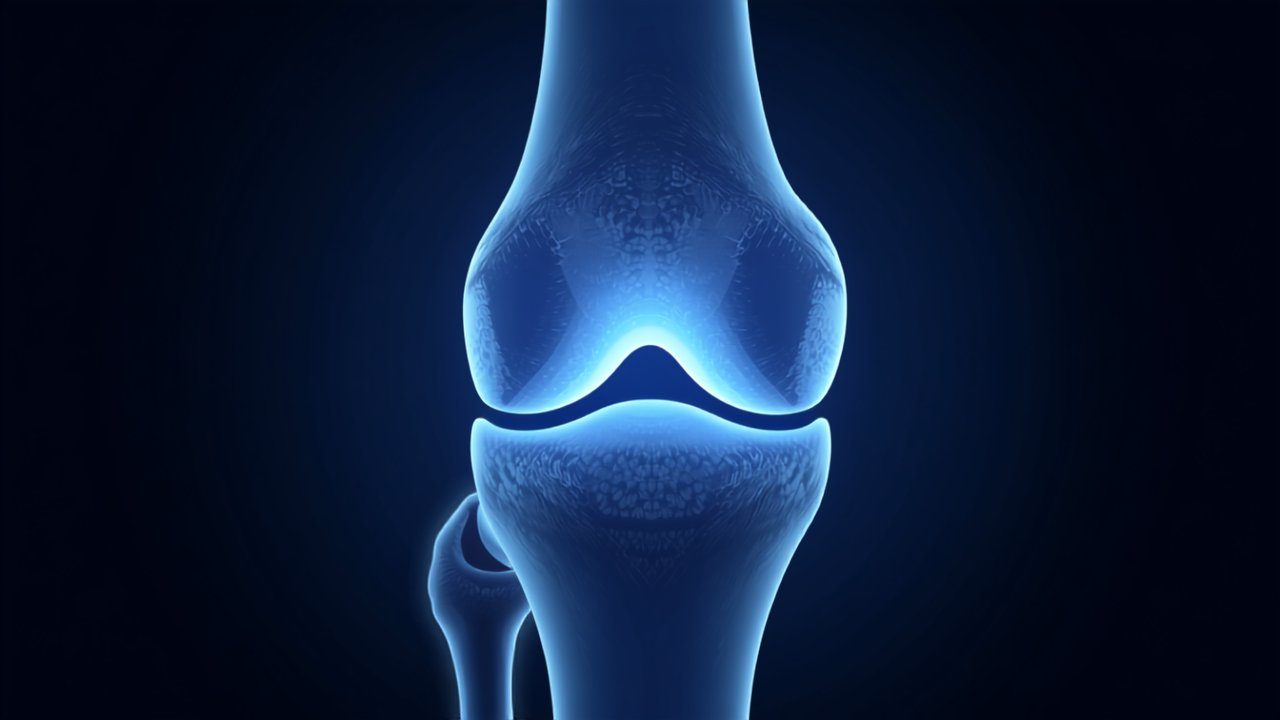
The Stanford Molecule That Regrew Aging Cartilage — And What It Means for Your Joints
Key Takeaways
- Stanford scientists used a small-molecule inhibitor of the enzyme 15-PGDH to regenerate aging cartilage in mice to near-young levels in one month, with no stem cells required
- The same inhibitor reduced cartilage degradation markers and stimulated regeneration in tissue from 11 human osteoarthritis patients in vitro
- The mechanism is phenotypic reprogramming of existing chondrocytes: cells in breakdown mode shift to rebuild mode
- 15-PGDH is a “gerozyme” — a class of enzymes that increase with age and actively reduce the body’s tissue-repair capacity across multiple organs
- No FDA-approved drug has ever been shown to halt or reverse cartilage loss in OA; this is the first molecule to show this level of regenerative effect
- Phase 1 safety data is available from a sarcopenia trial; human OA trials are planned but not yet started as of early 2026
The Problem Nobody Has Solved — Until Now
Osteoarthritis is one of the most common age-related conditions in the world, affecting approximately 33 million Americans and 1 in 5 adults overall. The joint pain, stiffness, and loss of mobility it causes are familiar to anyone over 50. What is less widely known is how little medicine can actually do about it.
Every treatment for osteoarthritis in current use manages symptoms. NSAIDs reduce pain and inflammation. Corticosteroid injections provide temporary relief. Physical therapy preserves function. Eventually, when the joint is damaged enough, surgeons replace it. As of January 2026, no FDA-approved disease-modifying osteoarthritis drug (DMOAD) exists — meaning no approved medication that actually changes the course of cartilage loss, let alone reverses it.
A study published in Science in February 2025 changed what scientists believe is possible. The research, led by Helen M. Blau and Nidhi Bhutani at Stanford University, identified a small molecule that regenerated aging cartilage in mice to levels indistinguishable from young animals — and produced the same effect in human tissue removed during knee replacement surgery.
What the Scientists Found
The target is an enzyme called 15-hydroxy prostaglandin dehydrogenase, or 15-PGDH. In 2023, Blau’s lab coined the term “gerozyme” to describe a class of enzymes that increase with age and actively impair tissue regeneration. 15-PGDH is a gerozyme. Its job is to degrade prostaglandin E2 (PGE2), a signaling molecule that promotes tissue repair. More 15-PGDH as you age means less PGE2, which means weaker repair signals to cartilage cells.
The researchers found that 15-PGDH protein in knee cartilage was approximately twice as abundant in aged mice (24 months old) compared to young mice (4 months old). The same pattern appeared in human osteoarthritic tissue — samples from 11 patients undergoing total knee replacement all showed elevated 15-PGDH and reduced PGE2.
In aged mice, daily administration of a small-molecule 15-PGDH inhibitor called SW033291 for one month increased articular cartilage thickness and uniformity to near-young-mouse levels. Expression of key cartilage proteins — type II collagen, aggrecan, and lubricin — all increased. In a separate group of mice that had undergone the equivalent of an anterior cruciate ligament injury, the inhibitor prevented osteoarthritis from developing at all.
No Stem Cells Required
The mechanism turned out to be something the team did not expect. The prevailing assumption in regenerative medicine is that tissue regrowth requires activation of stem or progenitor cells. The Stanford team looked for this and found nothing. Cell proliferation did not increase.
What happened instead was phenotypic reprogramming of existing chondrocytes. Single-cell analysis revealed three subpopulations shifting after treatment: hypertrophic (degenerative) chondrocytes dropped from 8% to 3%, fibrochondrocytes dropped from 16% to 8%, and matrix-maintaining hyaline chondrocytes rose from 22% to 42%. The existing cells changed their behavior. No new cells appeared.
As Nidhi Bhutani described it: “Until now, there has been no drug that directly treats the cause of cartilage loss. But this inhibitor causes a dramatic regeneration of cartilage beyond that reported in response to any other drug or intervention.”
Disclosure: affiliate link. I earn a small commission at no additional cost to you if you purchase through this link.
The Human Tissue Results
Cartilage samples collected from 11 patients during total knee replacement surgery — all with confirmed end-stage OA — showed the same elevated 15-PGDH and reduced PGE2 that the team found in aged mice. When those same samples were treated with the 15-PGDH inhibitor in the lab for one week, 15-PGDH-expressing chondrocytes decreased, fibrocartilage markers dropped, articular cartilage markers increased, and tissue stiffness improved.
This doesn’t prove the drug will work in living humans. But it validates that the target is relevant to human OA biology, not just a rodent phenomenon.
What Gerozymes Mean for Aging Biology
The gerozyme concept is broader than this single study. The idea, first formally proposed in 2023 by Blau’s lab, is that aging is not only a matter of cells accumulating damage — it is also a matter of cells being actively suppressed from repairing that damage by enzymes that increase with age. 15-PGDH is one such enzyme. The same compound being developed for OA joints previously showed safety in a Phase 1 trial for sarcopenia (age-related muscle loss).
If gerozymes are a general feature of aging — suppressing repair capacity across multiple tissues — then inhibiting them could have effects beyond cartilage: muscle, tendon, bone, and potentially other tissues that share the gerozyme-mediated repair suppression mechanism. This is speculative at this stage, but it is the biological logic the Stanford team is working from.
Where the Drug Stands Now
Phase 1 clinical trials of a 15-PGDH inhibitor for age-related muscle weakness demonstrated safety and biological activity in healthy human volunteers, with no serious adverse events. Patents covering the OA and tissue-regeneration applications are held by Stanford University and licensed to Epirium Bio, a company co-founded by Blau. The Stanford team stated plans to launch a clinical trial for cartilage regeneration soon — but no OA-specific human trial had begun as of early 2026.
The realistic timeline to an approved drug: 3 to 5 years minimum if trials go well. Most DMAODs that enter clinical trials fail. One potential concern noted by the researchers: systemic elevation of PGE2 could have unintended effects including potential impact on intraocular pressure, which will need to be addressed in clinical safety studies.
What You Can Do for Your Joints Right Now
The 15-PGDH inhibitor is years away from clinical use. In the meantime, the evidence for joint health is not empty — it just doesn’t include anything that regenerates cartilage the way this molecule does in mice.
Resistance training is the single most evidence-supported intervention for preserving joint function. It maintains the muscle strength that protects joints from excessive load, preserves cartilage hydration, and slows cartilage thickness loss in early OA. Two to three sessions per week is the standard recommendation.
Body weight management removes significant mechanical load from knee cartilage — every pound of body weight translates to approximately four pounds of force on the knee during walking. Even modest weight loss in people with knee OA produces meaningful reductions in pain.
Omega-3 fatty acids have the strongest supplement evidence for OA symptom management — multiple meta-analyses show reductions in joint pain and morning stiffness. Type II collagen supplementation has shown consistent, if modest, benefits for joint pain and stiffness in randomized trials and is the most direct nutritional support for cartilage structure currently available.
Why This Matters Beyond Joint Pain
Osteoarthritis is often framed as a quality-of-life condition. That framing undersells the longevity consequences. Chronic joint pain reduces physical activity, which accelerates muscle loss, cardiovascular deconditioning, and metabolic aging. Joint replacement surgery carries increasing complication risks with age. The ability to walk, climb stairs, and move without significant pain is one of the strongest predictors of physical independence into your 80s and 90s.
As Helen Blau put it: “Imagine regrowing existing cartilage and avoiding joint replacement.” A drug that could do that would not merely reduce pain. It would extend the years of functional independence that allow older adults to maintain the physical activity their health depends on.
The Bottom Line
A Stanford study published in Science found the first molecule ever shown to regenerate aging cartilage to near-young levels — not by growing new cells, but by reprogramming the ones already there. The target is a gerozyme called 15-PGDH that suppresses tissue-repair signals that decline with age. Human OA tissue responded the same way as mouse cartilage in lab tests. The molecule is 3 to 5 years from potential clinical use at best. In the meantime, the best tools for joint longevity remain resistance training, body weight management, omega-3s, and collagen.
👉 Download our free guide: The Joint Longevity Protocol — How to Protect Cartilage and Preserve Mobility Into Your 70s and 80s
FAQ
Is the 15-PGDH inhibitor available now?
No. As of early 2026, it has completed Phase 1 safety trials for a different indication (sarcopenia). An OA-specific human trial had not yet started. The realistic timeline to an available drug is 3 to 5 years minimum.
Will this work for people who already have severe OA?
The human tissue result used cartilage from patients with end-stage OA severe enough to require joint replacement, and even that tissue showed regenerative response in lab conditions. In vitro results don’t predict clinical outcomes, but the signal is encouraging.
Can glucosamine or chondroitin do something similar?
No. Glucosamine and chondroitin have produced inconsistent results in large clinical trials including the GAIT trial, which showed no significant benefit for most participants. They have not been shown to regenerate cartilage in any model comparable to the 15-PGDH inhibitor results.
What is a gerozyme exactly?
A gerozyme is an enzyme that increases in abundance with age and impairs the body’s tissue-repair capacity by degrading regenerative signaling molecules. The concept was first formally proposed in 2023 by Blau’s lab at Stanford. 15-PGDH is the best-characterized example to date.
Does the drug help with pain as well as cartilage loss?
Yes, in mouse models. In the injury model, pain behaviors and gait abnormalities both improved alongside cartilage regeneration. The pain relief is likely indirect: less cartilage degradation means less inflammation and less pain signal. Human pain data are not yet available.
References
- Singla M et al. Inhibition of 15-hydroxy prostaglandin dehydrogenase promotes cartilage regeneration. Science. 2025 Feb 7. DOI: 10.1126/science.adx6649. PMID: 41308124.
- Ho ATV et al. Prostaglandin E2 is essential for efficacious skeletal muscle stem-cell function, augmenting regeneration and strength. Proc Natl Acad Sci. 2017;114(26):6675–6684. PMID: 28607048. pubmed.ncbi.nlm.nih.gov/28607048
- Kolasinski SL et al. 2019 ACR/AF Guideline for the Management of Osteoarthritis. Arthritis Care Res. 2020;72(2):149–162. PMID: 31908149. pubmed.ncbi.nlm.nih.gov/31908149