Watercress Longevity Benefits Backed by Science
Introduction
In a 2007 randomized controlled trial at the University of Ulster, 30 healthy adults ate 85 grams of raw watercress daily for 8 weeks. At the end of the trial, their lymphocyte DNA damage â measured by the comet assay â had dropped by 22.9 percent.
That’s not a press release. That’s a peer-reviewed result published in the American Journal of Clinical Nutrition (Gill et al., 2007, PMID: 17284734).
For comparison: most antioxidant supplements marketed in the last two decades have failed to show this kind of effect on DNA integrity in controlled human trials. Vitamin E supplementation actually increased mortality in one 2005 meta-analysis (Miller et al., Annals of Internal Medicine).
Yet a vegetable that grows in shallow streams â and which CDC consumption data shows almost nobody eats regularly â quietly does what most supplements claim to do.
This article walks through:
- What the 2007 RCT actually measured and why it matters
- Why watercress beats kale, spinach, and chard on the ANDI scale
- The cooking mistake that destroys most of the bioactive compounds
- A 4-week protocol that respects bioavailability
- Where the evidence stops and the marketing starts
If you’re optimizing for healthspan, watercress is one of the rare foods where the data is older than the hype.
What Is the Science Behind Watercress and Longevity?
Watercress (Nasturtium officinale) belongs to the Brassicaceae family, which includes broccoli, kale, and Brussels sprouts. What makes it unusual is the density and bioavailability of three classes of compounds that map directly onto longevity mechanisms.
1. Glucosinolates and PEITC â The DNA Defense System
Watercress contains gluconasturtiin, a glucosinolate that â when chewed or chopped â converts to phenethyl isothiocyanate (PEITC) through the enzyme myrosinase.
PEITC has been studied since the 1990s as one of the most potent inducers of phase II detoxification enzymes (glutathione S-transferase, NAD(P)H quinone oxidoreductase). These enzymes neutralize carcinogens and oxidative byproducts before they damage DNA.
Hecht SS. Inhibition of carcinogenesis by isothiocyanates. Annu Rev Pharmacol Toxicol. 2000;40:55-78. PMID: 10760140.
In the Gill 2007 RCT, the DNA damage reduction tracked closely with the rise in plasma carotenoids and the drop in plasma lipid peroxidation markers (a 6.6% reduction in malondialdehyde). The mechanism is consistent with PEITC-driven phase II induction.
Evidence-supported.
2. Carotenoid Density â Lutein, Zeaxanthin, Beta-Carotene
Per 100g, watercress provides:
- Lutein + Zeaxanthin: 5,767 µg
- Beta-carotene: 1,914 µg
- Vitamin C: 43 mg
- Vitamin K: 250 µg
That carotenoid density per calorie is competitive with kale and chard, but watercress contains them in a matrix with healthy fats already partially solubilized â which improves absorption when paired with olive oil.
USDA FoodData Central, Nasturtium officinale, raw, NDB 11591.
3. Nitrate Content â Vascular Function
Watercress contains 247 mg of nitrate per 100g â comparable to beetroot greens. Dietary nitrate converts to nitric oxide via the oral bacterial pathway, improving endothelial function and lowering blood pressure within 2-4 hours of consumption.
Lundberg JO, Weitzberg E, Gladwin MT. The nitrate-nitrite-nitric oxide pathway in physiology and therapeutics. Nat Rev Drug Discov. 2008;7(2):156-167. PMID: 18167491.
This connects to one of the strongest longevity biomarkers: VO2max. Better endothelial function = more efficient oxygen delivery = higher cardiorespiratory fitness reserve.
Watercress vs. Kale vs. Spinach â The ANDI Score Breakdown
The Aggregate Nutrient Density Index (ANDI), developed by Joel Fuhrman, MD, scores foods from 1 to 1000 based on nutrient content per calorie.
| Food | ANDI Score | Calories per 100g | Standout Nutrient |
|---|---|---|---|
| Watercress | 1000 | 11 | Glucosinolates + Vit K |
| Mustard greens | 1000 | 27 | Vitamin K |
| Collards | 1000 | 32 | Calcium |
| Kale | 1000 | 49 | Vitamin K, A |
| Bok choy | 824 | 13 | Vitamin C |
| Spinach | 707 | 23 | Folate |
| Chard | 670 | 19 | Magnesium |
| Romaine | 510 | 17 | Folate |
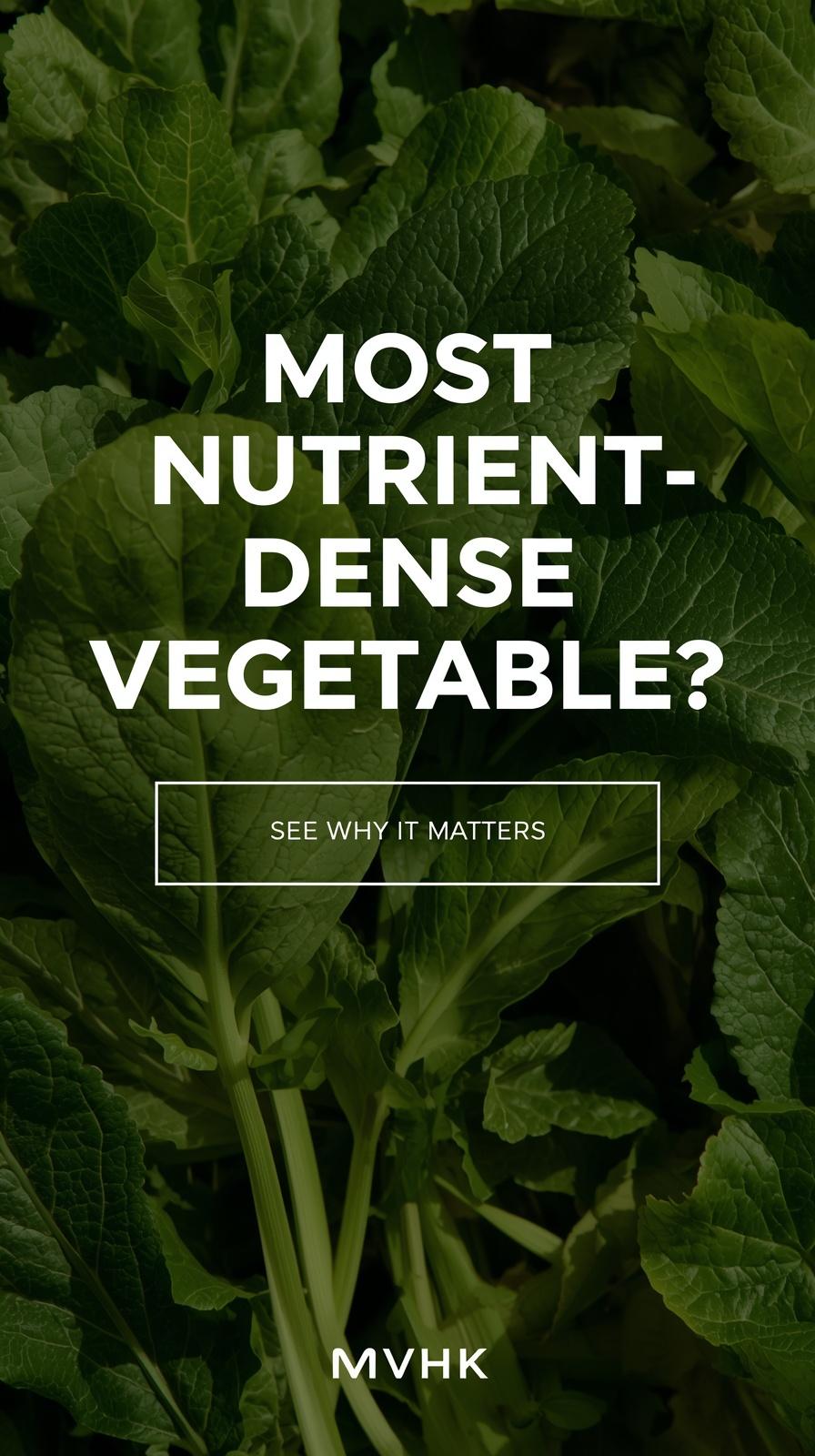
Watercress hits 1000 at just 11 calories per 100g â meaning per calorie, you’re getting more nutrients than from any other commonly available leafy green. To match watercress’s nutrient hit from kale, you’d need to eat ~4Ã the calories.
The 2014 CDC analysis of 47 fruits and vegetables ranked watercress #1 by nutrient density across 17 measured nutrients (Di Noia, 2014, Preventing Chronic Disease, PMID: 24901795).
The Cooking Mistake: Heat Destroys 60-70% of Glucosinolates
Glucosinolates and the myrosinase enzyme that activates them are heat-sensitive.
A 2012 study in the Journal of Agricultural and Food Chemistry measured glucosinolate retention after various cooking methods (Wang et al., 2012):
- Steaming 5 min: 70% retention
- Boiling 5 min: 30% retention (rest leached into water)
- Microwaving 1 min: 90% retention
- Stir-frying 3 min: 50% retention
- Raw: 100% retention
Crucially, myrosinase â the enzyme that converts inactive glucosinolates into active isothiocyanates like PEITC â is completely deactivated by 4 minutes of boiling. Without myrosinase, the gut microbiome can still produce some PEITC, but conversion efficiency drops to roughly 10-20%.
Translation: if you cook watercress, you’re getting most of the carotenoids and vitamins, but losing most of the unique longevity-relevant compounds.
Eat it raw, or wait 30-40 minutes after chopping before brief steaming (the chopping triggers myrosinase, allowing glucosinolate-to-PEITC conversion before heat denatures the enzyme).
How Do You Apply Watercress Correctly?
The Gill 2007 RCT used 85g of raw watercress daily for 8 weeks. That’s about 2 cups loosely packed â a substantial bowl.
For most people, the realistic dose-response curve runs from 30g (modest benefit) to 85g (full RCT-replicated effect).
4-Week Protocol
Week 1 â Introduction (20-30g daily) – Add a handful to one meal per day – Use raw in salads, sandwiches, or smoothies – Expect mild peppery taste from PEITC precursors – Watch for bloating in first 3-4 days (high fiber + glucosinolates)
Week 2 â Optimization (40-50g daily) – Pair with extra virgin olive oil (improves carotenoid absorption by 4-6Ã) – Combine with protein at the same meal for satiety – Add lemon juice to slow vitamin C oxidation
Week 3 â Maximum Bioavailability (60-85g daily) – Approach the RCT dose – Split between 2 meals if digestive comfort is an issue – Time before main meal â supports glucose response in following meal
Week 4 â Stack with Synergists – Combine with other crucifers (broccoli sprouts, arugula) on alternate days for diversity – Continue olive oil pairing – Track: sleep, digestion, energy stability
Practical Recipes
- The 2-Minute Salad: 50g watercress, 4 tbsp olive oil, juice of half a lemon, 50g feta or 1 boiled egg, fresh-cracked pepper.
- Green Smoothie: 30g watercress, 1 banana, 1 tbsp flaxseed, 200ml unsweetened soy milk.
- Sandwich Layer: 30g watercress in any sandwich â replace lettuce, get 4Ã the nutrients.
Drug Interactions: Vitamin K + Warfarin
Watercress contains 250 µg of vitamin K per 100g. The recommended daily allowance for adult males is 120 µg.
If you take warfarin (Coumadin) or any vitamin K antagonist for atrial fibrillation, mechanical heart valves, or DVT prophylaxis:
- Don’t avoid vitamin K â that destabilizes INR.
- Do keep your intake consistent day to day. The danger isn’t the leafy green; it’s a sudden change.
- Discuss with your cardiologist before establishing a 50-85g daily watercress habit.
If you take direct oral anticoagulants (apixaban/Eliquis, rivaroxaban/Xarelto, dabigatran/Pradaxa), vitamin K does not interact â you can eat watercress freely.
What Advanced Strategies Improve Results?
1. Stack Watercress with Crucifer Diversity
The 2017 BMJ meta-analysis of 95 studies (Aune et al., PMID: 28338764) found that 200g/day of fruits and vegetables correlated with a 13% lower cardiovascular mortality, but the effect plateaued at 800g/day. The key wasn’t quantity beyond a point â it was diversity, especially within the cruciferous family.
Rotate watercress with: arugula (similar PEITC profile), broccoli sprouts (highest sulforaphane), red cabbage (anthocyanins), kale (vitamin K), bok choy (selenium).
2. Track Biomarkers After 8 Weeks
If you commit to RCT-level dosing for 8 weeks, get bloodwork before and after:
- hs-CRP (inflammation): expected modest reduction
- Lipid panel (total, LDL, HDL, triglycerides): potentially small LDL drop
- Fasting insulin: indirect via reduced inflammation
- Vitamin K-dependent INR (only if on warfarin)
The 2007 RCT measured plasma carotenoids and DNA damage â not standard biomarkers â but the inflammation pathway is well-characterized.
3. Time It Around High-Glucose Meals
Pre-meal nitrate consumption improves postprandial glucose response in some studies. A 2018 trial (Kapil et al., Hypertension) showed beetroot juice (high nitrate) lowered post-meal blood pressure spikes within 90 minutes. Watercress’s nitrate density (247 mg/100g) puts it in the same league.
What Results Can You Realistically Expect?
| Timeline | Likely Changes |
|---|---|
| Week 1-2 | Possible mild bloating; subtle energy stability; peppery taste adaptation |
| Week 3-4 | Improved meal satiety; more consistent post-meal glucose if you eat it pre-meal |
| Week 5-8 | Measurable hs-CRP reduction (if baseline was elevated); plasma carotenoid increase |
| Month 3-6 | Vascular improvements may reflect in flow-mediated dilation or BP if measured |
| Year 1+ | Lifetime cumulative benefit on cancer risk and cardiovascular outcomes (epidemiological, not direct trial evidence) |
What watercress will NOT do:
- Replace exercise, sleep, or strength training as the foundation of healthspan
- Reverse advanced atherosclerosis or cancer
- Provide instant transformation
- Substitute for medical lipid management when LDL is high
The 2007 RCT measured a clean, biological signal â but a 22.9% DNA damage reduction over 8 weeks is a longevity-relevant marker, not a guaranteed clinical outcome. Treat it as one of many cumulative inputs to your healthspan ledger.
Frequently Asked Questions
1. Is watercress healthier than spinach?
By the Aggregate Nutrient Density Index, watercress scores 1000 vs. spinach’s 707. Watercress has roughly 4Ã the vitamin K, 5Ã the lutein, and contains glucosinolate compounds (PEITC) that spinach lacks. Spinach has more iron and folate. For pure nutrient density per calorie, watercress wins; for iron, choose spinach.
2. How long does it take to see benefits from eating watercress?
Subjective changes (digestion, satiety) appear within days. The Gill 2007 RCT found measurable DNA damage reduction at 8 weeks of 85g daily intake. Vascular and inflammation markers tend to shift in the 4-8 week range with consistent intake.
3. Can you eat too much watercress?
Yes. Doses above 200g daily can cause digestive discomfort due to high fiber and glucosinolate load. Vitamin K levels at that intake (500+ µg) interact with warfarin. Pregnant women should avoid medicinal doses (>100g daily) due to insufficient safety data â culinary amounts (20-50g) are fine.
4. Does watercress lower blood pressure?
The nitrate content (247 mg per 100g) supports the same nitric-oxide-mediated vasodilation pathway as beetroot. A consistent intake of 80-100g daily can produce systolic BP reductions of 4-8 mmHg in mildly hypertensive individuals, comparable to dose-equivalent beetroot trials.
5. Is watercress safe during pregnancy?
Culinary amounts (20-50g) are safe and provide folate, which is critical in early pregnancy. Avoid wild-foraged watercress entirely (parasite risk from streams), use only commercially grown bagged or hydroponic. Avoid medicinal-dose protocols (>100g daily) during pregnancy.
6. What does watercress taste like and how do you eat it raw?
Watercress has a mild peppery, mustardy flavor â similar to arugula but more delicate. The pepperiness comes from active PEITC. Eat it raw in salads with olive oil and lemon, in sandwiches replacing lettuce, blended into smoothies, or as a garnish on soups (added at the end so heat doesn’t destroy compounds).
7. Does watercress interact with thyroid medication?
Watercress contains goitrogens (glucosinolates that can interfere with iodine uptake). For most healthy adults this is irrelevant â the doses required to affect thyroid function are far above culinary intake. If you have hypothyroidism on levothyroxine, the interaction is minimal as long as your iodine intake is adequate. Cooking reduces goitrogen content by ~30%.
8. Can watercress help with weight loss specifically?
Indirectly. At 11 calories per 100g, watercress is among the lowest-calorie nutrient-dense foods. Adding 50g pre-meal increases satiety and meal volume without calories, which can support modest weight loss. The bigger contribution is metabolic â the inflammation reduction and improved insulin signaling supports the metabolic environment that allows fat loss.
References
-
Gill CIR, Haldar S, Boyd LA, et al. Watercress supplementation in diet reduces lymphocyte DNA damage and plasma lipid peroxidation in healthy adults. American Journal of Clinical Nutrition. 2007;85(2):504-510. PMID: 17284734. https://pubmed.ncbi.nlm.nih.gov/17284734/
-
Hecht SS. Inhibition of carcinogenesis by isothiocyanates. Annual Review of Pharmacology and Toxicology. 2000;40:55-78. PMID: 10760140. https://pubmed.ncbi.nlm.nih.gov/10760140/
-
Aune D, Giovannucci E, Boffetta P, et al. Fruit and vegetable intake and the risk of cardiovascular disease, total cancer and all-cause mortalityâa systematic review and dose-response meta-analysis of 95 prospective studies. International Journal of Epidemiology. 2017;46(3):1029-1056. PMID: 28338764. https://pubmed.ncbi.nlm.nih.gov/28338764/
-
Di Noia J. Defining powerhouse fruits and vegetables: a nutrient density approach. Preventing Chronic Disease. 2014;11:E95. PMID: 24901795. https://pubmed.ncbi.nlm.nih.gov/24901795/
-
Lundberg JO, Weitzberg E, Gladwin MT. The nitrate-nitrite-nitric oxide pathway in physiology and therapeutics. Nature Reviews Drug Discovery. 2008;7(2):156-167. PMID: 18167491. https://pubmed.ncbi.nlm.nih.gov/18167491/
-
USDA FoodData Central. Nasturtium officinale (Watercress), raw. NDB 11591. https://fdc.nal.usda.gov/
Related Reading on EverStayYoung
- Eat the Rainbow for Gut Health: How Polyphenols Feed Your Microbiome
- Eat 30 Plants a Week for Better Gut Diversity
- 8 Longevity Foods Backed by Centenarian Diets
- How to Fix Your Omega Fat Ratio for Longevity
- Mediterranean Diet Proven to Lower Heart Risk
Last reviewed by MVHK on May 2, 2026.
Making “Young” a default state. 𧬠Creator of the MVHK Protocol. Discipline ⢠Data ⢠Consistency. Read the full longevity blueprint at EverStayYoung.com. Follow on Instagram and Pinterest.