The Odd-Chain Fat in Butter That Activates Your Longevity Pathways
Key Takeaways
View on Amazon →
- C15:0 (pentadecanoic acid) is an odd-chain saturated fat found primarily in full-fat dairy products and certain fish
- A 2023 cell-based study found C15:0 shares 24 biological activities with rapamycin, metformin, and acarbose — the most studied longevity-enhancing compounds
- Epidemiological data links higher blood C15:0 to 12–25% fewer cardiovascular events and ~14% lower type 2 diabetes risk
- Western populations have likely been deficient in C15:0 since the low-fat dietary guidelines of the 1980s reduced full-fat dairy consumption
- C15:0 is now available as a purified supplement (Fatty15) for those avoiding dairy, though food-first sources remain the primary recommendation
The Fat That’s Been Hiding in Plain Sight
For forty years, nutrition science told us to avoid saturated fat. The advice was well-intentioned and based on the data available at the time. The problem is that “saturated fat” was never a single thing — it was a category containing dozens of distinct molecules with different metabolic effects. The broad brush did real damage. C15:0 — pentadecanoic acid — is a saturated fat. It’s also increasingly recognized as an essential nutrient that supports cellular membrane stability, activates longevity pathways, and tracks inversely with cardiovascular disease risk in population studies. It was caught in the crossfire of anti-fat messaging for decades, and intake across Western populations has declined sharply as a result. What makes it particularly interesting in 2026 isn’t just the epidemiology. It’s the cell-based comparison data — specifically, the finding that C15:0 activates many of the same molecular pathways as the drugs currently attracting the most interest in longevity medicine.What Makes C15:0 Different from Other Saturated Fats
Saturated fats are classified by their carbon chain length and whether the chain contains an even or odd number of carbons. Most saturated fats in the Western diet — palmitic acid (C16:0), stearic acid (C18:0) — are even-chain. C15:0 is odd-chain, and that structural difference appears to matter significantly at the cellular level. Even-chain saturated fats integrate into cell membranes in ways that can increase rigidity and impair signaling. Odd-chain fats, including C15:0, appear to integrate differently — stabilizing membranes while preserving their flexibility. This has downstream effects on how cells respond to insulin, clear damaged components, and handle inflammatory signals. C15:0 also feeds into mitochondrial energy metabolism differently than even-chain fats, producing propionate during beta-oxidation — a short-chain fatty acid with its own set of beneficial cellular effects.What I Use
Omega-3 Fish Oil (high EPA/DHA)
complementary essential fatty acid for cellular membrane health
Disclosure: affiliate link. I earn a small commission at no additional cost to you if you purchase through this link.
The Rapamycin Comparison Study
In 2023, Stephanie Venn-Watson and Nicholas Schork published a study in Nutrients that ran a direct cellular comparison between C15:0 and three of the most studied longevity-enhancing compounds: rapamycin, metformin, and acarbose. Rapamycin is an mTOR inhibitor that reliably extends lifespan in every animal model where it’s been tested. It’s the closest thing clinical longevity science has to a proven intervention — but it’s also an immunosuppressant with significant side effect risks at therapeutic doses. Metformin is the most prescribed diabetes drug in the world, with emerging longevity data. Acarbose is a glucose-lowering agent with lifespan extension data in mice. Using human cell-based molecular phenotyping assays across 10 different cell systems, the researchers compared each compound at its optimal dose. At 17 µM, C15:0 shared 24 biological activities with these compounds — including anti-inflammatory, antifibrotic, and anticancer effects. The comparison wasn’t perfect: rapamycin outperformed C15:0 on some immune-suppressive metrics, and the study was cell-based rather than clinical. But the mechanistic overlap was substantial and surprised researchers. The key pathways: C15:0 activates AMPK (which promotes cellular cleanup and energy efficiency) and inhibits mTOR (which, when chronically elevated, accelerates aging-associated cellular dysfunction). These are two of the core targets in modern longevity pharmacology.The Epidemiological Evidence
The cell biology is interesting. The population data adds context. Multiple large-scale prospective studies have tracked blood C15:0 levels over time. A 2025 narrative review synthesized over 115 PubMed-indexed studies and found that individuals in the highest quintile of blood C15:0 consistently showed 12 to 25 percent fewer cardiovascular events and approximately 14 percent lower risk of developing type 2 diabetes compared to those in the lowest quintile. Importantly, C15:0 is an odd-chain fat that isn’t significantly synthesized by the human body from other fats — it comes almost entirely from diet. This means blood levels function as a reasonable proxy for dietary intake, which strengthens the mechanistic interpretation of the epidemiological associations. Correlation isn’t causation. People who eat more full-fat dairy may differ from those who don’t in ways that confound the analysis. But the consistency of the signal across multiple study populations is worth noting.Why Western Populations Are C15:0 Deficient
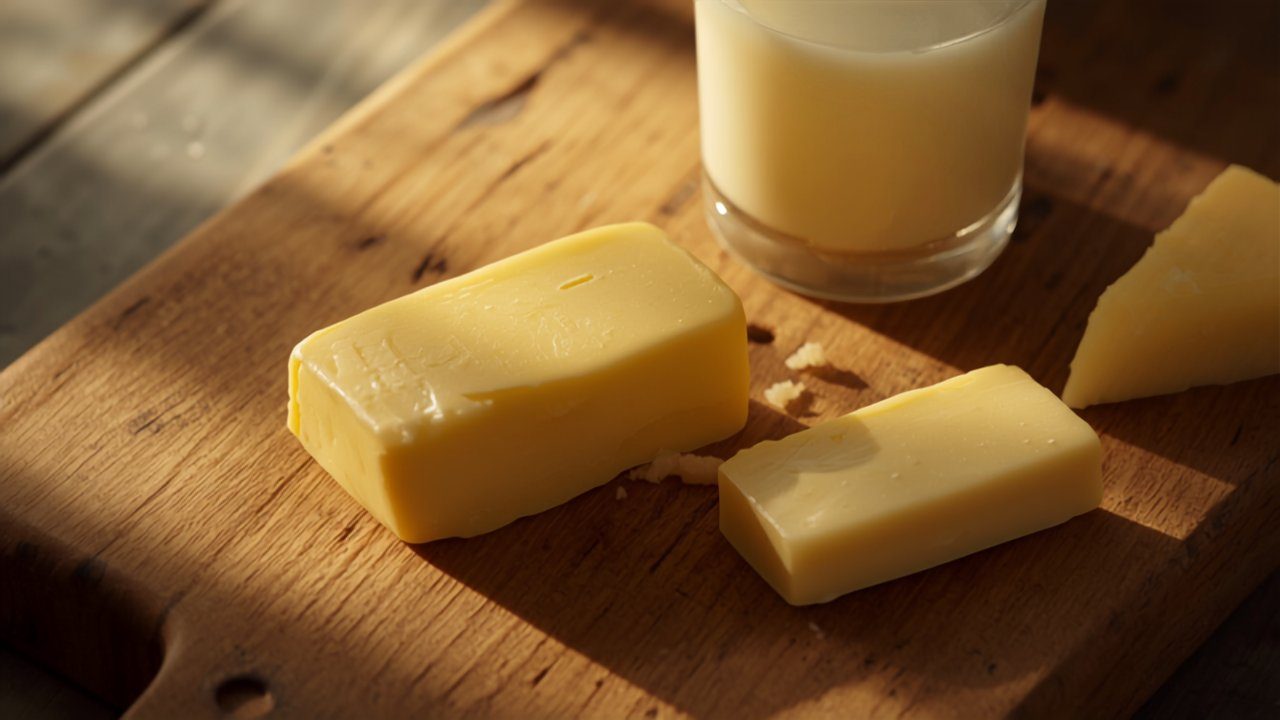
The primary dietary source of C15:0 is full-fat dairy: whole milk, butter, aged cheese, cream. Secondary sources include fatty fish, particularly mackerel and sardines. Starting in the 1980s, dietary guidelines in the US and Europe recommended reducing saturated fat intake — primarily by switching from whole-fat to low-fat dairy. This shift was massive and population-wide. Skim milk replaced whole milk. Low-fat yogurt replaced full-fat. Butter was replaced by vegetable spreads. The consequence, not anticipated at the time, was a significant reduction in C15:0 intake across the Western population. Studies tracking C15:0 blood levels over time show a sustained decline correlated with these dietary changes. The gut microbiome can synthesize small amounts of C15:0 from fermentation of odd-chain dietary fibers (rye, barley, resistant starch), but the quantities appear insufficient to reach the blood levels associated with metabolic benefits in population studies.Food Sources vs. Supplements
For people who eat full-fat dairy, dietary C15:0 intake is achievable through food:- Aged hard cheese (parmesan, cheddar, gouda): highest C15:0 density per gram among dairy products
- Butter and ghee: concentrated dairy fat, moderate C15:0 content
- Whole milk and full-fat yogurt: lower concentration per serving but higher volume intake
- Mackerel, sardines, anchovies: the highest non-dairy food sources
Limitations and What We Don’t Know
The mechanistic case for C15:0 is credible. The population associations are consistent. The cell-based longevity comparison data is striking. But there are important gaps. There are no randomized controlled trials in humans specifically testing whether supplemental C15:0 reduces cardiovascular events, extends lifespan markers, or improves clinically meaningful outcomes. The cell-based study is not a clinical trial — it tells us about mechanisms, not outcomes. The epidemiological data is observational. Confounders are possible. The primary researcher behind the C15:0-as-essential-nutrient hypothesis (Venn-Watson) is the co-founder of Fatty15. The science appears legitimate, but independent replication is ongoing and not yet complete. This is a promising nutritional finding, not a proven intervention. The risk-to-benefit calculus of eating full-fat dairy or taking a well-characterized fat supplement is low. The certainty of dramatic benefit is not yet high.Realistic Expectations
If you’ve been avoiding full-fat dairy because of saturated fat concerns, the evidence is increasingly supportive of reconsidering that — at least for odd-chain sources like dairy fat. C15:0 appears to be a case where the “all saturated fats are bad” framing was too crude. Switching to full-fat dairy isn’t a longevity intervention in the pharmaceutical sense. It’s a low-risk dietary adjustment that may improve your cellular fat intake profile in a way that supports cardiometabolic and metabolic aging outcomes over years and decades. Supplementing with concentrated C15:0 is a reasonable option for those avoiding dairy, with a reasonable mechanistic rationale and a low safety concern profile. It’s not cheap ($50+/month for Fatty15), and it’s not proven by RCT. Calibrate expectations accordingly.FAQ
What is C15:0 and where does it come from? C15:0 (pentadecanoic acid) is an odd-chain saturated fatty acid found primarily in full-fat dairy products (butter, aged cheese, whole milk) and fatty fish. It cannot be synthesized efficiently from other fats by the human body, making dietary intake the main source. Is C15:0 actually an essential nutrient? Venn-Watson’s research argues it should be classified as essential, based on evidence that the body can’t produce adequate amounts independently and deficiency correlates with disease risk. This classification is not yet formally adopted by regulatory bodies, but the argument is biologically coherent and increasingly discussed in the research literature. Can I get enough C15:0 from diet alone? If you eat full-fat dairy and fatty fish regularly, yes. People eating low-fat dairy or dairy-free diets are likely deficient relative to what the epidemiological data suggests is optimal. Is C15:0 safe to take as a supplement? Pentadecanoic acid has a strong safety profile. It’s a naturally occurring fat already present in food. No significant adverse effects have been reported in the published literature at typical supplemental doses. Does this mean all saturated fat is fine? No. Even-chain saturated fats (palmitic acid, found in palm oil and animal fat) still have mixed-to-negative evidence profiles at high intake. C15:0 is a specific odd-chain fat. The distinction matters.References
- Venn-Watson S, Schork NJ. Pentadecanoic Acid (C15:0), an Essential Fatty Acid, Shares Clinically Relevant Cell-Based Activities with Leading Longevity-Enhancing Compounds. Nutrients. 2023;15(21):4607. PMID: 37960259. https://pubmed.ncbi.nlm.nih.gov/37960259/
- Venn-Watson S et al. Efficacy of dietary odd-chain saturated fatty acid pentadecanoic acid parallels broad associated health benefits in humans: could it be essential? Sci Rep. 2020;10:8161. PMID: 32424181. https://pubmed.ncbi.nlm.nih.gov/32424181/
- Forouhi NG et al. Differences in the prospective association between individual plasma phospholipid saturated fatty acids and incident type 2 diabetes. Lancet Diabetes Endocrinol. 2014;2(10):810–818. PMID: 25107467. https://pubmed.ncbi.nlm.nih.gov/25107467/
- de Oliveira Otto MC et al. Dietary intake of saturated fat by food source and incident cardiovascular disease. Am J Clin Nutr. 2012;96(2):397–404. PMID: 22760560. https://pubmed.ncbi.nlm.nih.gov/22760560/
Free Weekly Newsletter
Want the weekly version of this?
Every Saturday, I send one longevity study, one practical takeaway, and one update from the protocol. No hype. No supplements to sell. Just the signal from the noise.