Orange Juice vs Whole Fruit: Which Is Better for Blood Sugar, Hunger, and Long-Term Health?
💡 Key Takeaways
- A glass of orange juice can contain as much sugar as a soda.
- “No added sugar” does not mean low sugar.
- Whole fruit generally provides better satiety than fruit juice.
- Fiber slows digestion and helps moderate blood sugar response.
- Calories alone do not predict health effects.
- Juice contains beneficial nutrients but lacks most of the fiber found in whole fruit.
Introduction
Many people assume orange juice is automatically healthier than soda because it comes from fruit. The reality is more nuanced.
Orange juice contains vitamins, minerals, and beneficial plant compounds. At the same time, it can deliver a large amount of sugar with very little fiber. That combination means it may affect hunger and eating behavior differently than whole fruit.
A useful way to think about nutrition is that calories tell you how much energy a food provides, while food quality influences how your body responds to that energy.
Disclosure: affiliate link. I earn a small commission at no additional cost to you if you purchase through this link.
Why Whole Fruit Usually Wins
When fruit is turned into juice, much of its fiber is removed.
Fiber helps:
- Slow digestion
- Reduce rapid sugar absorption
- Increase fullness
- Support healthy blood sugar regulation
Research from Harvard’s Nutrition Source and the CDC notes that fiber helps regulate blood sugar and improves satiety.
The Non-Obvious Insight
Many people focus entirely on sugar grams.
The more important question is often:
How quickly does that sugar reach your bloodstream, and how full does the food keep you?
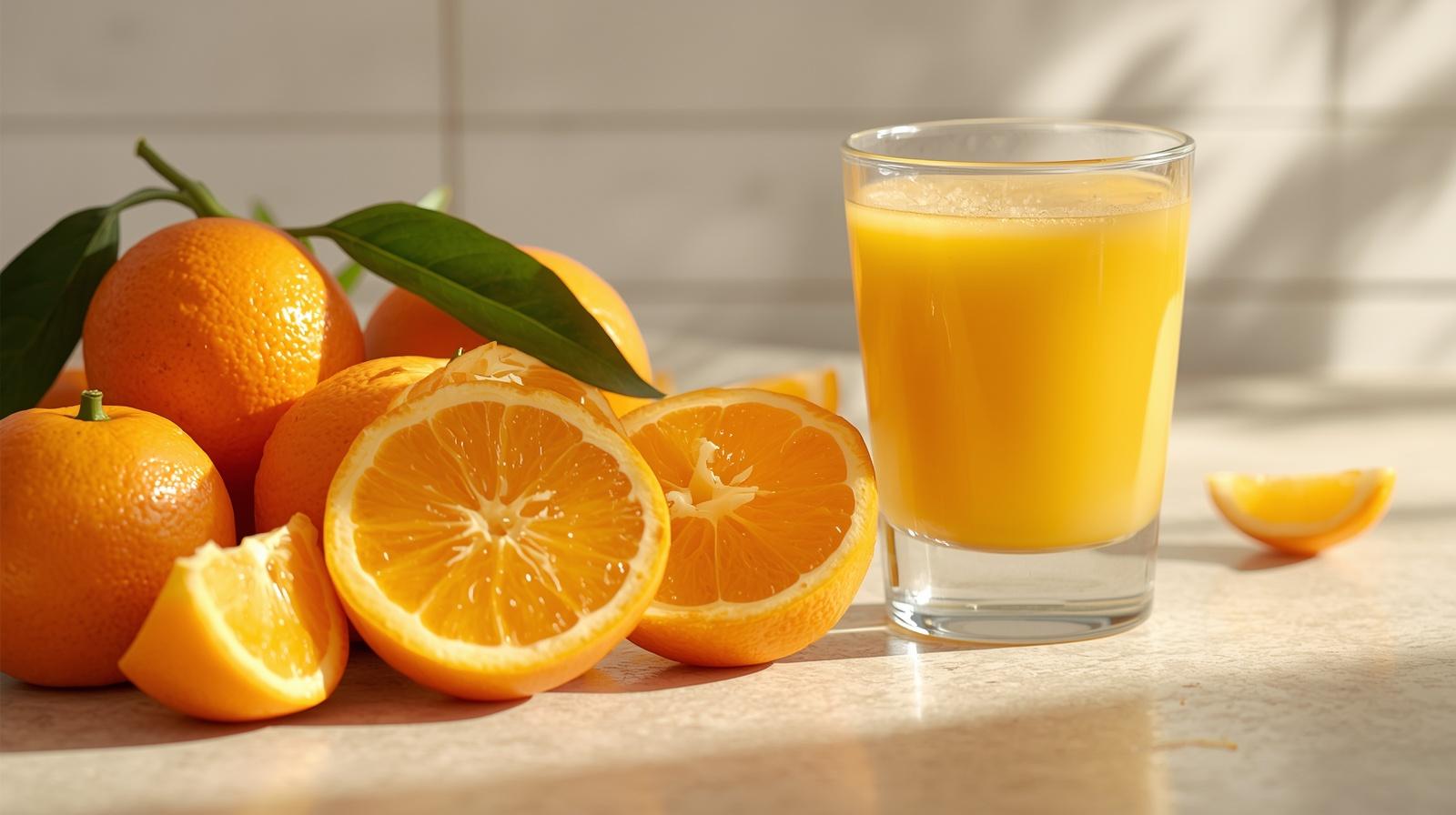
A whole orange and a glass of orange juice may contain similar nutrients, but they are not experienced by the body in the same way.
Juice Is Not Soda
This is where discussions often become overly simplistic.
Orange juice is not nutritionally identical to soda.
100% fruit juice provides:
- Vitamin C
- Potassium
- Polyphenols
- Other bioactive compounds
Several reviews note that fruit juice contains nutrients and phytochemicals that are absent from most soft drinks.
However, juice still contains substantial amounts of naturally occurring sugar and relatively little fiber.
Calories Do Not Measure Food Quality
Two foods with identical calories can produce different outcomes.
Examples:
- Hunger levels
- Blood sugar response
- Micronutrient intake
- Long-term dietary adherence
This is one reason why calorie counting alone often fails to predict overall diet quality.
Practical Application
A simple hierarchy:
- Whole fruit
- Whole fruit + water
- Limited amounts of 100% fruit juice
- Sugar-sweetened beverages
For most adults:
- Eat fruit rather than drink it.
- Treat juice as a supplement to a meal rather than a replacement for fruit.
- Prioritize fiber-rich foods throughout the day.
Disclosure: affiliate link. I earn a small commission at no additional cost to you if you purchase through this link.
Limitations & Risks
Not everyone responds identically.
Factors include:
- Activity level
- Overall diet quality
- Body weight
- Insulin sensitivity
- Portion size
Evidence regarding 100% fruit juice is more complex than many headlines suggest. Some analyses find neutral effects on glucose-control markers, while others support limiting juice because of calorie intake and lower satiety.
Realistic Expectations
Switching from juice to whole fruit is not a miracle intervention.
It is a small dietary upgrade that can:
- Increase fiber intake
- Improve satiety
- Reduce excess calorie consumption
- Support healthier eating patterns
Small changes repeated daily often produce larger long-term benefits than dramatic short-term diets.
Optional Action Plan
Breakfast:
- Replace one glass of juice with an orange.
Lunch:
- Add a whole apple or pear.
Snack:
- Choose berries over sweetened beverages.
Dinner:
- Aim for vegetables and fiber-rich foods.
FAQ
Is orange juice unhealthy?
Not necessarily. It contains nutrients, but it also delivers sugar without much fiber.
Is 100% fruit juice better than soda?
Generally yes, because it contains vitamins and plant compounds. However, whole fruit is usually the better option.
Does no added sugar mean low sugar?
No. Natural sugars can still be present in large amounts.
Why is fiber important?
Fiber slows digestion, supports fullness, and helps regulate blood sugar.
References
- Rossi I, et al. Health effects of 100% fruit and vegetable juices: evidence from human subject intervention studies. Nutr Res Rev. 2024;37(1):194-238. PMID: 37655747
https://pubmed.ncbi.nlm.nih.gov/37655747/ - Muraki I, et al. Fruit consumption and risk of type 2 diabetes. BMJ. 2013;347:f5001. PMID: 23990623
https://pubmed.ncbi.nlm.nih.gov/23990623/ - Nguyen M, et al. Consumption of 100% Fruit Juice and Body Weight in Children and Adults: A Systematic Review and Meta-Analysis. JAMA Pediatr. 2024. PMID: 38227336
https://pubmed.ncbi.nlm.nih.gov/38227336/ - Cozma AI, et al. 100% Fruit juice and measures of glucose control and insulin sensitivity: a systematic review and meta-analysis of randomized controlled trials. Br J Nutr. 2018;120(8):856-870. PMID: 30207264
https://pubmed.ncbi.nlm.nih.gov/30207264/