CoQ10 and Selenium Reduced Cardiovascular Mortality by Nearly 50% in a 10-Year Trial
Key Takeaways
- The KiSel-10 trial enrolled 443 elderly Swedes with low selenium levels in a double-blind, placebo-controlled RCT
- After 4 years of daily CoQ10 (200mg) plus selenium (200mcg), the supplement group had 49% lower cardiovascular mortality at 10 years (HR 0.51, p=0.0003)
- At 12-year follow-up, the protective effect was still significant at 41% lower mortality (HR 0.59, p=0.001)
- A 2025 reanalysis found women without pre-existing heart disease benefited more than men
- Both CoQ10 and selenium decline substantially with age — the trial specifically targeted participants with low selenium levels
- This is among the strongest long-term supplement-mortality evidence in any longevity trial
Why CoQ10 and Selenium Matter in Aging
Coenzyme Q10 (CoQ10) has two primary jobs. First, it is a critical cofactor in the mitochondrial electron transport chain — without it, cells cannot efficiently convert nutrients into energy (ATP). Second, it functions as a potent fat-soluble antioxidant, protecting cell membranes and LDL cholesterol particles from oxidative damage.
The problem with aging is that CoQ10 production declines dramatically. Tissue levels fall by an estimated 50% between the ages of 20 and 80. The heart muscle, which operates continuously and has extremely high energy demands, is particularly vulnerable to this decline. Heart failure patients routinely show CoQ10 levels 40 to 50% lower than healthy age-matched controls.
Selenium has a complementary role. It is a trace mineral embedded in a family of selenoprotein enzymes, most importantly glutathione peroxidase (which neutralizes hydrogen peroxide and lipid peroxides) and thioredoxin reductase (which recycles oxidized antioxidants back to their active forms). Selenium also supports thyroid function, immune response, and DNA repair.
Across much of Europe and parts of North America, selenium intake is chronically low because the soil is selenium-poor. Older adults are more likely to be deficient because both dietary intake and absorption efficiency decline with age. Urban Alehagen at Linkoping University in Sweden designed the KiSel-10 trial to directly address these two overlapping deficiencies.
The KiSel-10 Trial
443 independently living elderly citizens in southeastern Sweden, selected specifically for having low selenium blood levels, were randomly assigned to receive either 200mg/day of CoQ10 (pharmaceutical-grade ubiquinone) plus 200mcg/day of selenium yeast, or identical placebo capsules, for four years.
The primary outcome was cardiovascular mortality. After the 4-year intervention, the researchers tracked all-cause and cardiovascular death for an additional 6 years, creating a 10-year total follow-up period. A 12-year follow-up then validated the findings. This means the trial assessed whether supplement-generated benefits persisted long after supplementation ended, a question no short-term trial can answer.
What the Trial Found
10-year follow-up: Cardiovascular mortality in the active group was significantly lower than placebo. Multivariate Cox regression showed a hazard ratio of 0.51 (95% CI: 0.36 to 0.74, p=0.0003). In concrete terms, roughly 5.9% of the supplement group died of cardiovascular causes versus 12.6% in the placebo group — a 49% relative reduction.
12-year follow-up: The protective effect persisted. Cardiovascular mortality was 28.1% in the active group versus 38.7% in the placebo group. Multivariate Cox HR: 0.59 (95% CI: 0.42 to 0.81, p=0.001). The supplement group had not resumed taking CoQ10 or selenium after year 4 — the benefit endured for 8 years after the intervention ended.
2025 sex-difference analysis: A June 2025 paper published in Antioxidants reanalyzed the KiSel-10 data stratified by sex. Both sexes benefited, but the pattern differed. Women without ischemic heart disease (IHD) at baseline showed a more pronounced cardiovascular mortality reduction than their male counterparts without IHD. Men with established IHD at baseline also benefited substantially.
Why the Effect Persists After Supplementation Ends
The most striking feature of the KiSel-10 data is that cardiovascular protection held 8 years after participants stopped taking the supplements. This is not something you see with most interventions, pharmaceutical or otherwise.
The proposed explanations involve durable structural improvements. Sustained CoQ10 and selenium supplementation during the 4-year intervention may have improved mitochondrial quality through better energy production and reduced oxidative damage, partially reversing accumulated mitochondrial dysfunction in cardiac muscle cells. It may also have reduced oxidative damage to cardiac collagen and elastin, which provide structural support to the heart muscle, and reduced chronic low-grade inflammation in the vascular wall, slowing atherosclerotic progression in a way that outlasted the supplementation period itself.
Disclosure: affiliate link. I earn a small commission at no additional cost to you if you purchase through this link.
The Caveats
The trial specifically enrolled older adults with low selenium levels from a Swedish population where selenium intake is characteristically low due to soil depletion. Whether the same effect would occur in populations with adequate baseline selenium (such as people eating typical North American diets with more selenium-rich wheat) is unclear. The benefit may be smaller or different in those contexts.
The 443-person sample is modest. The 10-year and 12-year analyses are observational follow-ups of an RCT — the initial randomization provides a strong foundation, but the long-term follow-up data carry some of the same limitations as observational studies.
CoQ10 at 200mg per day was used as ubiquinone in the trial. Ubiquinol (the reduced, more bioavailable form) may be preferable for adults over 60 because conversion efficiency from ubiquinone declines with age. Selenium at 200mcg per day is within the safe range but approaching the upper tolerable intake level. Selenium toxicity (selenosis) can occur at much higher intakes, usually from misuse or industrial exposure.
Food Sources and Supplement Considerations
CoQ10 food sources include organ meats, sardines, mackerel, beef, and spinach, but achieving 200mg/day from food alone is not realistic. Supplementation is the practical route for therapeutic doses.
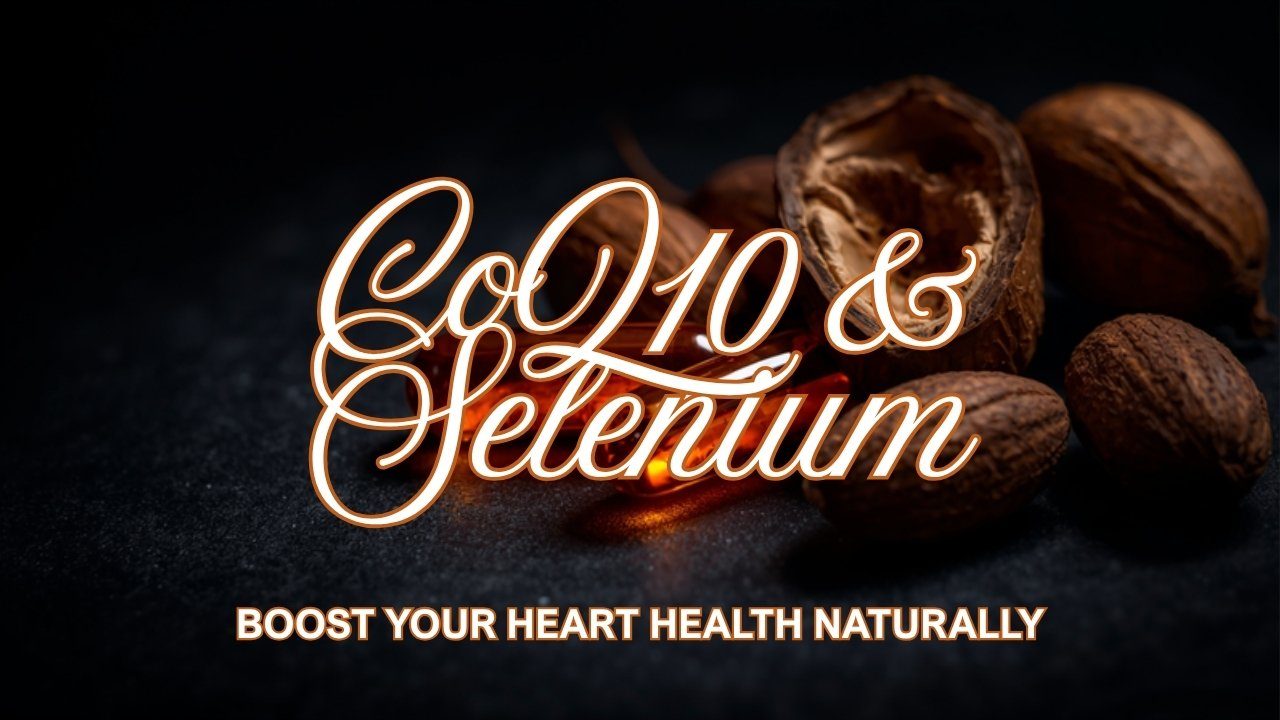
For selenium, Brazil nuts are the densest food source — one large nut typically provides approximately 100 mcg. Tuna, oysters, sardines, whole wheat, and sunflower seeds are also good sources. Selenium content in wheat and grains varies substantially by where they are grown. People in Europe generally get less dietary selenium than those in North America.
Disclosure: affiliate link. I earn a small commission at no additional cost to you if you purchase through this link.
The Bottom Line
A double-blind, placebo-controlled trial in 443 elderly Swedish adults with low selenium found that 4 years of CoQ10 (200mg) plus selenium (200mcg) daily reduced cardiovascular mortality by 49% over 10 years and 41% over 12 years, with the benefit persisting long after supplementation ended. A 2025 reanalysis found women without prior heart disease showed a particularly pronounced benefit.
Both CoQ10 and selenium decline significantly with age, and the KiSel-10 trial represents among the longest and most rigorous supplement-mortality evidence in the longevity field. The doses used are achievable through standard supplementation and are generally considered safe at these levels.
FAQ
What is the difference between ubiquinone and ubiquinol?
Both are forms of CoQ10. Ubiquinone is the oxidized form; ubiquinol is the reduced, active antioxidant form. The body interconverts them, but this conversion becomes less efficient with age. The KiSel-10 trial used ubiquinone; some researchers prefer ubiquinol for adults over 60 due to potentially better bioavailability at equivalent doses.
Is 200mcg of selenium per day safe?
Yes. The tolerable upper intake level for selenium is 400mcg per day. Selenosis typically occurs at much higher intakes through misuse or industrial exposure. The 200mcg dose in KiSel-10 is the most common therapeutic dose used in research and is generally considered safe.
Why did the benefit persist after supplementation stopped?
This is not fully explained. One hypothesis involves durable improvements in cardiac mitochondrial function and structural integrity during the 4-year supplementation period. The intervention may have been long enough to partially reverse accumulated oxidative damage in cardiac tissue, creating benefits that outlasted the supplementation itself.
Does this apply to people who already have heart disease?
Yes. In the KiSel-10 trial, people with existing ischemic heart disease also showed cardiovascular mortality reductions in the active treatment group, particularly men. The 2025 sex-differences analysis found the benefit was present across subgroups.
Do statins affect CoQ10 levels?
Yes. Statins inhibit the mevalonate pathway, which is the same biosynthetic route used to make both cholesterol and CoQ10. Statin use is consistently associated with lower CoQ10 blood levels. People taking statins may have an additional reason to consider CoQ10 supplementation.
Should I check my selenium levels first?
If testing is available, knowing your baseline helps. People with adequate selenium from diet may need less supplementation. Testing is not strictly necessary for the 100 to 200mcg/day doses that are well within the safe range, but it provides a more personalized starting point.
References
- Alehagen U, Aaseth J, Johansson P. Reduced Cardiovascular Mortality 10 Years after Supplementation with Selenium and Coenzyme Q10 for Four Years. PLoS ONE. 2015;10(12):e0141641. PMID: 26624886. pubmed.ncbi.nlm.nih.gov/26624886
- Alehagen U, Aaseth J, Alexander J, Johansson P. Still reduced cardiovascular mortality 12 years after supplementation with selenium and coenzyme Q10 for four years. PLoS ONE. 2018;13(4):e0193820. PMID: 29641571. pubmed.ncbi.nlm.nih.gov/29641571
- Alehagen U, et al. Selenium and Coenzyme Q10 Supplementation and Sex Differences in Cardiovascular Mortality. Antioxidants. 2025 Jun 5;14(6):685. DOI: 10.3390/antiox14060685. PMC: PMC12190002. pmc.ncbi.nlm.nih.gov/articles/PMC12190002