The Ancestral Light Environment: Why Both Sun Avoidance and “More Sun” Are Biologically Wrong
💡 Key Takeaways
- Humans likely evolved in dynamic light environments rather than constant direct sun
- Infrared-rich outdoor light and canopy-filtered light may matter biologically
- Modern indoor living removed natural circadian light variability
- Excessive sun avoidance and nonstop sun maximization both oversimplify human photobiology
- Skin pigmentation, latitude, ancestry, and recovery capacity change optimal exposure patterns
- Circadian timing may matter as much as total UV exposure
Introduction
The modern sunlight debate usually splits into two extremes.
One side treats sunlight primarily as a carcinogen. The other treats more sun exposure as universally beneficial for hormones, mood, vitamin D, mitochondrial function, and longevity.
Both positions miss something important: humans probably did not evolve in either environment.
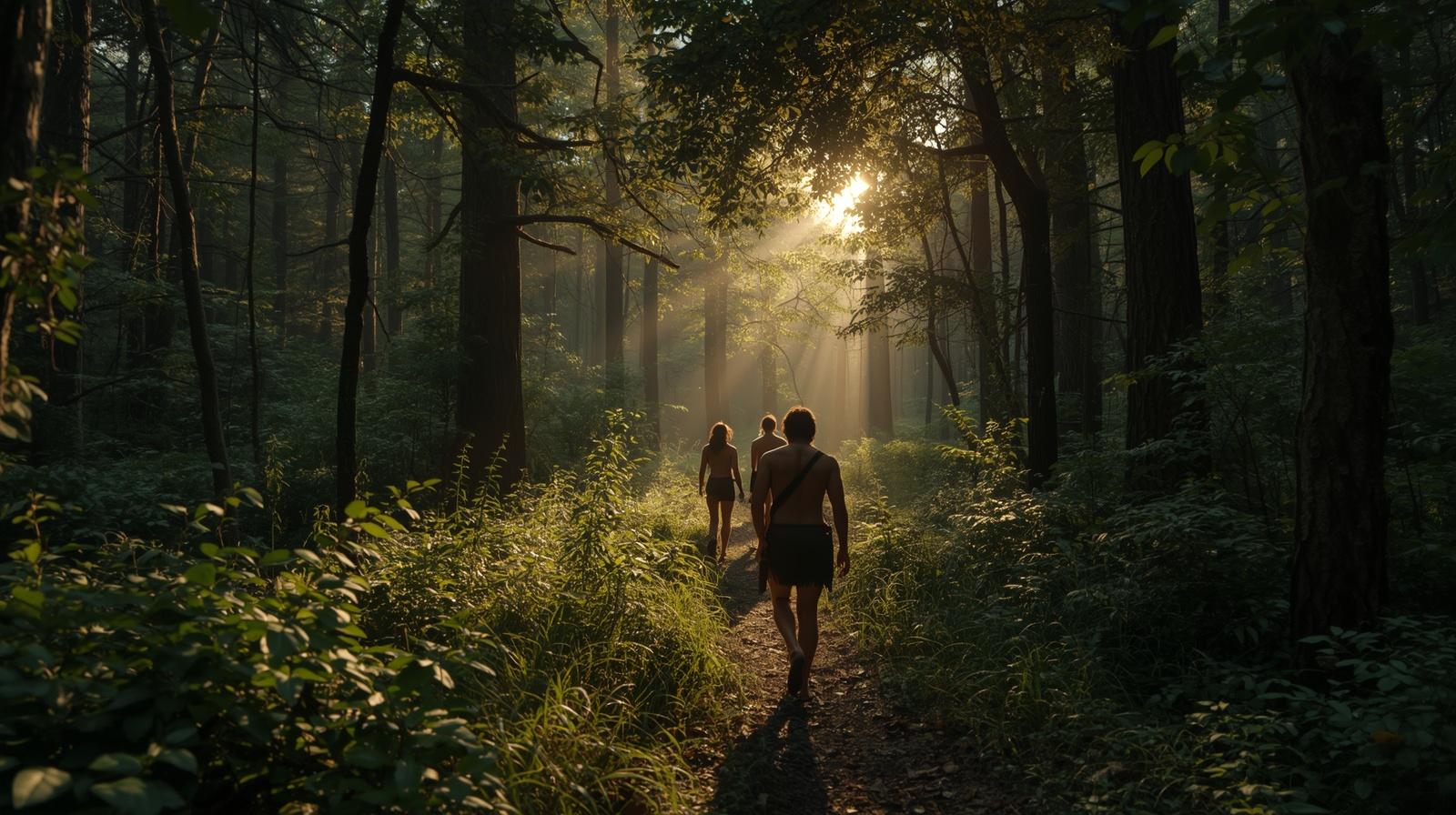
Ancestral sunlight exposure was likely intermittent, variable, and filtered through ecological conditions most modern people rarely experience today. Early humans moved through forests, open terrain, shade, reflected light, changing seasons, smoke, clouds, dawn light, and infrared-dominant environments long before modern buildings or artificial lighting existed.
That matters because circadian biology depends on light patterns, not just sunlight quantity.
The emerging argument from researchers such as Dr. Alexander Wunsch is that modern humans suffer less from “not enough sun” alone and more from an unnatural light ecology: weak indoor daylight, excessive nighttime artificial light, disrupted circadian timing, and isolated bursts of direct UV exposure disconnected from natural recovery cycles.
Disclosure: affiliate link. I earn a small commission at no additional cost to you if you purchase through this link.
The Missing Context in the Sunlight Debate
Most discussions about sunlight revolve around UV radiation.
That framing is incomplete.
Natural sunlight contains ultraviolet light, visible light, red light, and near infrared wavelengths. In fact, near infrared light makes up a large portion of solar radiation reaching the earth’s surface. Some researchers believe these wavelengths may support mitochondrial signaling, circulation, nitric oxide dynamics, and tissue recovery.
The problem is that modern humans often experience sunlight in biologically strange ways:
- dim indoor light during the day
- intense artificial light at night
- sudden recreational overexposure on weekends
- limited dawn and dusk exposure
- reduced outdoor movement
- long periods behind glass filtering parts of the solar spectrum
From an evolutionary perspective, that pattern may be highly abnormal.
Humans Probably Did Not Evolve in Constant Open Sun
One of the more overlooked points in evolutionary photobiology is ecological variability.
The ancestral human environment was not a beach chair.
Anthropological evidence suggests early humans occupied mixed landscapes containing woodland, savanna, partial canopy cover, caves, riversides, and intermittent open terrain. Even hunter-gatherer populations living in sunny regions spent substantial time moving through shaded environments, especially during periods of extreme midday heat.
This creates a radically different light profile compared to modern sun-maximizing behaviors.
A forest canopy light environment alters:
- UV intensity
- spectral distribution
- infrared dominance
- glare exposure
- thermal load
- retinal light signaling
Diffuse outdoor light can still reach intensities far exceeding indoor lighting while dramatically changing photobiological stress.
That distinction matters because biology responds not only to dose, but also to pattern.
The Circadian Biology Perspective
Circadian systems evolved under predictable environmental oscillations.
Bright mornings. Dim evenings. Seasonal variation. Outdoor movement. Darkness at night.
Modern lighting flattened those rhythms.
Research now links circadian disruption to metabolic dysfunction, poor sleep, mood disorders, cardiovascular disease risk, and impaired immune regulation. Outdoor daylight exposure, particularly early in the day, strongly influences circadian entrainment and melatonin timing.
But circadian biology sunlight research also suggests timing may matter more than brute-force exposure duration.
Morning light produces different biological effects than intense midday exposure. Evening artificial light shifts melatonin signaling. Intermittent shade alters retinal contrast patterns and thermal stress.
This is where the simplistic “more sun is always healthier” narrative starts to break down.
The Infrared Question
One of the more controversial aspects of the modern sunlight discussion involves near infrared light exposure.
Near infrared wavelengths penetrate tissue more deeply than UV and are increasingly studied in photobiomodulation research. Experimental evidence suggests certain wavelengths may influence mitochondrial cytochrome c oxidase activity, ATP production, oxidative signaling, and inflammatory pathways.
The important nuance is this:
Natural sunlight delivers infrared and UV simultaneously within constantly changing environmental conditions.
That is different from isolated UV exposure or artificial tanning patterns.
Some researchers speculate that ancestral environments provided a balance between stress and recovery signals through shifting spectral exposure during the day. This idea remains partially theoretical, but it is biologically plausible and increasingly discussed within photobiology circles.
The evidence is strongest for circadian light timing and weakest for broad claims that unlimited sunlight is inherently regenerative.
The Problem With Universal Sunlight Advice
A major weakness in modern sunlight culture is the assumption that all humans respond similarly.
They do not.
Skin pigmentation evolved partly in response to regional UV conditions. Latitude changes annual sunlight availability. Altitude alters UV intensity. Age influences skin resilience. Medications, metabolic health, and circadian stability also modify tolerance.
An office worker in northern Europe, a construction worker in Arizona, and a dark-skinned athlete near the equator do not share the same optimal human sun exposure profile.
This is where evolutionary arguments become more useful than ideological ones.
Humans adapted to local light ecologies over thousands of years. Modern one-size-fits-all sunlight advice often ignores that reality.
Practical Application
The evidence currently supports a moderate, circadian-centered approach rather than either extreme.
Useful principles include:
- prioritize outdoor light exposure early in the day
- avoid living under dim indoor lighting continuously
- reduce bright artificial light exposure late at night
- use gradual seasonal adaptation instead of sudden overexposure
- seek natural outdoor environments with variable light conditions
- avoid repeated sunburns
- recognize individual variation in skin response
For many people, the healthiest environment may resemble dynamic outdoor living rather than constant direct sun or constant indoor isolation.
Disclosure: affiliate link. I earn a small commission at no additional cost to you if you purchase through this link.
Limitations & Risks
Important limitations exist.
Some claims surrounding near infrared light exposure and evolutionary photobiology remain speculative. Human ancestral light conditions cannot be perfectly reconstructed. Controlled long-term trials on “ancestral light ecology” do not exist.
There is also a real risk that anti-sunscreen or extreme sun-maximizing movements understate skin cancer risks, especially among lighter-skinned populations with high UV sensitivity.
On the other side, chronic indoor living combined with weak daylight exposure likely creates circadian and metabolic problems that standard dermatology discussions often underemphasize.
The evidence is strongest for:
- circadian timing importance
- daylight exposure benefits
- nighttime light disruption harms
- risks of repeated UV overexposure
The evidence is mixed or emerging for:
- infrared-mediated recovery effects
- canopy-filtered light optimization
- sunlight-induced mitochondrial enhancement beyond established mechanisms
Realistic Expectations
Sunlight is not a magic therapy.
It is an environmental input humans evolved with.
The real issue may not be “more sun” or “less sun,” but whether modern humans still experience biologically coherent light cycles at all.
That distinction changes the conversation from ideology to ecology.
Optional: Action Plan
Morning:
- Get 10–30 minutes of outdoor light exposure shortly after waking
- Avoid sunglasses during low-risk morning light when safe
Midday:
- Use intermittent sun exposure instead of continuous overexposure
- Incorporate movement through shade when possible
Evening:
- Reduce bright LED and screen exposure
- Prioritize darkness to preserve melatonin signaling
Weekly:
- Spend time in natural outdoor environments with variable light patterns rather than exclusively artificial indoor settings
Get the Full Guide
👉 Get the full guide here
FAQ
Is more sunlight always healthier?
No. Evidence suggests both insufficient daylight exposure and repeated overexposure can create biological problems. Circadian timing, skin type, latitude, and recovery dynamics matter.
What is ancestral sunlight exposure?
Ancestral sunlight exposure refers to the natural light environments humans evolved under, including intermittent direct sunlight, shade, diffuse daylight, seasonal variation, and near infrared-rich outdoor environments.
Does near infrared light matter biologically?
Possibly. Experimental photobiomodulation research suggests near infrared wavelengths may influence mitochondrial and inflammatory signaling, though many broader health claims remain preliminary.
Did humans evolve under forest canopy conditions?
Partially. Human evolution likely occurred across mixed ecologies containing woodland, savanna, riverside, and open terrain environments rather than nonstop open-sun conditions.
Is indoor light biologically different from outdoor light?
Yes. Outdoor daylight is dramatically brighter and spectrally broader than standard indoor lighting, making it important for circadian entrainment and retinal signaling.
References
Czeisler CA, Gooley JJ. Sleep and circadian rhythms in humans. Cold Spring Harb Symp Quant Biol. 2007;72:579-597. PMID: 18419318
https://pubmed.ncbi.nlm.nih.gov/18419318/
Bedrosian TA, Nelson RJ. Timing of light exposure affects mood and brain circuits. Transl Psychiatry. 2017;7(1):e1017. PMID: 28085017
https://pubmed.ncbi.nlm.nih.gov/28085017/
Cheung IN, Zee PC, Shalman D, et al. Morning and evening blue-enriched light exposure alters metabolic function in normal weight adults. PLoS One. 2016;11(5):e0155601. PMID: 27191727
https://pubmed.ncbi.nlm.nih.gov/27191727/
Hamblin MR. Mechanisms and applications of the anti-inflammatory effects of photobiomodulation. AIMS Biophys. 2017;4(3):337-361. PMID: 28748217
https://pubmed.ncbi.nlm.nih.gov/28748217/
Jablonski NG, Chaplin G. Human skin pigmentation as an adaptation to UV radiation. Proc Natl Acad Sci U S A. 2010;107(Suppl 2):8962-8968. PMID: 20445093
https://pubmed.ncbi.nlm.nih.gov/20445093/
Lucas RJ, Peirson SN, Berson DM, et al. Measuring and using light in the melanopsin age. Trends Neurosci. 2014;37(1):1-9. PMID: 24287308
https://pubmed.ncbi.nlm.nih.gov/24287308/