Stevia, SIRT1, and Muscle Metabolism: Can a Sweetener Protect Muscle?
The internet is split on stevia. Half the articles call it a superfood that lowers blood sugar and fights inflammation. The other half call it an ultra-processed chemical that wrecks your gut microbiome.
The truth is messier than either camp admits.
A 2023 study in Nutrients showed that stevia extract activated the AMPK→SIRT1→PGC-1α pathway in mouse muscle cells and suppressed the two primary genes responsible for muscle atrophy. Real molecular activity. Real pathway. But the dose used was equivalent to roughly 17 grams of stevia per day in a 70kg human — far more than anyone actually consumes in their coffee or yogurt.
So which is it: longevity tool or overrated sweetener? This article looks at what the evidence actually shows — the interesting findings, the real limits, and where stevia fits in a practical protocol.
What Is Stevia and How Is It Different from Other Sweeteners?
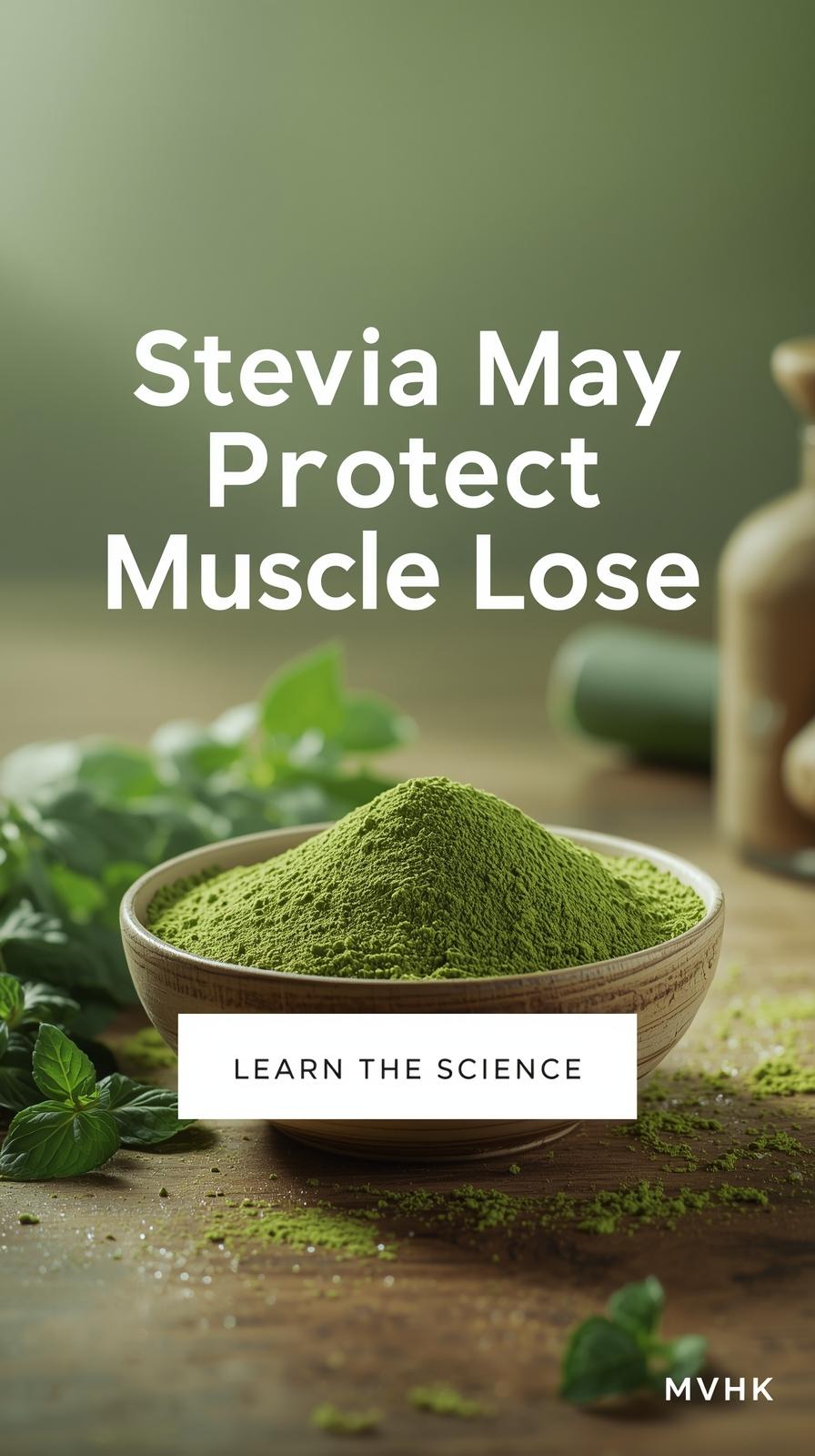
Stevia is a plant-derived sweetener extracted from Stevia rebaudiana, a shrub native to South America. The primary sweet compounds are steviol glycosides — rebaudioside A (Reb-A) being the most commercially used.
Most of what you find on store shelves is refined Reb-A extract, not whole-leaf stevia. The difference matters: whole-leaf stevia contains a broader range of glycosides plus other plant compounds (flavonoids, polyphenols, caffeic acid), while refined Reb-A is a single isolated compound.
This distinction is relevant to the molecular research, because most of the interesting mechanistic studies used whole-leaf or crude extract, not the purified product in your grocery store. Stevia is 200-400 times sweeter than sucrose by weight, so actual amounts consumed are tiny: a typical stevia-sweetened drink contains 0.05-0.2g of stevia extract.
The SIRT1 and AMPK Story: What the Research Actually Shows
The AMPK→SIRT1→PGC-1α cascade is one of the core longevity pathways. AMPK activates SIRT1 by raising NAD+ levels. SIRT1 then activates PGC-1α, a master regulator of mitochondrial biogenesis. More mitochondria means better energy production, better stress resistance, and slower aging of muscle tissue.
The AMPK-SIRT1 connection was established by Cantó and Auwerx in a landmark 2009 Nature paper (PMID: 19262508). This is well-established biology.
Several cell culture and animal studies have shown that stevioside and steviol (the metabolite stevia breaks down into in the gut) activate AMPK in muscle and liver cells. In animal models, this activation suppressed atrogin-1 and MuRF1 — the two primary genes responsible for muscle protein degradation, first identified by Bodine et al. in a 2001 Science paper (PMID: 11679633). Suppressing these genes means less muscle protein breakdown. This is a genuine molecular signal.
The dose problem: Studies showing these effects use concentrations of 50-200mg/kg of stevia extract in rodents. Translating to human equivalents using the FDA’s standard body surface area conversion factor means 50mg/kg in a mouse is approximately 250mg/kg in a human — about 17.5 grams of pure stevia extract for a 70kg person. The FDA’s acceptable daily intake for steviol glycosides is 4mg/kg per day — about 280mg for a 70kg adult, roughly the amount in 8-10 stevia-sweetened drinks. The research doses are 60x the acceptable daily intake.
The Human Evidence: What We Actually Know
The human evidence on stevia is solid in one area and thin in another.
Where the evidence is strong: Anton et al. (2010, Appetite, PMID: 20303371) compared stevia, aspartame, and sucrose on postprandial glucose and insulin in a controlled human trial. Stevia consumers had significantly lower glucose and insulin responses after meals compared to sucrose. Despite consuming fewer calories at the pre-meal snack, total caloric intake across the day didn’t differ — people didn’t overcompensate by eating more. Stevia reduced the metabolic cost of sweetness without triggering compensatory hunger.
Where the evidence is thin: Direct human evidence for SIRT1 activation, muscle preservation, or any longevity pathway mechanism at normal dietary doses doesn’t exist yet. The mechanistic story is almost entirely from cell culture and animal models. Translating that to “stevia activates your longevity pathways” is a leap the current evidence doesn’t support.
Stevia vs. Other Sweeteners: The Microbiome Question
The Suez et al. (2014) Nature paper (PMID: 25231862) showed that saccharin, sucralose, and aspartame altered gut microbiota composition in mice and induced glucose intolerance. The paper caused significant concern about all non-caloric sweeteners.
Stevia is different. Its steviol glycosides are not absorbed in the small intestine — they pass to the colon, where bacteria hydrolyze them to steviol and glucose. This is a different metabolic pathway than saccharin or sucralose, which interact directly with intestinal bacteria. Some in vitro studies suggest stevia may have mild prebiotic properties.
| Sweetener | Postprandial glucose | Microbiome concern | SIRT1/AMPK signal |
|---|---|---|---|
| Sucrose | High | Low (natural) | None |
| Aspartame | Low | Moderate (animal data) | None |
| Saccharin | Low | High (Suez 2014) | None |
| Sucralose | Low | Moderate-high | None |
| Stevia (whole-leaf) | Low | Low-neutral | Possible at high dose |
| Stevia (Reb-A refined) | Low | Low | Unlikely at normal dose |
Whole-Leaf vs. Reb-A: What’s Lost in Processing
Whole-leaf stevia contains steviol glycosides plus flavonoids like quercetin and kaempferol, caffeic acid, chlorogenic acid, and plant polyphenols — compounds with independent anti-inflammatory and antioxidant activities. When Reb-A is refined for commercial use, those compounds are removed. You’re left with a purified sweet molecule and nothing else.
The molecular studies showing SIRT1 activation generally used whole-leaf extract or stevioside (a glycoside found in whole-leaf but lower in Reb-A products). If there’s any longevity signal in stevia at all, it’s more likely to be present in whole-leaf forms than in the white powder extract labeled “stevia” in most grocery stores.
The Muscle Preservation Stack That Actually Works
Given the dose limitations on stevia’s muscle effects, here’s how to think about it practically. Stevia contributes to muscle preservation indirectly — by replacing sugar without raising insulin. Lower chronic insulin means better insulin sensitivity, which means better glucose uptake in muscle cells during and after exercise. That’s a real but indirect contribution.
The direct contributors to muscle preservation, in order of effect size:
1. Resistance training — The evidence base is enormous. Two to three sessions per week is the minimum effective dose. There is no supplement or sweetener that does what consistent strength training does.
2. Protein intake — Older adults require roughly 1.6-2.0g of protein per kg of body weight per day to achieve the same muscle protein synthesis response as younger adults. Spread across meals rather than concentrated at dinner.
3. Sleep — Most muscle protein synthesis occurs during sleep, driven by growth hormone pulses in the first half of the night. Chronic sleep deprivation reduces anabolic signaling. Eight hours is not a suggestion.
4. Zone 2 cardio — Preserves mitochondrial function in muscle cells via the same AMPK→PGC-1α pathway that stevia is hypothesized to activate at high doses. Sixty minutes of Zone 2 generates a much larger signal through this pathway than any realistic stevia intake.
Stevia in a longevity protocol is best understood as a zero-calorie sweetener that removes sugar without the metabolic cost. If you were going to use a sweetener anyway, stevia is probably the best choice. But if you’re using it because of the SIRT1 story, understand that the dose gap between the research and real-world use is enormous.
FAQ
Does stevia raise blood sugar at all?
At normal doses, stevia does not raise blood glucose. The Anton et al. (2010) trial showed stevia-sweetened snacks produced lower postprandial glucose and insulin than sucrose. Some individuals report a small insulin response to sweet taste regardless of caloric content (the cephalic phase insulin response), but this is modest and transient.
Is stevia safe during pregnancy?
The FDA classifies refined stevia extracts (high-purity steviol glycosides) as generally recognized as safe (GRAS). Most major health agencies consider it safe at normal dietary doses during pregnancy. The conservative recommendation is to stick to Reb-A extracts rather than whole-leaf products during pregnancy, and to keep intake moderate.
Can stevia help build muscle?
Not directly, and not at normal doses. The animal studies showing atrogin-1 and MuRF1 suppression used doses 60x the human acceptable daily intake. Stevia’s practical contribution to muscle is indirect: replacing sugar reduces chronic insulin elevation, which improves insulin sensitivity, which improves nutrient delivery to muscle. The direct drivers of muscle building are resistance training and protein intake.
Does stevia affect gut bacteria like artificial sweeteners do?
Current evidence suggests stevia’s microbiome impact is less concerning than saccharin or sucralose. Stevia glycosides pass to the colon and are hydrolyzed by gut bacteria rather than interacting directly with intestinal bacteria the way artificial sweeteners do. Some research suggests mild prebiotic effects. Overall, stevia appears to be a better choice than sucralose or saccharin from a gut health perspective.
What’s the difference between stevia and Reb-A?
Stevia is the plant. Rebaudioside A (Reb-A) is one of the steviol glycosides extracted from the plant — the most commonly used in commercial products. Whole-leaf stevia contains Reb-A plus many other glycosides and plant compounds. Most commercial “stevia” products are highly refined Reb-A. The molecular research on SIRT1 activation generally used whole-leaf or crude extracts, not purified Reb-A.
Is stevia better than monk fruit?
Both are plant-derived, zero-calorie sweeteners with no meaningful effect on blood glucose. Monk fruit (mogrosides) has less research overall but a similar safety profile. Neither has strong human evidence for longevity pathway activation at normal doses. Taste preference is the main differentiator — monk fruit is slightly sweeter and many people find it cleaner-tasting. From a metabolic standpoint, they’re approximately equivalent.
How much stevia is too much per day?
The FDA’s acceptable daily intake for steviol glycosides is 4mg per kg of body weight per day — about 280mg for a 70kg adult. That’s equivalent to roughly 8-10 standard servings of stevia-sweetened food or drink. Most people who use stevia regularly consume well below this. There’s no established toxicity in humans at normal dietary doses.
Does stevia have any side effects?
At normal doses, stevia is well tolerated. Some people report mild digestive discomfort at high doses, particularly from whole-leaf products. Rare allergic reactions have been reported in people with ragweed allergies (stevia is in the same plant family). At very high doses in animal studies, stevia affected reproductive hormones — but these were doses far above any human dietary exposure. Normal dietary use has no established adverse effects.
References
- Cantó C, Auwerx J. AMPK regulates energy expenditure by modulating NAD+ metabolism and SIRT1 activity. Nature. 2009;458(7241):1056-1060. PMID: 19262508. pubmed.ncbi.nlm.nih.gov/19262508
- Bodine SC, et al. Identification of ubiquitin ligases required for skeletal muscle atrophy. Science. 2001;294(5547):1704-1708. PMID: 11679633. pubmed.ncbi.nlm.nih.gov/11679633
- Anton SD, et al. Effects of stevia, aspartame, and sucrose on food intake, satiety, and postprandial glucose and insulin levels. Appetite. 2010;55(1):37-43. PMID: 20303371. pubmed.ncbi.nlm.nih.gov/20303371
- Suez J, et al. Artificial sweeteners induce glucose intolerance by altering the gut microbiota. Nature. 2014;514(7521):181-186. PMID: 25231862. pubmed.ncbi.nlm.nih.gov/25231862
- Imai S, Guarente L. NAD+ and sirtuins in aging and disease. Trends Cell Biol. 2014;24(8):464-471. PMID: 24786309. pubmed.ncbi.nlm.nih.gov/24786309
Last reviewed by MVHK — May 2026.