Cold Exposure for Focus, Dopamine, and Longevity
💡 Key Takeaways
- Cold exposure acutely increases dopamine and norepinephrine
- The mechanism is hormetic stress improving nervous system resilience
- Correct protocol = short, consistent, sub-15°C exposure
- Benefits are acute and adaptive—not permanent “boosts”
Introduction
Cold exposure is often marketed as a “dopamine hack,” but that framing misses the biology. The real value lies in how controlled cold stress reshapes your nervous system over time.
Yes—cold water can spike dopamine significantly. But that doesn’t automatically translate into better cognition, decision-making, or long-term brain performance. The longevity relevance comes from adaptation: repeated exposure improves stress tolerance, metabolic flexibility, and neural responsiveness.
When applied correctly, cold exposure becomes a high-ROI tool for energy regulation and resilience—not a shortcut, not a stimulant replacement.
What Is the Science Behind Cold Exposure?
Cold exposure works by activating the sympathetic nervous system and triggering a cascade of neurochemical and metabolic responses.
Direct answer: Cold exposure increases catecholamines (dopamine and norepinephrine), activates mitochondrial stress responses, and improves systemic resilience through hormesis.
Disclosure: affiliate link. I earn a small commission at no additional cost to you if you purchase through this link.
Key Mechanisms
1. Dopamine and Norepinephrine Surge (Evidence-supported)
Studies show dopamine can increase up to ~250% under cold stress (~14°C), while norepinephrine may rise even higher.
- Source: PubMed (cold exposure catecholamine studies)
- Effect: heightened alertness, motivation, vigilance
Important nuance:
Dopamine ≠ cognitive performance. It enhances drive, not necessarily intelligence or memory.
2. Hormetic Stress Response (Evidence-supported)
Cold acts as a controlled stressor, activating adaptive pathways:
- Increased antioxidant defenses
- Improved cellular stress resistance
- Enhanced autonomic balance
This aligns with the principle of Hormesis.
3. Mitochondrial Activation (Hypothesis-supported)
Cold exposure may stimulate:
- Mitochondrial biogenesis
- Brown adipose tissue activation
- Improved energy efficiency
This links directly to longevity via metabolic health.
4. Inflammation and Stress Regulation (Evidence-supported)
Repeated cold exposure can:
- Reduce chronic low-grade inflammation
- Improve stress response calibration
- Increase resilience to psychological stressors
How Do You Apply Cold Exposure Correctly?
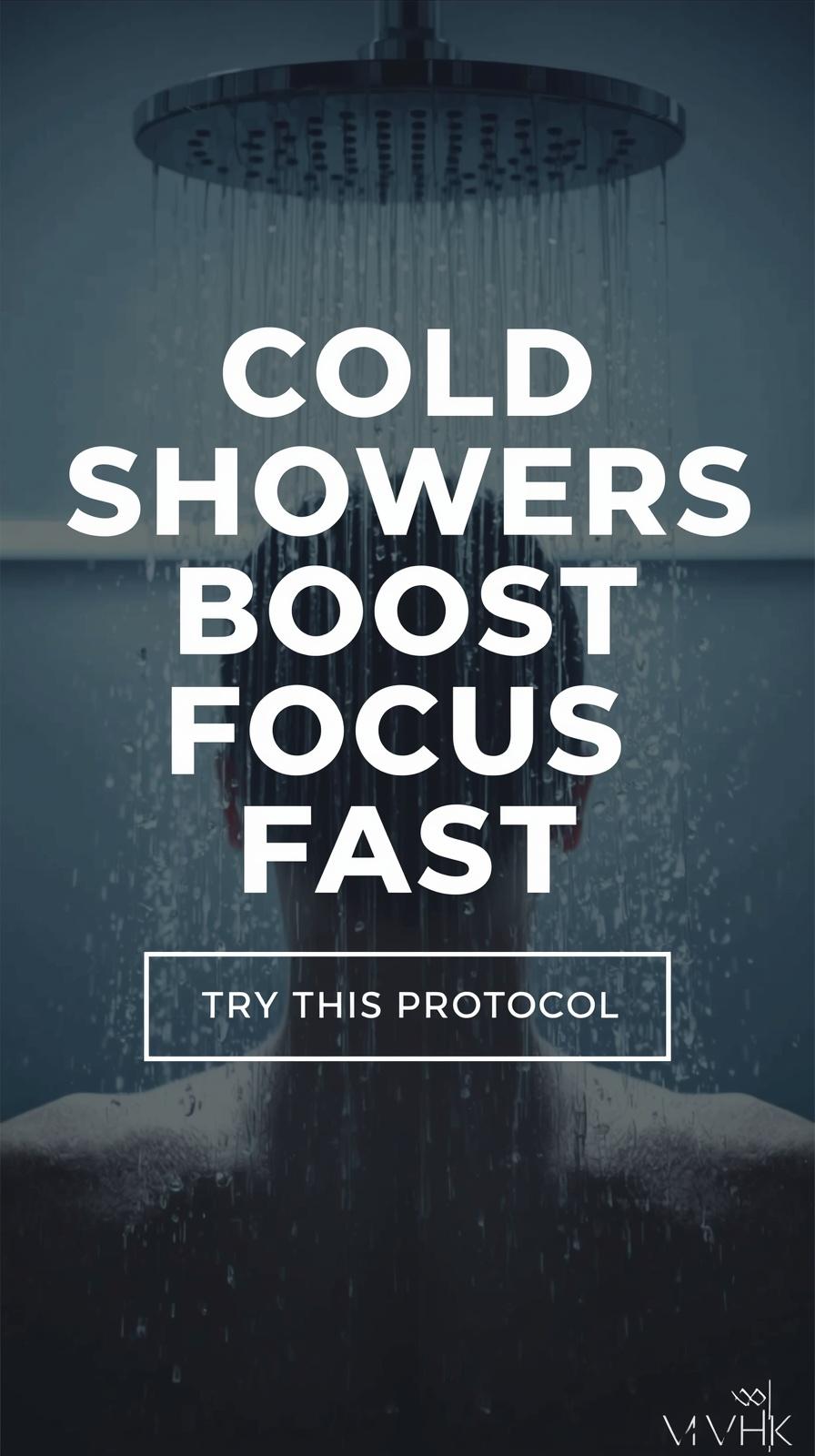
Direct answer: Use short, consistent cold exposure sessions (2–5 minutes, <15°C) multiple times per week, focusing on adaptation—not intensity.
Practical Protocol (High ROI)
Baseline Protocol:
- Duration: 2–5 minutes
- Temperature: below 15°C
- Frequency: 3–5× per week
- Timing: morning or before cognitive work
Week-by-Week Adaptation
Week 1:
- 30–60 seconds cold finish after warm shower
- Focus: breathing control
Week 2:
- 1–2 minutes continuous cold
- Reduce resistance response
Week 3:
- 2–3 minutes
- Stable breathing, minimal shock
Week 4:
- 3–5 minutes
- Full adaptation phase
Key Execution Rules
- Do not rely on “shock exposure”
- Avoid ultra-short (<30s) ineffective sessions
- Prioritize consistency over intensity
Safety Notes
Cold exposure is not risk-free.
Risks include:
- Blood pressure spikes
- Cardiac stress
- Arrhythmia risk in predisposed individuals
Avoid if:
- You have cardiovascular conditions
- You experience dizziness or chest discomfort
Disclosure: affiliate link. I earn a small commission at no additional cost to you if you purchase through this link.
What Advanced Strategies Improve Results?
Direct answer: Combine cold exposure with heat, training, and timing strategies to amplify adaptation.
1. Contrast Therapy (Cold + Sauna)
Alternating cold and heat may:
- Enhance vascular flexibility
- Improve recovery
- Increase autonomic resilience
Supported by research in The Lancet and NEJM on heat exposure benefits.
2. Timing with Training
- Before mental work: boosts alertness
- After strength training: avoid immediately (may blunt hypertrophy signaling)
- After endurance training: potentially beneficial
3. Biomarker Tracking
Track:
- Resting heart rate
- HRV (heart rate variability)
- Subjective energy
Wearables help personalize exposure dose.
4. Stacking with Circadian Optimization
Morning cold exposure:
- Reinforces wakefulness signals
- Aligns with cortisol awakening response
- Improves daily energy rhythm
What Results Can You Realistically Expect?
Direct answer: Expect immediate alertness and gradual improvements in stress tolerance—not permanent dopamine elevation.
Short-Term (First Week)
- Increased wakefulness
- Elevated mood
- Reduced perceived fatigue
Medium-Term (2–4 Weeks)
- Improved stress resilience
- Faster recovery from mental fatigue
- Better emotional regulation
Long-Term (Months)
- Enhanced autonomic balance
- Improved metabolic flexibility
- Greater tolerance to discomfort
Anti-Hype Reality
- No permanent dopamine increase
- No direct IQ or memory boost
- Not a substitute for sleep, nutrition, or exercise
Cold exposure is a tool—not a foundation.
4-Week Practical Action Plan
Week 1:
- 30–60s cold finish
- Focus on breathing
Week 2:
- 1–2 min continuous cold
- Build tolerance
Week 3:
- 2–3 min exposure
- Add 3–4 sessions/week
Week 4:
- 3–5 min full protocol
- Optional: add sauna contrast
Frequently Asked Questions
1. Is cold exposure the “best dopamine hack”?
No. While dopamine increases acutely, it doesn’t directly improve cognition. It enhances motivation and alertness, not intelligence or memory.
2. How cold does the water need to be?
Ideally below 15°C (59°F). Warmer water reduces the physiological stress response and limits adaptation.
3. Can I do cold showers every day?
Yes, but 3–5 times per week is sufficient for adaptation without excessive stress.
4. Should I do cold exposure after workouts?
Avoid immediately after strength training, as it may blunt muscle growth signaling. Timing matters.
5. Is longer always better?
No. Beyond 5–10 minutes, risks increase without proportional benefits. Adaptation—not endurance—is the goal.
References
- PubMed: Cold exposure and catecholamine response
- Nature: Brown adipose tissue and metabolism
- Cell: Mitochondrial adaptation and stress
- NEJM: Sauna and cardiovascular health
- The Lancet: Hormetic stress and longevity