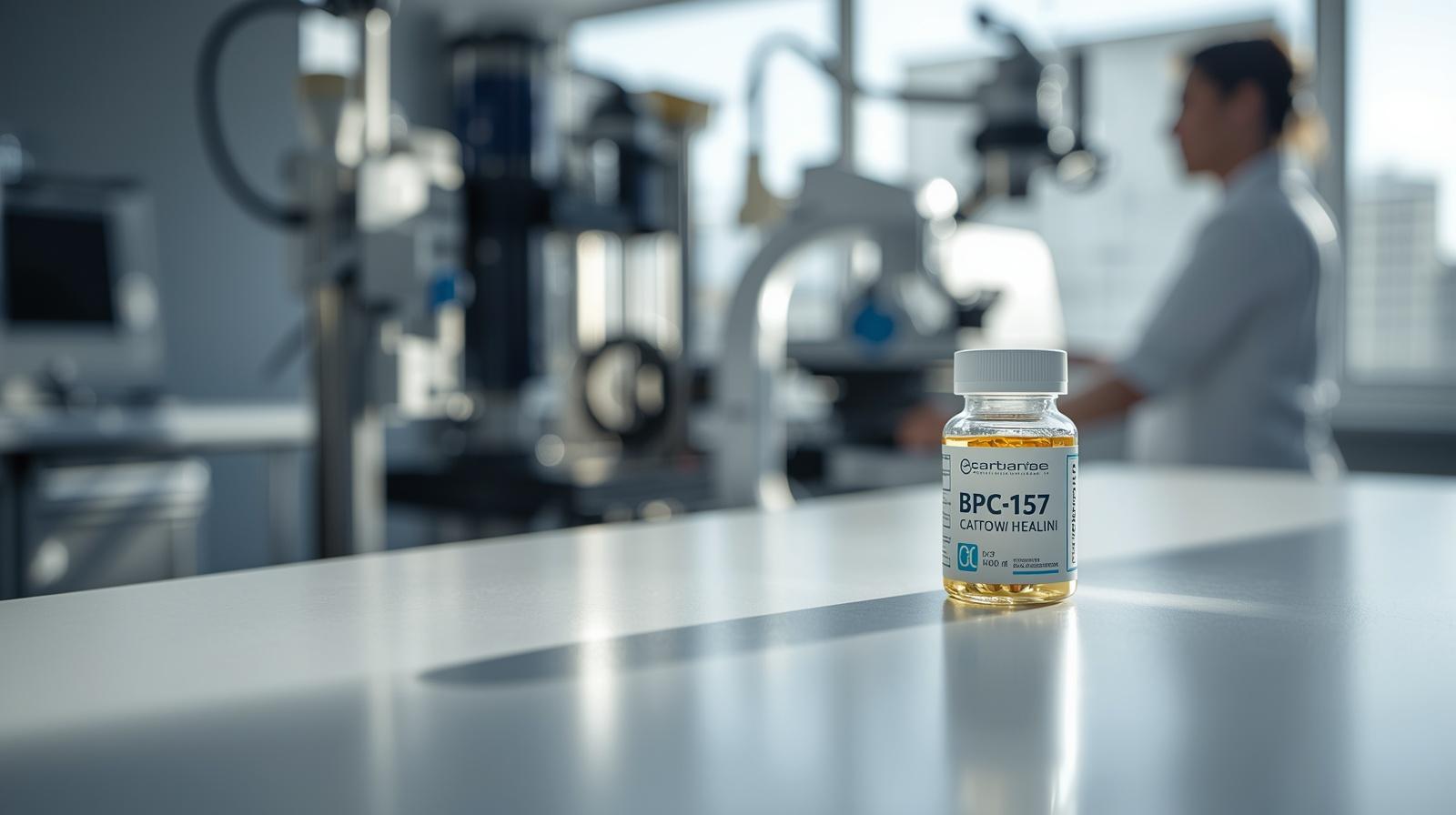
BPC-157 Benefits: What Human Research Actually Shows
💡 Key Takeaways
- BPC-157 shows promising effects in animal studies.
- Human evidence remains extremely limited.
- Long-term safety has not been established.
- Most online claims exceed the available clinical evidence.
- The strongest support exists for tissue healing mechanisms, not longevity.
Introduction
BPC-157 has become one of the most discussed peptides in sports recovery and biohacking circles. Many users claim it accelerates tendon healing, reduces pain, and improves recovery after injury.
The problem is that most of the enthusiasm comes from animal studies rather than large human clinical trials. The latest narrative review published in 2025 highlights both the potential and the major evidence gaps surrounding BPC-157.
Disclosure: affiliate link. I earn a small commission at no additional cost to you if you purchase through this link.
Why Researchers Are Interested in BPC-157
BPC-157 is a synthetic peptide derived from a protective protein sequence found in gastric juice.
Researchers believe it may:
- Promote angiogenesis
- Improve blood vessel formation
- Enhance collagen organization
- Support tendon and ligament repair
- Modulate inflammatory pathways
These mechanisms are biologically plausible and repeatedly observed in preclinical studies.
The Strongest Evidence
The best evidence currently comes from animal models.
Studies consistently report improvements in:
- Tendon healing
- Ligament repair
- Muscle regeneration
- Soft tissue recovery
This consistency across multiple experimental models explains why BPC-157 remains a major research topic.
The Human Evidence Problem
The most important takeaway from the 2025 review is that human data remains scarce.
Only a limited number of:
- Pilot studies
- Observational reports
- Small clinical investigations
have been published.
Large randomized controlled trials are largely absent.
This creates a major disconnect between marketing claims and scientific certainty.
A Non-Obvious Insight
Most people assume BPC-157 is controversial because the results are weak.
The reality is different.
The biggest problem is not negative results.
It’s the absence of high-quality human data.
If future trials confirm the animal findings, BPC-157 could become an important regenerative medicine tool. Right now, researchers simply do not know.
Practical Application
For healthy adults interested in recovery:
- Focus first on sleep quality
- Maintain adequate protein intake
- Follow progressive rehabilitation programs
- Address inflammation through proven lifestyle interventions
These strategies have substantially stronger evidence than BPC-157.
Limitations & Risks
Current limitations include:
- Unknown long-term safety
- Lack of standardized dosing
- Limited human efficacy data
- Variable product quality
- Regulatory uncertainty
These factors should not be ignored.
Realistic Expectations
The available evidence does not support viewing BPC-157 as:
- An anti-aging therapy
- A longevity intervention
- A performance-enhancing breakthrough
The most realistic expectation is that it may eventually prove useful for tissue repair if future human trials confirm current findings.
Optional Action Plan
- Optimize sleep.
- Increase daily protein intake.
- Follow evidence-based rehabilitation.
- Monitor future human peptide research.
- Avoid assuming animal results automatically apply to humans.
FAQ
Does BPC-157 have proven human benefits?
Not yet. Human evidence remains limited.
Is BPC-157 approved by the FDA?
No.
Is BPC-157 a longevity peptide?
Current evidence does not support longevity claims.
Why do people use it?
Primarily for injury recovery and tissue repair goals.
References
McGuire FP, Martinez R, Lenz A, Skinner L, Cushman DM. Regeneration or Risk? A Narrative Review of BPC-157 for Musculoskeletal Healing. Curr Rev Musculoskelet Med. 2025;18(12):611-619. PMID: 40789979
https://pubmed.ncbi.nlm.nih.gov/40789979/