Stress Mindset: How Beliefs Rewire Your Biology
💡 Key Takeaways
- Stress perception directly alters physiological response
- Belief-driven modulation impacts cortisol and inflammation
- Reframing stress improves resilience and performance
- Chronic threat perception accelerates biological aging
Introduction
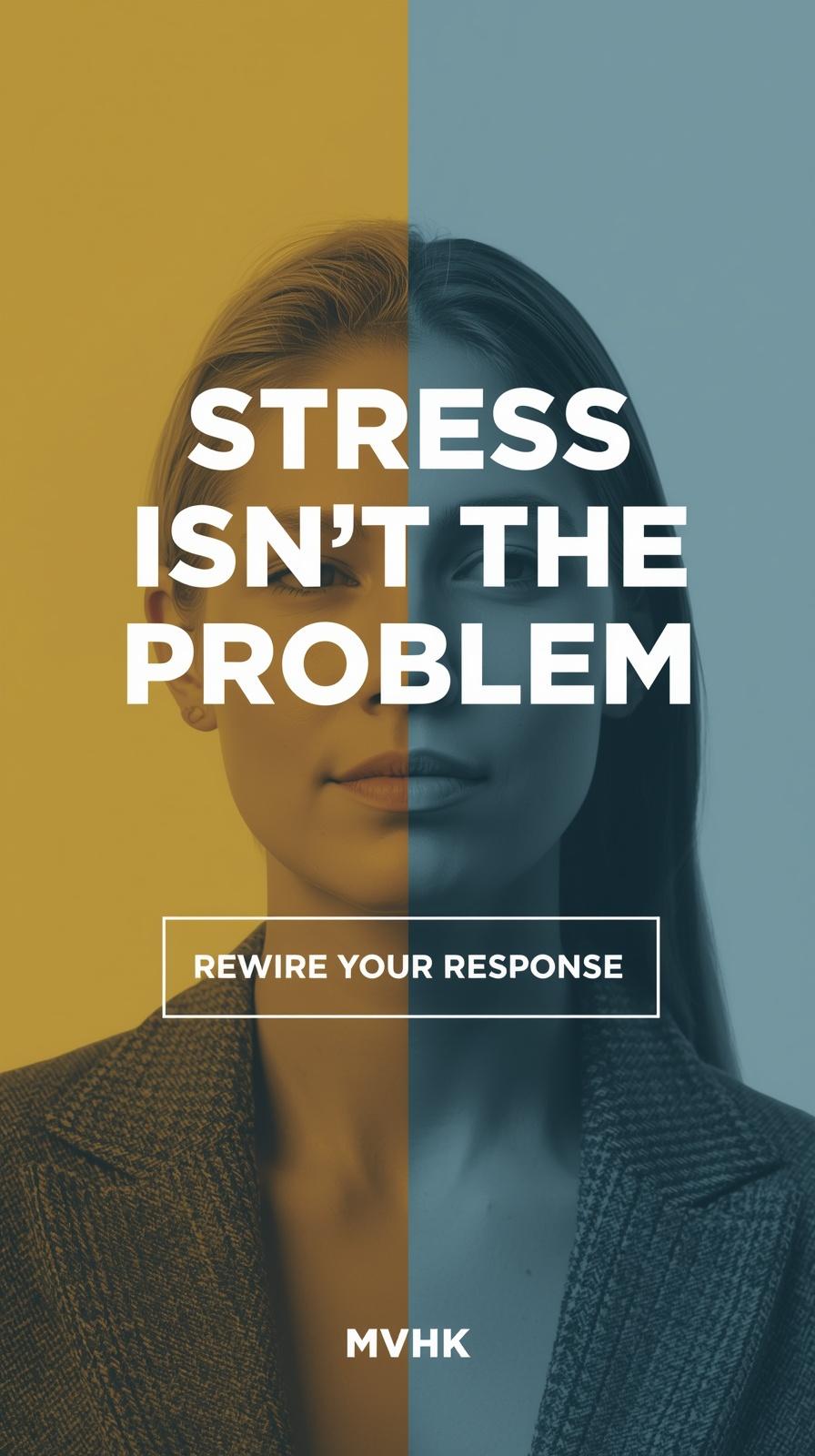
The conventional model treats stress as inherently harmful—but that assumption is biologically incomplete. Research from Stanford psychologist Alia Crum shows that stress mindset—your belief about stress—directly shapes how your body responds at a cellular and systemic level.
This isn’t motivational framing. It’s a measurable physiological shift.
When stress is perceived as a threat, the body amplifies cortisol, inflammation, and vascular constriction. When perceived as adaptive, the same stimulus triggers improved cardiovascular efficiency and reduced inflammatory signaling.
The implication for longevity is critical: chronic negative stress perception may accelerate aging pathways, while adaptive framing may buffer them.
What Is the Science Behind Stress Mindset?
Stress mindset refers to the cognitive interpretation of stress as either harmful or enhancing—and it directly modulates biological systems.
Direct Answer:
Your brain’s interpretation of stress determines whether your body activates damage pathways or adaptive resilience mechanisms.
Mechanisms:
1. Cortisol Regulation (Evidence-supported)
Negative stress perception leads to prolonged cortisol elevation, linked to:
- Insulin resistance
- Visceral fat accumulation
- Immune suppression
Positive stress framing produces shorter, more efficient cortisol spikes.
2. Cardiovascular Response (Evidence-supported)
Threat mindset → vasoconstriction
Challenge mindset → vasodilation
This distinction impacts long-term cardiovascular risk.
3. Inflammation Pathways (Evidence-supported)
Chronic psychological threat increases:
- IL-6
- CRP
- TNF-alpha
These markers are directly associated with aging and disease.
4. Brain Aging (Hypothesis-supported)
Perceived chronic stress accelerates:
- Amygdala hyperactivation
- Hippocampal shrinkage
Adaptive perception may mitigate these effects.
5. Mitochondrial Efficiency (Hypothesis-supported)
Emerging research suggests stress perception influences:
- Energy production efficiency
- Oxidative stress load
Your perception shapes your biology. Train it
How Do You Apply Stress Mindset Correctly?
You shift stress biology by systematically retraining interpretation patterns.
Direct Answer:
You must repeatedly reinterpret stress signals as adaptive cues until your physiological response recalibrates.
Step-by-Step Protocol:
Week 1: Awareness Phase
- Identify stress triggers
- Label physical sensations (heart rate, tension)
- Avoid immediate negative interpretation
Week 2: Cognitive Reframing
- Replace “this is harmful” with “this is preparation”
- Associate stress with performance readiness
- Journal stress-response patterns
Week 3: Behavioral Integration
- Act immediately under stress instead of delaying
- Use stress energy for focused action
- Reinforce successful outcomes
Week 4: Automatic Conditioning
- Stress becomes a cue for engagement
- Reduced hesitation and anxiety
- Improved recovery time
Safety Notes:
- This does NOT apply to chronic burnout or trauma
- Severe stress requires clinical intervention
- Overexposure without recovery remains harmful
What Advanced Strategies Improve Results?
Direct Answer:
You enhance stress adaptation by combining mindset training with physiological optimization.
1. Breath Control (Circadian Optimization)
- Slow exhale breathing reduces sympathetic overload
2. HRV Tracking (Wearables)
- Monitor recovery capacity
- Adjust stress exposure accordingly
3. Cold Exposure (Hormetic Stress)
- Reinforces adaptive stress signaling
4. Glucose Stability (Insulin Sensitivity)
- Prevents stress-induced metabolic dysfunction
5. VO2 Max Training
- Improves resilience to physiological stress
Your body listens to your mind. What are you telling it?
What Results Can You Realistically Expect?
Direct Answer:
You can expect improved stress tolerance, better metabolic stability, and reduced inflammatory burden over time.
Short-Term (1–2 weeks):
- Reduced anxiety response
- Faster recovery after stress
Mid-Term (3–6 weeks):
- Improved focus under pressure
- Better emotional regulation
Long-Term (2–6 months):
- Lower baseline cortisol
- Improved cardiovascular markers
- Reduced chronic inflammation
Anti-Hype Reality:
- This does not eliminate stress
- It changes your biological response to it
- Benefits depend on consistency
4-Week Practical Action Plan
Week 1:
Track stress triggers and reactions daily
Week 2:
Implement reframing language during stress
Week 3:
Pair stress with immediate action
Week 4:
Measure improvements (HRV, mood, recovery)
Repeat cycle and refine.
Frequently Asked Questions
1. Is stress ever actually harmful?
Yes. Chronic, unmanaged stress with negative perception increases disease risk. The key variable is duration and interpretation.
2. Can mindset alone override biology?
No, but it significantly modulates physiological pathways, especially hormonal and inflammatory responses.
3. How fast does stress mindset change?
Initial shifts occur within weeks, but durable changes require consistent reinforcement over months.
4. Does this apply to physical stress (exercise)?
Yes. Perception influences adaptation, recovery, and performance outcomes.
5. Is this scientifically proven?
Yes—supported by research published in journals like Nature, NEJM, and Health Psychology.
References
- Crum AJ et al. Health Psychology
- McEwen BS. NEJM
- Sapolsky RM. Nature Reviews Neuroscience
- Cohen S. Psychological Science
- Epel ES. PNAS