The Food Matrix: Why Structure Changes Everything
Introduction
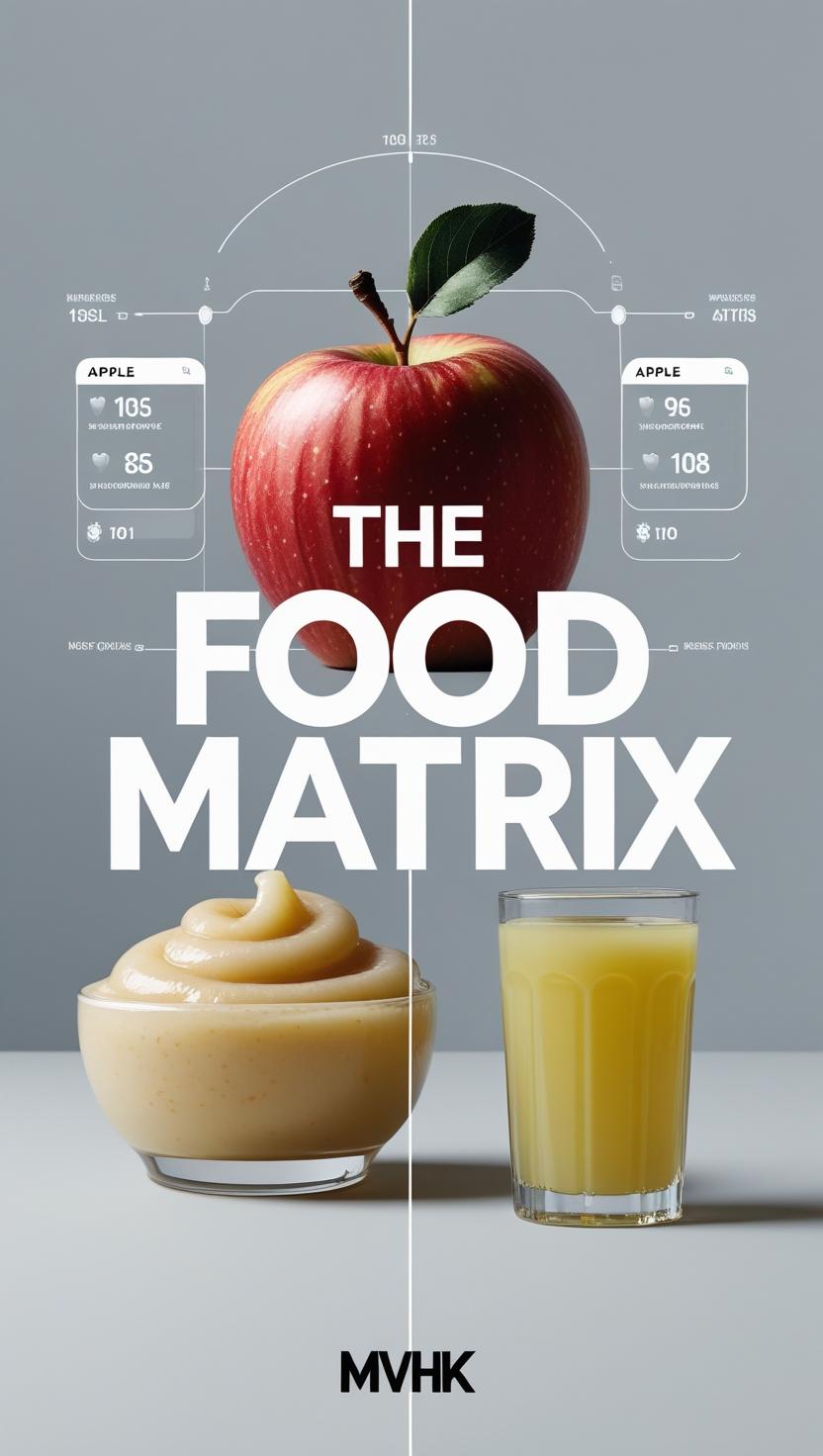
How much does an apple really differ from a glass of apple juice? According to calorie counts—barely. But ask your metabolism, and you’ll get a very different answer. The “food matrix” concept is transforming our understanding of nutrition by showing that structure—not just nutrients—plays a vital role in how food affects our health. In this article, we’ll explore how the food matrix influences digestion, satiety, and long-term metabolic wellness.
🎯 The Science Behind the Food Matrix
Latest Research
Studies from Harvard and the European Food Safety Authority confirm that even when foods contain the same nutrients, differences in structure—fibers, cellular makeup, and processing level—change how they’re absorbed. For instance, a 2019 review in The American Journal of Clinical Nutrition found that whole almonds release fewer calories than almond butter due to intact cell walls.
Mechanisms
The food matrix affects:
- Digestive speed: Whole foods slow gastric emptying.
- Hormonal response: Structured foods trigger more satiety hormones.
- Microbiome interaction: Less processed foods feed beneficial gut bacteria more effectively.
Expert Opinions
Dr. Dariush Mozaffarian of Tufts University notes: “The food matrix is as important as what’s in the food. We can’t reduce health to macronutrient labels anymore.”
💪 Implementation Guide
Getting Started
Focus on minimally processed foods. Instead of juices, opt for whole fruits. Choose steel-cut oats over instant oatmeal. The goal: maintain structural integrity.
Progression Strategies
- Add raw veggies instead of puréed soups.
- Replace energy bars with whole nuts.
- Incorporate slow-digesting carbs like quinoa or bulgur.
Common Mistakes
- Relying on smoothies as full meals.
- Believing “low-calorie” means “healthy.”
- Ignoring fiber degradation in cooked/blended items.
🚀 Advanced Techniques
Personalization
Biometric tracking tools (like Lumen, Zoe, and Levels) can help analyze individual glycemic responses to different food structures—enabling smarter choices based on personal data.
Technology Integration
Use continuous glucose monitors (CGMs) to see how a piece of bread vs. intact grains impact your glucose. Pair this with food journaling apps that categorize processing levels.
Sustainability
Eating structurally intact foods typically aligns with whole, plant-forward diets—better for both you and the planet.
📊 Results & Success Stories
Case Studies
One study from the University of Sydney found that participants eating minimally processed foods lost 2x more fat compared to those on a calorie-matched processed diet.
Measurable Outcomes
Users of the Zoe program saw a 60% improvement in gut health markers when choosing foods with intact matrices.
Community Feedback
Health forums like MyFitnessPal and Reddit show growing awareness. One user shared: “Once I switched from fruit smoothies to whole fruit, my energy stabilized!”
🎯 Action Plan: Start Today
Week 1-2: Foundation
- Swap processed snacks with whole options.
- Keep a food matrix log: track how different forms affect satiety.
Week 3-4: Progression
- Introduce more intact whole grains.
- Use CGMs or food response apps to personalize intake.
Long-term Maintenance
- Continue emphasizing structural diversity.
- Reframe “calories in, calories out” to “structure in, health out.”
FAQ Section
What is the food matrix in nutrition?
The food matrix refers to the physical and chemical structure of food—how nutrients are embedded in fiber, cells, or protein structures—which impacts digestion and absorption.
Does blending food affect its health benefits?
Yes. Blending can break down fiber and alter how quickly sugars are absorbed, often spiking blood glucose more than whole versions.
How can I implement the food matrix concept daily?
Choose whole versions of foods (like fruits, grains, and legumes), minimize ultra-processed options, and pay attention to how your body responds.
How long to see benefits?
You may notice improved satiety and more stable energy within 1-2 weeks. Gut health and weight changes may take a month or more.
Is this approach safe for everyone?
Generally yes, but those with digestive issues may need gradual transitions. Consult a dietitian if unsure.