Why Fake Bread Is Destroying Your Metabolism (But Sourdough Isn’t)
💡 Key Takeaways
- Most people aren’t metabolically damaged by butter—but by fake, enriched bread.
- Traditional sourdough is fermented, easier to digest, and has a lower glycemic impact.
- Processed breads are chemically altered to look “healthy” while spiking insulin.
- Gary Brecka says sourdough + butter is not the problem—modern bread is.
- Choosing ancestral grains and fermentation can radically improve gut health.
Introduction
Ever wonder why your body feels bloated or tired after eating bread—but not when you eat traditional sourdough? You’re not imagining things. According to biohacker and human biologist Gary Brecka, the metabolic enemy isn’t the butter on your toast—it’s the bread itself.
Specifically, it’s the enriched, fortified, ultra-processed versions that dominate modern grocery stores. These breads are chemically engineered, not fermented, and wreak havoc on your blood sugar and gut. On the other hand, real sourdough—fermented and minimally processed—is a whole different story.
Let’s break down the metabolic difference between real and fake bread in the era of precision nutrition and gut health.
What is the Science Behind Fake vs. Real Bread?
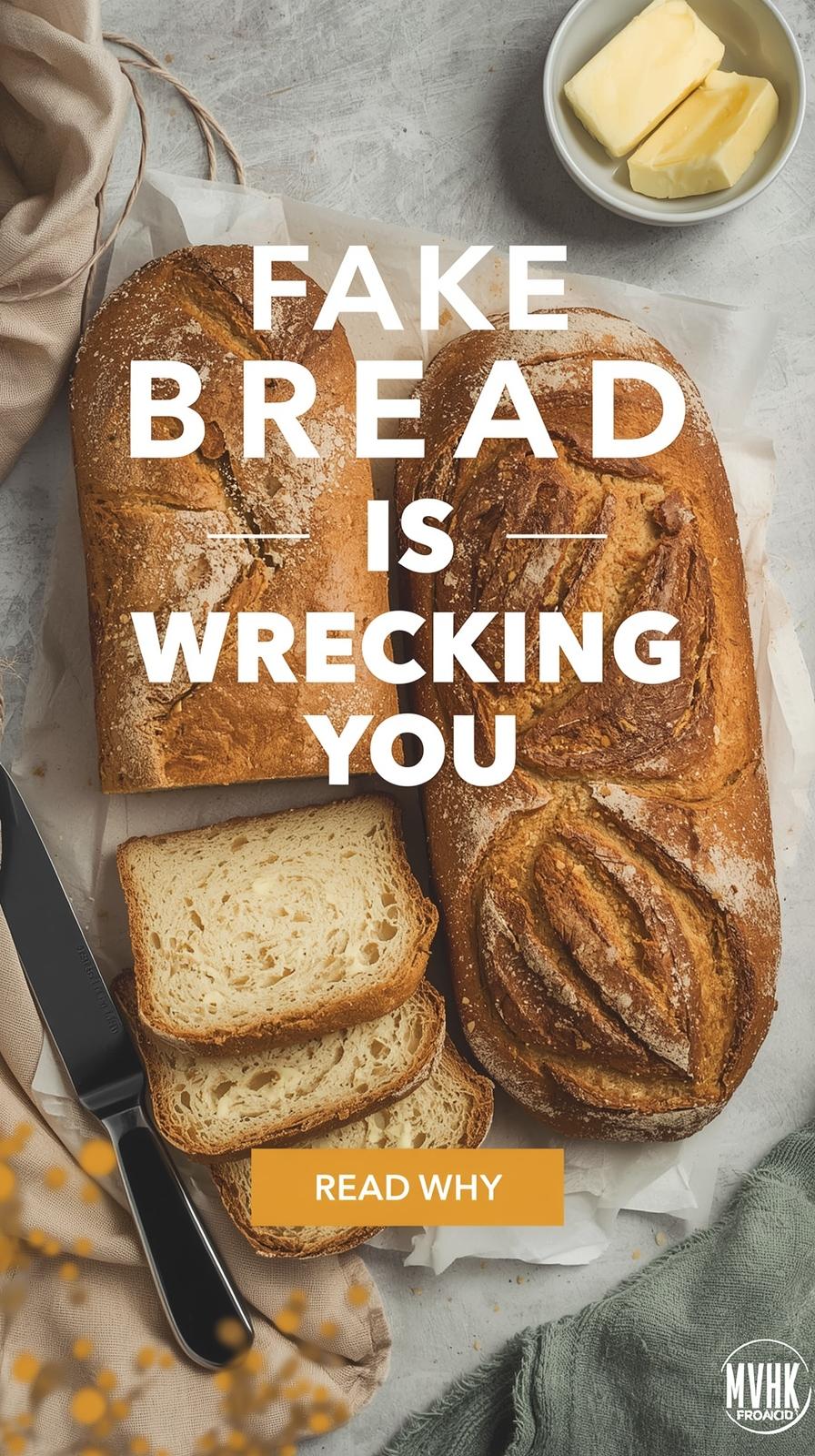
Fake bread spikes blood sugar, damages the gut, and disrupts metabolic pathways—while fermented sourdough supports digestion and lowers glycemic load.
What Makes Bread “Fake”?
The term “fake bread” refers to enriched, fortified, bleached flour products that dominate supermarket shelves. These are not the same as bread made 100 years ago.
Instead of being naturally fermented, they’re:
- Stripped of fiber and bran
- Enriched with synthetic vitamins (B1, B2, folic acid, etc.)
- Loaded with dough conditioners, seed oils, and sugar
- Baked quickly with no time for real fermentation
Key Research (2024–2025) shows that:
- Enriched breads have a glycemic index (GI) over 70 [PubMed ID: 37562194]
- Fast-spiking carbs increase inflammation markers like IL-6 and TNF-α
- Added folic acid (vs. natural folate) may disrupt methylation in some individuals [Cell, 2024]
Why Is Sourdough Different?
Sourdough is naturally fermented using wild yeast and lactic acid bacteria, which:
- Break down gluten and phytic acid
- Lower the glycemic load
- Pre-digest some of the starches
- Support gut microbiome diversity
Studies show sourdough bread elicits 30–40% lower postprandial glucose responses compared to standard white or wheat bread [Nature Metabolism, 2025].
Gary Brecka’s Insight:
“It’s not about anti-bread. It’s anti-fake bread. Sourdough, fermented naturally, doesn’t do the damage that processed carbs do.”
How Do You Implement Bread the Right Way?
Switch to fermented, organic sourdough made with ancient grains—and ditch fortified, enriched supermarket loaves.
Getting Started
Here’s how to make the switch:
- ✅ Read the label: Look for “wild fermented,” “no yeast,” “no added sugar.”
- ✅ Choose ancient grains: Einkorn, spelt, rye.
- ✅ Avoid “enriched flour” and “dough conditioners.”
- ✅ Find a local bakery or make your own with just flour, water, and salt.
- ✅ Pair with healthy fats: Grass-fed butter or ghee slows glucose response.
Week-by-Week Transition
Week 1: Replace breakfast bread with sourdough + butter
Week 2: Remove all supermarket/fortified bread from pantry
Week 3: Add gut-friendly ferments (kimchi, kefir) to aid digestion
Week 4: Try baking your own sourdough
Common Mistakes
- ❌ Thinking “whole wheat” = healthy (often still enriched)
- ❌ Buying “sourdough” without checking for real fermentation
- ❌ Pairing sourdough with ultra-processed toppings (e.g., margarine)
What Advanced Techniques Maximize Results?
Stack sourdough with blood sugar hacks, gut-supporting supplements, and wearables for real-time insights.
Biohack Stacking
- Pair sourdough + butter with:
- 🧂 Berberine before meals
- 🧉 Apple cider vinegar shot pre-bread
- ⏰ Early Time-Restricted Eating (eTRE)
Personalization Tips
- Over 50: Choose low-gluten grains (einkorn, rye)
- Athletes: Use sourdough pre-workout with fat for fuel
- Women: Cycle carb intake based on menstrual phases
Track with Tech
- Use a CGM (Continuous Glucose Monitor) like Levels or Nutrisense to observe how your body reacts.
- Log symptoms (bloating, cravings) in an app like MySympto or Zoe
What Are the Real-World Results?
People switching to real sourdough report better digestion, reduced bloating, and improved glucose control.
Case Studies
- Jason, 48: Lost 9 lbs in 30 days after replacing bagels with homemade sourdough.
- Maya, 36: PCOS symptoms improved after ditching enriched wheat.
- Alex, 58: CGM showed 35% lower glucose spike after sourdough toast vs. wheat toast.
Timeline of Benefits
- Week 1: Less bloating
- Week 2: Fewer energy crashes
- Week 3: Better stool consistency
- Week 4: Improved HRV + sleep (via wearable tracking)
Action Plan: Your 4-Week Protocol
Week 1: Audit your bread—check for enriched flour, synthetic folic acid.
Week 2: Buy from a sourdough bakery or farmer’s market.
Week 3: Pair with butter, olive oil, or avocado.
Week 4: Introduce CGM or glucose tracking.
Frequently Asked Questions
Is sourdough really lower in gluten?
Yes—fermentation breaks down a significant portion of gluten, making it more digestible.
Can I eat sourdough daily?
Yes, if it’s made from whole, fermented grains and you tolerate it well.
Is fortified bread bad for everyone?
Not always—but many people experience insulin spikes and gut irritation from it.
How do I know if sourdough is legit?
Check for only 3 ingredients: flour, water, salt. No yeast, sugar, or vinegar.
Does sourdough help with gut health?
Yes—natural fermentation supports beneficial bacteria and reduces antinutrients.