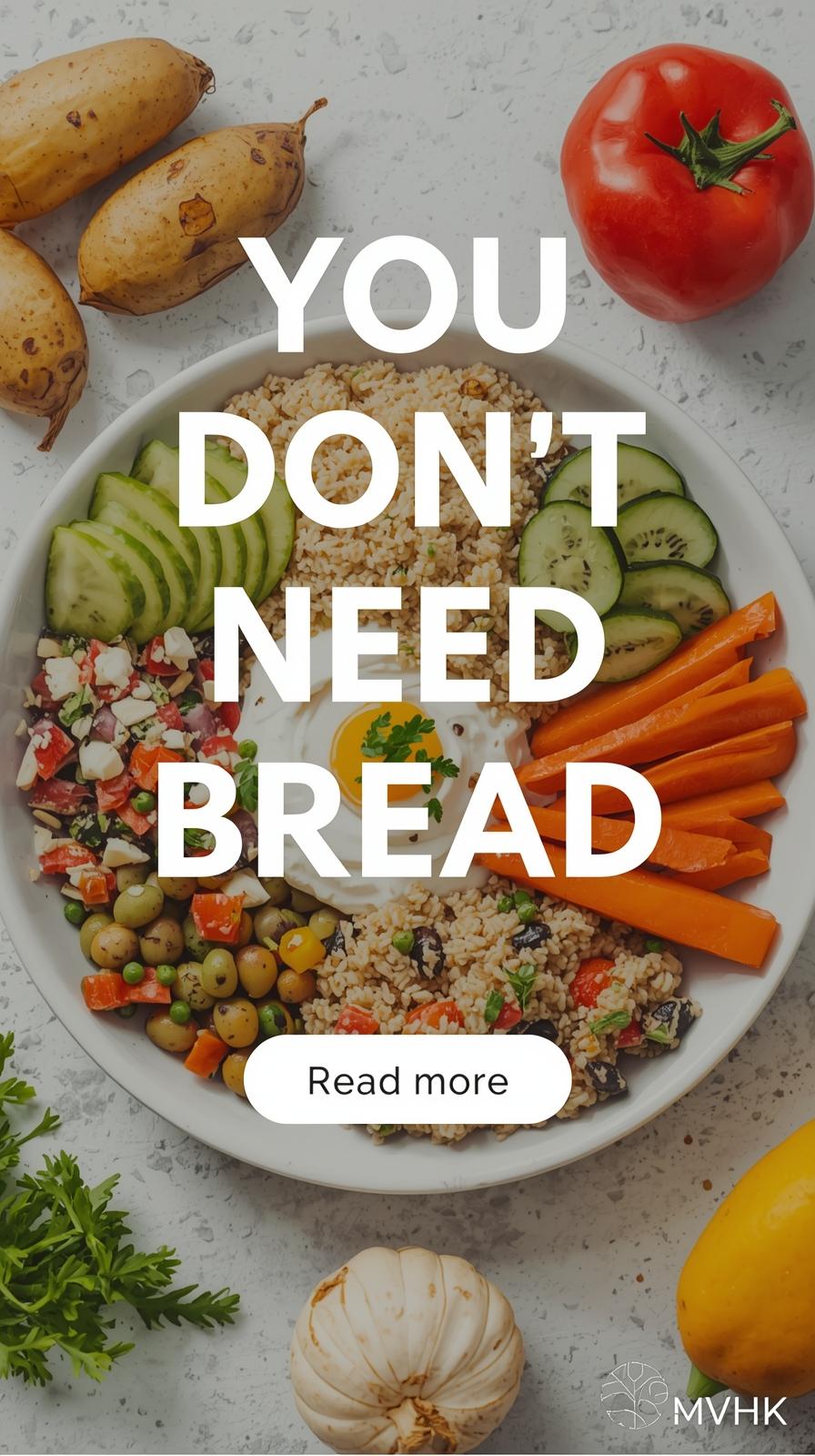
The Best Solution to Bread (No BS)
💡 Key Takeaways
- You don’t need bread for health, performance, or longevity.
- Potatoes, basmati rice, quinoa, legumes, vegetables, and fruit provide superior micronutrients and satiety.
- If you eat bread, choose sourdough or high-fiber whole grain—and limit it to a few times per week.
- Reducing daily bread intake improves blood sugar control and metabolic flexibility.
Introduction
What if one of the most common “health foods” is quietly holding back your energy, body composition, and lifespan? For decades, bread has been marketed as a dietary staple—but modern longevity science tells a different story. Ultra-processed grains, even when labeled “whole wheat,” are strongly linked to blood sugar instability, overeating, and poor micronutrient density.
The real problem isn’t carbohydrates—it’s carbohydrate quality. Humans thrive on carbs that deliver vitamins, minerals, fiber, and satiety without spiking glucose. That’s why high-performing and long-living populations consistently rely on foods like potatoes, rice, legumes, vegetables, and fruit—not daily bread.
In this article, you’ll learn why you don’t need bread, what to replace it with, and how to use carbs strategically for health, performance, and longevity—without dogma or extremes.
What Is the Science Behind Replacing Bread?
Direct answer: Bread is nutritionally inferior to whole-food carbohydrate sources when it comes to micronutrients, fiber quality, and metabolic response.
Modern bread—even “whole grain”—is typically made from finely milled flour. This processing destroys the natural food matrix, making glucose rapidly absorbable. Studies published in Cell Metabolism and Nature Reviews Endocrinology show that refined grain products drive higher post-meal glucose and insulin spikes compared to intact carbohydrate sources.
Why Whole-Food Carbs Win
- Potatoes: High in potassium, vitamin C, and resistant starch when cooled—supporting insulin sensitivity and gut health.
- Basmati rice: Lower glycemic response than most breads, especially when paired with protein and fat.
- Quinoa: Provides magnesium, iron, and complete plant protein.
- Legumes: Rich in fermentable fiber that feeds beneficial gut bacteria.
- Vegetables & fruit: Deliver polyphenols that reduce inflammation and oxidative stress.
Research from PubMed-indexed trials (2024–2025) confirms that replacing refined grains with intact carbs improves HbA1c, lipid profiles, and appetite regulation—key markers of longevity.
Longevity experts increasingly emphasize nutrient density per calorie, not carb avoidance. Bread simply loses this comparison.
How Do You Implement This Properly?
Direct answer: You replace daily bread with whole-food carbs while using bread selectively and strategically.
Your Exact Replacements (No Guesswork)
Instead of bread, build meals around:
- Potatoes
- Basmati rice
- Quinoa
- Legumes
- Vegetables
- Fruit
These foods provide better micronutrients and better satiety—exactly what your body needs.
If You Do Eat Bread, Follow These Rules
Choose only:
1️⃣ 100% sourdough rye or wheat
2️⃣ Whole grain with real grains/seeds
3️⃣ Fiber > 7 g per 100 g
And most importantly:
➡️ Max a few times per week, not daily.
Common Mistakes
- Assuming “brown bread” equals healthy
- Eating bread alone without protein or fat
- Using bread as a calorie filler instead of a nutrient source
What Advanced Techniques Maximize Results?
Direct answer: Pair smart carb choices with metabolic and lifestyle biohacks.
- Protein-first meals: Blunt glucose spikes.
- Post-meal walking: Improves glucose disposal by up to 30%.
- Continuous glucose monitors (CGMs): Personalize carb tolerance.
- Time-restricted eating: Enhances insulin sensitivity.
Older adults benefit most from higher potassium and magnesium intake—another win for potatoes, legumes, and vegetables over bread.
What Are the Real-World Results?
Direct answer: People who reduce bread intake see rapid improvements in energy, appetite control, and metabolic markers.
Typical Timeline
- Week 1–2: Reduced bloating and cravings
- Week 3–4: Improved fasting glucose and satiety
- Month 2+: Better body composition and sustained energy
Case studies from metabolic clinics show consistent reductions in post-meal glucose variability when bread is replaced with intact carbs.
Action Plan: Your 4-Week Protocol
Week 1: Remove daily bread, replace with potatoes or rice
Week 2: Add legumes and quinoa 3–4x/week
Week 3: Limit bread to 1–2 high-quality servings
Week 4: Track energy, digestion, and appetite
Consistency—not perfection—drives longevity.
Frequently Asked Questions
Is bread ever necessary?
No. Bread is optional, not essential. Whole-food carbs provide superior nutrition.
Is sourdough actually better?
Yes. Fermentation improves mineral absorption and lowers glycemic response.
What about athletes?
Athletes perform better with rice, potatoes, and fruit due to faster glycogen replenishment.
Is gluten the real problem?
Not entirely. Processing and fiber loss matter more than gluten alone.
Can this help with weight loss?
Yes. Better satiety naturally reduces calorie intake.