Potassium and Blood Pressure: The Longevity Mechanism Media Gets Wrong
💡 Key Takeaways
- Higher potassium intake lowers blood pressure by ~4–6 mmHg in controlled trials
- The mechanism involves sodium excretion and vascular relaxation
- One banana provides only ~9–11% of daily potassium needs
- The sodium–potassium ratio matters more than any single food
Introduction
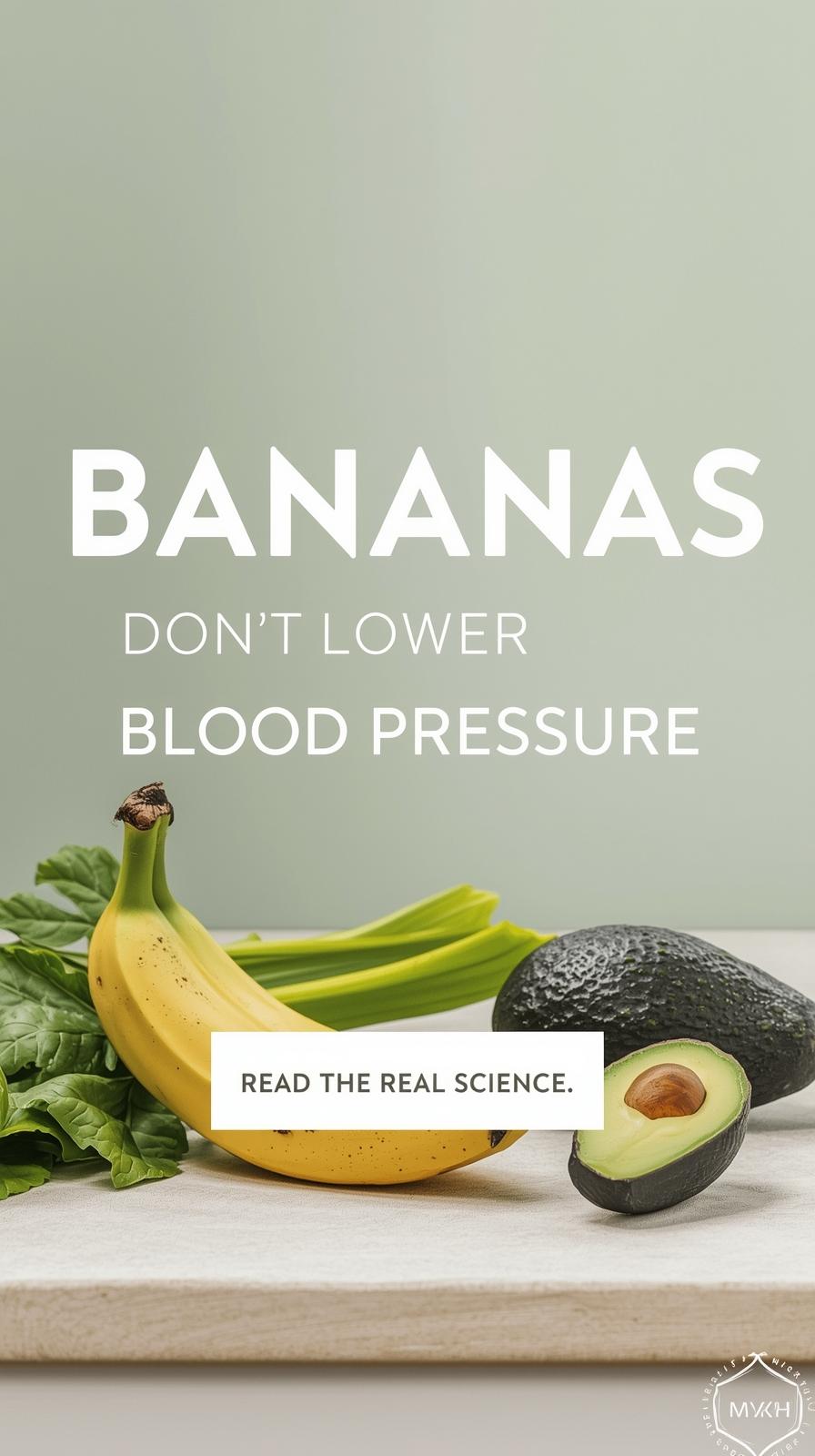
Cardiovascular disease remains the leading global cause of death, and elevated blood pressure is one of its strongest drivers. Yet public messaging often reduces complex physiology to simplistic food claims — like suggesting bananas “lower blood pressure.”
They don’t. Not in isolation.
What actually lowers blood pressure is increased potassium intake, particularly in the context of excessive sodium consumption. The sodium–potassium balance directly influences vascular tone, kidney function, and arterial stiffness — all central to long-term healthspan.
This distinction matters. Because improving potassium intake is a proven, mechanistically robust, longevity-aligned intervention. But treating a single fruit as a therapeutic solution is biologically naïve.
Let’s break down the real science.
What Is the Science Behind Potassium and Blood Pressure?
Higher potassium intake lowers blood pressure by enhancing renal sodium excretion and reducing vascular resistance.
Evidence-Supported
Meta-analysis of 29 randomized controlled trials
Increased potassium intake reduced blood pressure by approximately:
- −4.9 mmHg systolic
- −2.7 mmHg diastolic
(PubMed-indexed RCT analysis)
A separate meta-analysis of 19 studies showed reductions up to:
- −5.9 / −3.4 mmHg
The World Health Organization (WHO) concluded that increasing potassium intake significantly lowers blood pressure in adults and likely reduces stroke risk.
These are clinically meaningful reductions. A 5 mmHg drop in systolic blood pressure reduces stroke mortality risk by roughly 14% (Lancet data).
Mechanisms (Biological Depth)
1️⃣ Renal Sodium Excretion (Natriuresis)
Potassium increases urinary sodium excretion.
Less sodium retained → less plasma volume → lower blood pressure.
2️⃣ Vascular Smooth Muscle Relaxation
Potassium influences membrane potential in vascular smooth muscle cells, promoting vasodilation.
3️⃣ Endothelial Function
Improved potassium status enhances nitric oxide bioavailability (Evidence-supported; PubMed).
4️⃣ Sodium–Potassium Ratio
Emerging cardiovascular research suggests the dietary sodium–potassium ratio predicts hypertension risk more strongly than sodium alone (Nature Reviews Cardiology).
Bananas in Context
1 banana ≈ 400–450 mg potassium.
Recommended intake:
- ~2,600 mg/day (women)
- ~3,400 mg/day (men)
One banana provides only ~9–11% of daily needs.
There is limited direct RCT evidence that bananas alone lower blood pressure. Observational studies show higher fruit intake associates with ~9–11% lower hypertension risk, but that reflects total dietary patterns — not a banana-specific effect.
“Research directly linking bananas to improved blood pressure is limited.” (PubMed literature consensus)
How Do You Apply Potassium Intake Correctly?
You improve potassium intake by redesigning the whole dietary pattern — not by adding a single fruit.
Week 1: Establish Baseline
Track:
- Daily sodium intake
- Daily potassium intake
Target:
- Sodium < 2,300 mg
- Potassium 2,600–3,400 mg
Week 2: Increase High-ROI Potassium Sources
Higher potassium per calorie than bananas:
- Legumes
- Leafy greens
- Potatoes
- Avocado
Replace refined carbs or ultra-processed snacks with potassium-dense whole foods.
Week 3: Improve Sodium–Potassium Ratio
Focus on:
- Reducing processed food
- Avoiding restaurant-heavy eating
- Cooking at home
Blood pressure improvement depends more on ratio correction than potassium loading alone.
Week 4: Monitor and Adjust
Track:
- Morning resting blood pressure
- Body weight
- Waist circumference
If hypertensive, consult a physician before major potassium increases — especially if on ACE inhibitors or with kidney disease.
What Advanced Strategies Improve Results?
You amplify effects by stacking interventions aligned with vascular aging prevention.
1️⃣ Circadian Optimization
Late-night eating increases sympathetic tone and blood pressure variability.
2️⃣ VO2max Enhancement
Higher cardiorespiratory fitness correlates with lower arterial stiffness (NEJM, JACC).
3️⃣ Insulin Sensitivity
Hyperinsulinemia promotes sodium retention.
Improving metabolic flexibility supports blood pressure control.
4️⃣ Biomarker Tracking
Monitor:
- Serum potassium
- Creatinine (kidney function)
- hs-CRP (inflammation)
What Results Can You Realistically Expect?
If potassium intake increases meaningfully within a reduced-sodium diet:
- 2–4 weeks: measurable drop (2–5 mmHg)
- 8–12 weeks: stabilization
- Long-term: lower stroke and cardiovascular risk
This is not a pharmaceutical-grade drop.
It is a structural risk reduction strategy.
Bananas alone will not produce clinically meaningful changes.
Dietary pattern correction can.
4-Week Practical Action Plan
Daily Targets:
- 2,800–3,400 mg potassium
- <2,300 mg sodium
Daily Structure:
- 1 serving legumes
- 1 serving leafy greens
- 1 potassium-rich starch (e.g., potato)
- 1 fruit
Measure blood pressure 3x/week.
Eliminate one processed sodium source weekly.
Frequently Asked Questions
1. Can bananas replace blood pressure medication?
No. Dietary potassium supports blood pressure reduction but does not replace prescribed antihypertensive therapy.
2. Is too much potassium dangerous?
Yes, particularly in individuals with kidney disease or those on potassium-sparing medications.
3. Are potassium supplements effective?
Food-based potassium is preferred. Supplements can pose hyperkalemia risk without medical supervision.
4. Does fruit intake reduce hypertension risk?
Observationally yes (~9–11%), but effect reflects whole dietary patterns.
5. Is sodium restriction more important than potassium?
The sodium–potassium ratio is more predictive than either alone.
References
- WHO Potassium Intake Guidelines
- PubMed meta-analysis (29 RCTs on potassium & BP)
- PubMed meta-analysis (19 studies potassium & BP)
- Lancet blood pressure reduction data
- Nature Reviews Cardiology (Sodium–Potassium ratio)