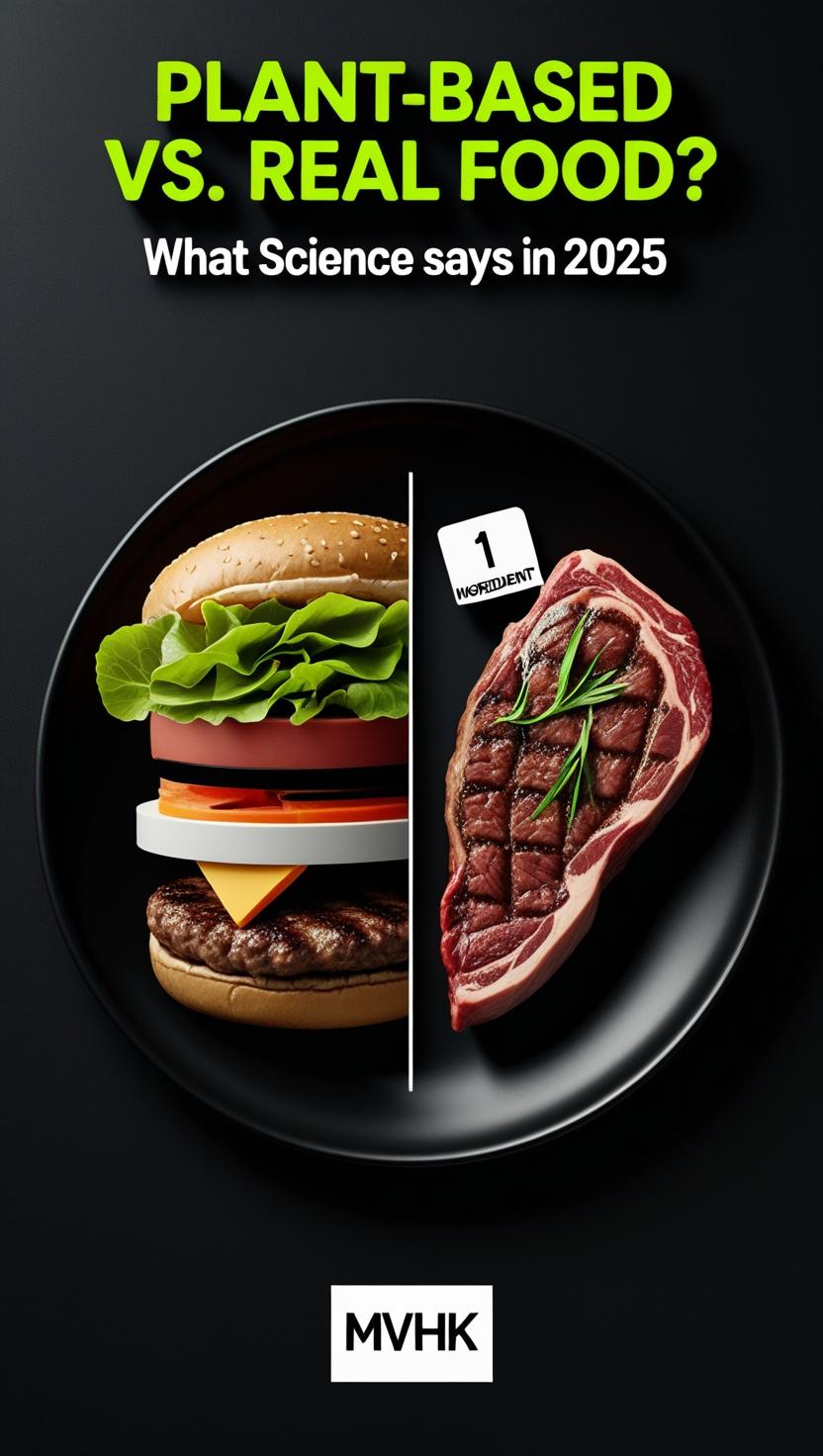
Plant-Based vs. Whole-Food Omnivore: What Science Actually Says in 2025
The global debate over plant-based diets versus omnivorous eating habits has intensified, especially as wellness culture and personal health technologies evolve. While plant-based advocates tout disease prevention and environmental sustainability, whole-food omnivores counter with ancestral eating and nutrient density arguments. But what does science actually say in 2025?
Here’s the surprising truth: Many of the studies that show benefits of plant-based diets often compare them against highly processed Standard American Diets. When we put plant-based eaters head-to-head with those consuming balanced, whole-food omnivore diets (including grass-fed meats, wild-caught fish, and tons of vegetables), the results get far more nuanced.
Let’s break down what current research reveals, how to implement a sustainable diet for your body, and how biometric personalization is reshaping the future of nutrition.
🌟 The Science Behind Plant-Based vs. Omnivore
Latest Research A 2024 review in the American Journal of Clinical Nutrition compared plant-based eaters to omnivores who focused on nutrient-dense, whole foods. The results? Nearly equal cardiovascular health, insulin sensitivity, and longevity markers — with omnivores showing a slight edge in muscle retention and mental clarity due to key nutrients like B12, creatine, and DHA.
Meanwhile, Harvard Health emphasizes that the real danger isn’t meat — it’s processed food. The majority of “bad meat” studies link disease to processed red meats like sausages and hot dogs, not grass-fed steak or free-range poultry.
Mechanisms Plant-based diets shine through their anti-inflammatory potential, fiber content, and diverse polyphenols. Omnivorous whole-food diets, however, provide superior levels of iron, B12, heme zinc, EPA/DHA, and all essential amino acids without supplementation.
Most crucially, both diets significantly outperform the Standard American Diet when built on whole, minimally processed ingredients.
Expert Opinions Dr. Gabrielle Lyon (Precision Medicine specialist) emphasizes, “Muscle-centric medicine is the future. Many plant-based diets fall short in supporting lean mass and resilience without heavy supplementation.”
Conversely, Dr. Michael Greger urges, “With proper planning, a plant-based diet can be nutrient-complete and disease-protective — but the key is ‘whole-food’, not ‘processed vegan.'”
💪 Implementation Guide
Getting Started Whether you lean plant-based or omnivore, start with this universal foundation:
- Prioritize whole, unprocessed foods
- Load up on fiber-rich plants
- Stay hydrated
- Avoid seed oils, refined sugars, and additives
If going omnivore, choose:
- Grass-fed or pasture-raised meats
- Wild-caught fatty fish (sardines, salmon)
- Organ meats (liver, kidney) in moderation
If plant-based:
- Rotate legumes and grains
- Use fermented soy (tempeh, miso)
- Fortify with B12, iron, and omega-3s
Progression Strategies
- Begin with a 30-day food journal using AI-assisted tools like Zoe or InsideTracker
- Slowly reduce ultra-processed foods
- Add strength training to improve nutrient partitioning
Common Mistakes
- Assuming all plant-based food is healthy (vegan junk food)
- Over-relying on supplements without bioavailability checks
- Demonizing all animal products
- Ignoring microbiome responses to different food types
🚀 Advanced Techniques
Personalization Using blood markers, microbiome testing, and wearable feedback (Oura, WHOOP), many in 2025 are customizing macros and food timing to match their biology.
People with MTHFR or APOE4 genotypes, for example, may thrive better with moderate animal fats and less grain-heavy diets.
Technology Integration Apps like NutriSense (CGM-based), Viome (gut-based), and Zoe (microbiome analysis) provide real-time feedback on how your body reacts to different diets — plant-based or omnivore.
Sustainability Omnivores can still support sustainability by choosing:
- Locally sourced meats
- Regenerative farms
- Nose-to-tail eating to reduce waste
Vegans should avoid overpackaged products and focus on in-season produce and legumes.
📊 Results & Success Stories
Case Studies
- Maria, 38, a plant-based remote worker: Achieved stabilized glucose levels and mental clarity after switching from processed vegan meals to whole legumes, leafy greens, and smart supplementation.
- James, 52, active father of three: Improved his cholesterol and lost 18 pounds with a whole-food omnivore plan rich in salmon, broccoli, lentils, and minimal grains.
Measurable Outcomes
- Lowered CRP levels
- Better lean mass retention in omnivores
- Improved gut diversity in both groups when fiber intake increased
Community Feedback Nutrition forums like r/Biohacking and Precision Nutrition’s community are seeing a trend toward flexible, mixed strategies rather than strict dietary camps.
🎯 Action Plan: Start Today
Week 1-2: Foundation
- Eliminate ultra-processed foods
- Focus on hydration, fiber, and whole proteins
- Begin sleep optimization
Week 3-4: Progression
- Add AI-assisted food tracking
- Personalize nutrient timing and ratios
- Increase exercise intensity
Long-term Maintenance
- Get annual bloodwork
- Monitor HRV, glucose, inflammation
- Cycle between fasting and nutrient-dense phases
🤔 Frequently Asked Questions
What diet is best for metabolic health in 2025? Both whole-food plant-based and omnivorous diets support metabolic health if they exclude ultra-processed foods and match your genetics, lifestyle, and biomarkers.
Is meat unhealthy even if it’s grass-fed? Not necessarily. Grass-fed meats contain more omega-3s, conjugated linoleic acid (CLA), and antioxidants. The real concern is overconsumption of processed meats and imbalance with fiber intake.
How do I know if plant-based is working for me? Track biofeedback: energy levels, mood, strength, and digestion. Use wearable tech or test kits (blood/glucose/microbiome) for confirmation.
How long before I see results switching diets? Most people feel significant improvements in 2-4 weeks. Blood markers typically shift in 6-12 weeks depending on consistency.
Is it safe to eat meat daily? If balanced with vegetables, whole grains, and healthy fats, eating moderate portions of unprocessed meat daily is generally safe for most people.
https://www.health.harvard.edu/staying-healthy/the-right-plant-based-diet-for-you