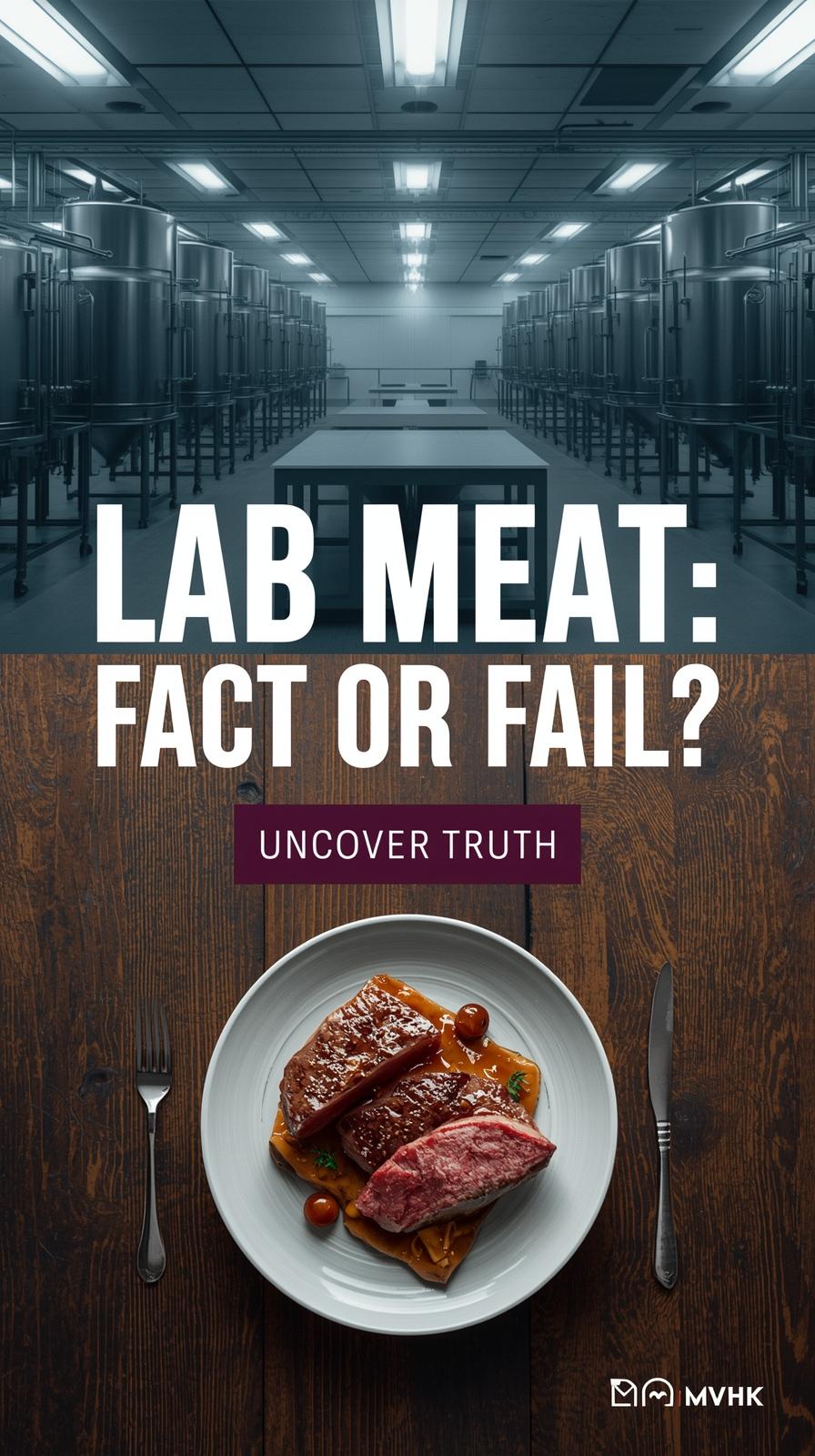
Lab-Grown Meat: Revolution or Just Food Hype?
💡 Key Takeaways
- Lab-grown meat is now legal in Australia—starting with Vow’s quail foie gras.
- It’s marketed as ethical and eco-friendly, but hides major energy and cost concerns.
- Critics call it ultra-processed, bland, and unlikely to scale.
- New research questions sustainability claims and reveals the tech’s limitations.
- For health-conscious biohackers, this trend may be more biotech theater than real food evolution.
Introduction
What if you could eat meat without ever harming an animal?
That’s the futuristic promise of lab-grown, or “cultured” meat—now officially on the menu in Australia. The biotech startup Vow is launching a cultivated quail foie gras dish in high-end Sydney restaurants. It’s touted as a game-changer: no slaughter, minimal land use, and supposedly lower emissions.
But is this sleek-sounding solution a genuine leap toward ethical, sustainable nutrition—or just another ultra-processed food fantasy?
Let’s break down what lab meat really is, how it works, and why many experts warn it may be a costly distraction from real food innovation.
What is the Science Behind Lab-Grown Meat?
Lab-grown meat is real animal tissue cultivated from cells in bioreactors, without slaughter.
At its core, lab-grown meat involves isolating animal stem cells and feeding them a nutrient-rich solution to grow muscle tissue in controlled tanks. The goal? Replicate meat without the mess of farming.
2024–2025 Research Findings
Recent studies have complicated the narrative.
- A 2024 Nature Food paper found that the energy demands of lab meat can be 4–25x higher than traditionally farmed chicken, depending on scale and bioreactor type.
- A 2025 Cell Metabolism review suggested the nutrient matrix is far from identical, lacking the complexity of real muscle meat in fat distribution and micronutrient synergy.
- Despite no need for antibiotics or hormones, cultured meat still requires extensive inputs, including amino acids, sugars, and recombinant growth factors—many derived from industrial biotech.
Cellular and Environmental Mechanisms
- Mitochondrial performance in cultured cells tends to be lower, reducing metabolic density and flavor precursors.
- Fat cell integration is still a major hurdle. Texture and mouthfeel suffer due to lack of true adipose tissue.
- CO₂ emissions from lab energy usage (cooling, sterilization, oxygenation) offset many environmental benefits unless powered by 100% renewables.
Expert Viewpoints
Dr. Liz Specht of the Good Food Institute acknowledges:
“Cultivated meat won’t replace conventional meat anytime soon—but it may fill strategic niches.”
Conversely, food systems expert Prof. Michael Hamm says:
“It’s an expensive, energy-hungry science experiment with minimal scalability.”
How Do You Implement Lab-Grown Meat Properly?
As a consumer, the only way to access lab-grown meat is via limited high-end tasting menus.
Getting Started: What It Looks Like Now
- Location: Australia, USA (limited pilot restaurants only)
- Form: High-end dishes (e.g., Vow’s quail foie gras)
- Price: $50–$100+ per plate
- Access: Invitation-only or reservation model
Week-by-Week Progression (Hypothetical Use Case)
Week 1: Try cultured foie gras in a tasting menu.
Week 2: Reflect on digestive response, satiety, taste perception.
Week 3: Compare to pasture-raised meat, both ethically and nutritionally.
Week 4: Track any inflammatory or metabolic response using wearables (e.g., glucose monitor, HRV).
Common Mistakes
- Assuming it’s “clean” food – it’s still highly engineered and processed.
- Equating “ethical” with “healthy” – moral optics ≠ nutritional value.
- Believing scalability hype – experts predict widespread affordability is decades away.
What Advanced Techniques Maximize Results?
Combining lab-grown meat with biohacking data tools may help evaluate personal response.
Biohack Stacking
- Use continuous glucose monitors (CGMs) to compare blood sugar response to lab meat vs whole meat.
- Track HRV and sleep quality after consumption using an Oura Ring or WHOOP.
Personalization
- Older adults may have higher sensitivity to synthetic textures and fat absence.
- Athletes may find the amino acid profiles insufficient for recovery.
Tech Integration
- Use AI food logs (like ZOE or Chronometer) to track micronutrient gaps.
- Combine with microbiome testing to assess gut impact of novel proteins.
What Are the Real-World Results?
So far, lab meat adoption is minimal, and data is limited.
Case Studies
- Singapore’s lab chicken launch (2023): Consumer reviews flagged rubbery texture and off-putting aroma.
- Australia’s 2025 launch: Early diners described Vow’s foie gras as “creamy but uncanny.”
Timeline Expectations
- 2025–2027: Remains a niche luxury.
- 2030+: Only realistic for processed foods or emergency rations unless energy inputs drop by >80%.
Action Plan: Your 4-Week Protocol
| Week | Action |
|---|---|
| 1 | Learn the science. Read up on cultured meat vs regenerative ag. |
| 2 | Try it if available, but compare with pastured meat. |
| 3 | Use wearables to assess how your body reacts. |
| 4 | Decide if it’s a real upgrade—or biotech theater. |
Frequently Asked Questions
Is lab-grown meat safe to eat?
Yes, it’s approved by food regulators and poses no immediate health risks—but long-term studies are still lacking.
Is it more sustainable than regular meat?
Not necessarily. Current production uses massive energy—negating many green claims.
Can I buy lab meat in stores?
No. It’s only available in select restaurants, mostly as high-end tasting experiences.
Is lab-grown meat healthier?
Not inherently. It’s engineered to mimic muscle tissue, but lacks the complexity of real whole-animal meat.
Why does it still feel like “frankenfood”?
Because it’s made in vats using growth factors, biopolymers, and artificial scaffolds—not nature.