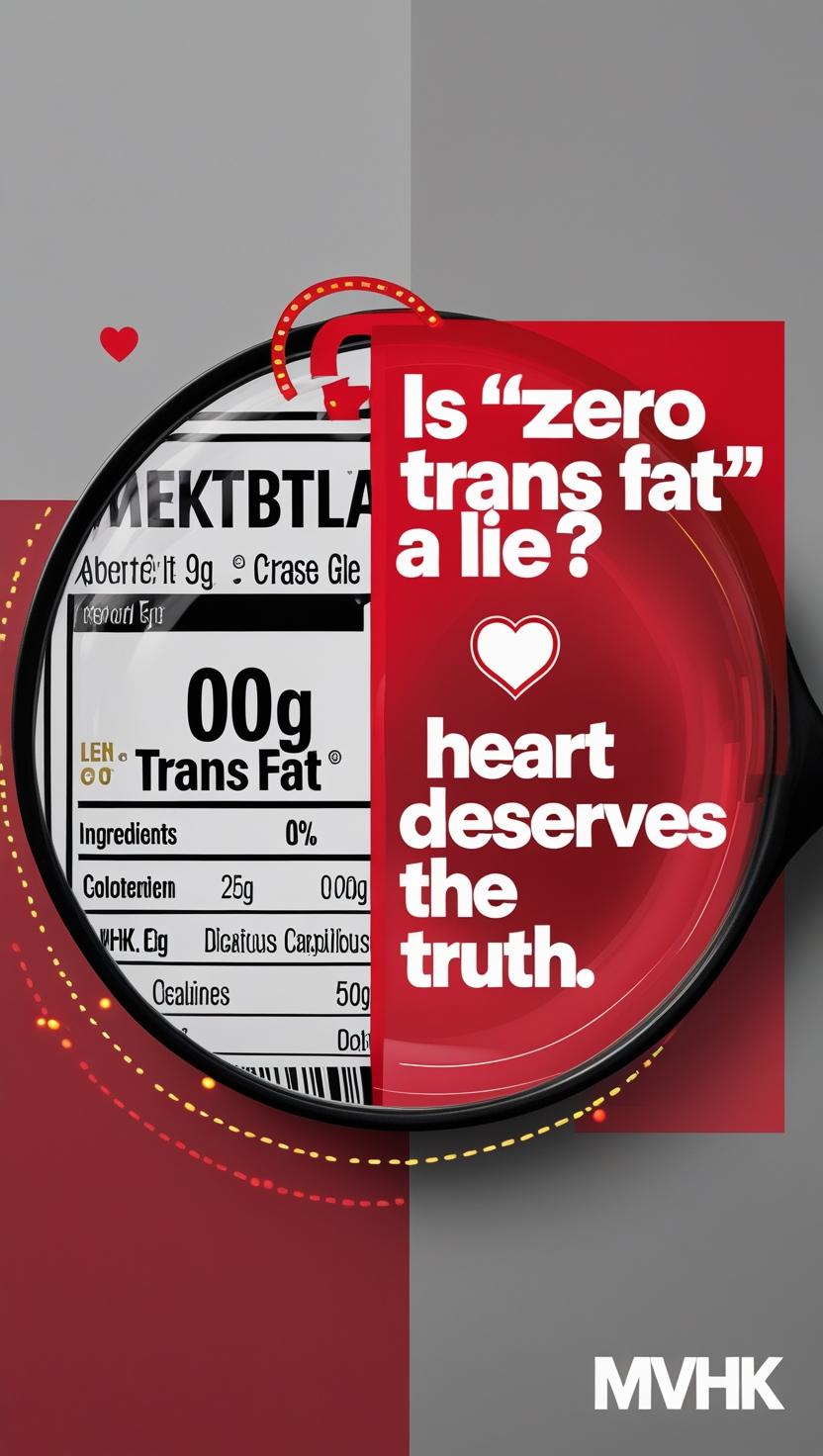
Is “Zero Trans Fat” a Lie? What Nutrition Labels Don’t Tell You
Imagine scanning a food label, relieved to see “0g trans fat” printed on the front. You toss it into your cart, thinking you’re making a heart-smart choice. But here’s the truth: that zero doesn’t always mean zero. Legally, if a product contains less than 0.5 grams of trans fat per serving, it can still claim “0g” on the label. And since most people consume more than one serving, those trace amounts quietly add up—harming your heart over time.
In this article, we’ll uncover how trans fats hide in plain sight, the biometric impact of these fats on your health, and how to spot misleading labels. We’ll also guide you on choosing natural fats that support long-term vitality—especially important for working parents juggling time, stress, and nutrition.
🎯 The Science Behind Trans Fats and Label Loopholes
Latest Research
Trans fats, especially industrial ones created through partial hydrogenation, have long been linked to increased LDL (bad) cholesterol, decreased HDL (good) cholesterol, and a higher risk of cardiovascular disease, stroke, and type 2 diabetes.
A meta-analysis published in The BMJ (2020) concluded that even small amounts of industrial trans fats significantly raise cardiovascular risks. What’s more alarming is how easily these can accumulate through daily consumption of packaged snacks, frozen foods, and baked goods.
Mechanisms
Trans fats alter the structure of cell membranes and increase systemic inflammation. They also affect insulin sensitivity, contributing to blood sugar issues and fat accumulation around the abdomen.
Your body’s biometric response (e.g., cholesterol levels, inflammatory markers like C-reactive protein) reflects even trace trans fat exposure over time. These aren’t just dietary choices—they’re long-term health influencers.
Expert Opinions
According to Dr. Walter Willett, professor at the Harvard T.H. Chan School of Public Health:
“Even small amounts of trans fats—if eaten regularly—can substantially increase the risk of chronic disease.”
He warns that “zero trans fat” claims often mislead consumers into a false sense of security, encouraging overconsumption.
💪 Implementation Guide
Getting Started
Start with awareness. Read entire ingredient lists, not just the nutrition label. Look for:
- “Partially hydrogenated oils” (immediate red flag)
- “Fully hydrogenated oils” (often used as a trans fat substitute)
- Buzzwords like “shortening,” “vegetable fat,” or “hydrogenated palm oil”
Progression Strategies
- Shift to whole, single-ingredient foods where possible
- Choose oils rich in unsaturated fats: olive oil, avocado oil, flaxseed oil
- Swap out processed snacks with homemade or clean-label alternatives
- Use tech tools like the Yuka app or MyFitnessPal to scan ingredient quality
Common Mistakes
- Believing serving size = your portion
- Trusting “zero grams” without checking ingredients
- Ignoring “fully hydrogenated” as a risk factor
- Assuming vegan or gluten-free equals healthy
🚀 Advanced Techniques
Personalization
If you’re using wearable tech or biometric trackers (like WHOOP or Oura Ring), monitor trends in your heart rate variability (HRV), resting heart rate, and recovery metrics after consuming packaged foods. Small trans fat exposure can reflect in subtle biofeedback.
Technology Integration
Integrate AI food tracking apps to identify risky ingredients. Tools like Cronometer offer micronutrient-level insights, helping users personalize fat intake based on body weight, stress levels, and physical demands.
Sustainability
Prioritize unprocessed fats from ethical sources:
- Grass-fed butter or ghee
- Wild-caught fish (omega-3 fats)
- Coconut oil in moderation
These choices support both your health and environmental sustainability.
📊 Results & Success Stories
Case Studies
A 42-year-old working mom from Ohio switched from boxed frozen dinners to clean-label meals and saw a 17% drop in LDL cholesterol and a 6-point HRV improvement within 8 weeks.
Measurable Outcomes
- Improved lipid profiles (lower LDL, higher HDL)
- Reduced inflammation (CRP levels)
- Decreased visceral fat in 12-week cycles
Community Feedback
Many working parents in nutrition forums report better sleep, focus, and mood after eliminating hidden trans fats. A common theme? More energy, fewer cravings.
🎯 Action Plan: Start Today
Week 1–2: Foundation
- Audit your pantry: Toss anything with hydrogenated oils
- Use a food scanning app to vet packaged snacks
- Begin journaling any symptoms (bloating, fatigue, cravings)
Week 3–4: Progression
- Replace refined oils with extra virgin olive oil
- Prepare one home-cooked meal per day
- Add heart-healthy omega-3s (chia, flax, salmon)
Long-term Maintenance
- Shop with a pre-vetted grocery list
- Follow evidence-based nutrition blogs or meal plans
- Revisit labels regularly—formulas change
❓ Frequently Asked Questions
Is “zero grams trans fat” actually zero?
No. It means less than 0.5g per serving. Multiply by your portion size—chances are, you’re getting more than you think.
Are fully hydrogenated oils safe?
Not necessarily. They’re ultra-processed and may still negatively affect your metabolism and heart health.
How can I tell if my food has trans fat?
Read the ingredients—not just the nutrition panel. Look for any hydrogenated oils.
How long to see benefits from eliminating trans fats?
Most people see improvements in cholesterol levels, inflammation, and energy within 4–8 weeks.
Is this safe for kids?
Yes—and highly recommended. Children are especially vulnerable to the negative effects of processed fats.