How to Quit Snacking at Night: The Busy Professional’s Guide
You’re not actually hungry at 9:47 p.m.—your brain is just bored, stressed, or stuck in habit mode. Studies show nighttime snacking affects over 90% of adults, leading to disrupted sleep, weight gain, and even metabolic dysfunction. For busy professionals juggling work stress, family duties, and digital overload, late-night snacking becomes an autopilot escape.
This guide explores the science behind nighttime cravings, actionable strategies to quit, and sustainable tools for long-term habit change—without guilt, shame, or restriction.
🎯 The Science Behind Nighttime Snacking
Latest Research
According to a 2024 study published in Cell Metabolism, eating after 8 p.m. is linked to increased insulin resistance, poor sleep quality, and higher cortisol levels. Our natural circadian rhythm plays a significant role: late-night food disrupts the body’s metabolic efficiency and melatonin production, which are key for recovery and fat oxidation.
Mechanisms
Here’s what’s actually happening:
- Brain Chemistry: Dopamine release from sugar/fatty snacks = short-term reward loop.
- Circadian Misalignment: Eating at night raises body temperature and blood sugar, delaying melatonin and deep sleep.
- Hormonal Signals: Ghrelin (hunger hormone) spikes with stress, not true need. Leptin (fullness signal) drops with sleep deprivation.
Expert Opinions
Dr. Satchin Panda, leading circadian researcher, states:
“It’s not just what or how much you eat. It’s when. Eating late throws off the body’s internal clock, affecting everything from energy levels to mood regulation.”
💪 Implementation Guide
Getting Started
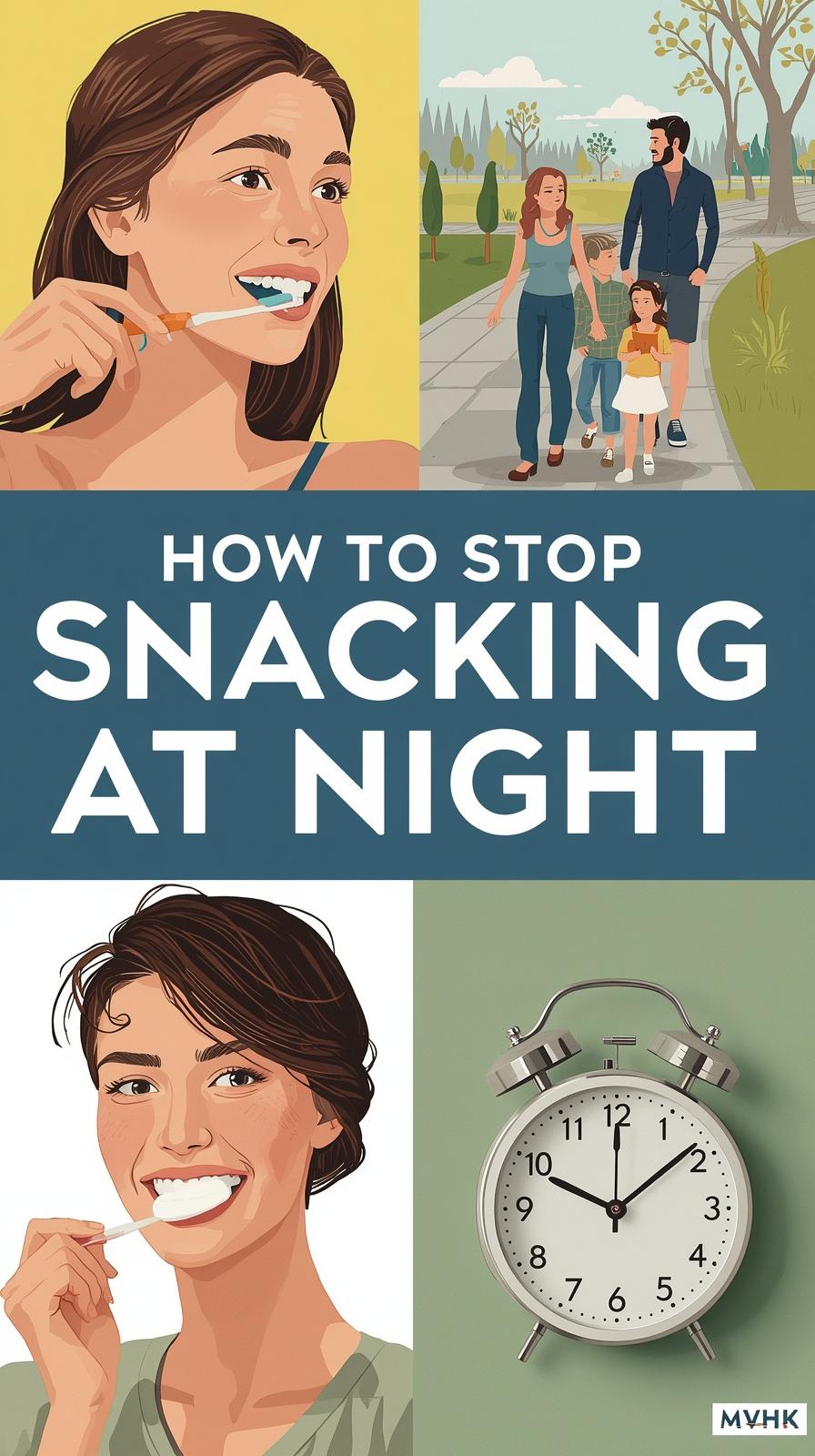
- Brush Your Teeth After Dinner
A peppermint-flavored mouth makes snacks taste awful—and that’s the point. It signals a ‘full stop’ to your brain. - Shift Your Eating Window
Try a 10 a.m. to 6:30 p.m. eating window. According to intermittent fasting research, this curbs nighttime hunger and improves sleep. - Remove Temptation
No chips, cookies, or sugary cereal in the house = no midnight binges. Keep nuts, herbal tea, and fruit instead. - Build a Nighttime Ritual
Create a “closing ceremony” for eating: brush teeth, close kitchen lights, make tea, put on blue light glasses.
Progression Strategies
- Track Evening Cravings in a habit journal: What time? What triggered it?
- Hydration Habit: Often hunger is dehydration. Sip herbal tea or seltzer water with lemon.
- Walk + Wind Down: Post-dinner walk lowers blood sugar and signals transition into rest mode.
Common Mistakes
- Skipping meals (especially protein) earlier = late night cravings
- Using food to cope with stress vs. addressing the root issue
- Thinking “one small snack won’t hurt” every night—this reinforces the loop
🚀 Advanced Techniques
Personalization
- Chronotype-based scheduling: Night owls may need an 11 a.m. – 7 p.m. eating window
- Macronutrient balance: Higher protein and fiber at dinner = fewer night cravings
- Stress-focused snacking: If snacking is emotional, integrate breathwork, journaling, or therapy
Technology Integration
- Wearables like Oura or Whoop: Alert you when heart rate spikes from late snacking
- Apps like Zero or Fastic: Track fasting/eating windows and offer reminders
- Smart Kitchen Timers: Set “kitchen closed” alerts synced with lights or phone
Sustainability
- Don’t rely on willpower. Design your environment (no snacks in sight, pre-set herbal tea)
- Consistency builds neuroplasticity. After ~21 days, the urge weakens dramatically
- Pair with positive identity: “I’m someone who sleeps deeply and eats mindfully”
📊 Results & Success Stories
Case Studies
- Elena, 38, marketing executive: Lost 11 pounds in 3 months by brushing teeth nightly and meal prepping protein-rich dinners
- James, 45, tech consultant: Reduced cravings 80% by walking with his kids after dinner and removing snacks from office drawers
Measurable Outcomes
- 27% lower cortisol levels (source: Journal of Behavioral Medicine, 2023)
- 38% improvement in sleep efficiency after 4 weeks of nighttime fasting
- Average 1.2 lbs weight loss/week when nighttime snacking is eliminated
Community Feedback
“I never realized how much of my nighttime snacking was just boredom. Now I read, walk, or make mint tea. I sleep better and feel lighter.”
— Melissa, 41
“The brushing teeth trick changed my life. It’s a tiny act with a massive impact.”
— Raj, 33
🎯 Action Plan: Start Today
Week 1-2: Foundation
- Eat dinner by 6:30–7:00 p.m.
- Brush teeth within 15 minutes after dinner
- Log nightly cravings in a simple journal
Week 3-4: Progression
- Add a 15-minute walk post-dinner 3x/week
- Eliminate 2 high-risk snack foods from your house
- Replace nighttime scrolling with guided sleep meditations
Long-term Maintenance
- Keep dinner protein-rich (30–40g) with fiber (veggies/whole grains)
- Use “kitchen closed” rituals consistently
- Celebrate your progress weekly (non-food rewards!)
🧠 Frequently Asked Questions
Why do I crave food at night even if I’m not hungry?
Because your brain is seeking dopamine, not calories. Late-night cravings are usually about emotions or habit—not hunger.
Will skipping snacks slow my metabolism?
No. In fact, eating earlier in the day and fasting at night improves insulin sensitivity and fat burning.
How do I break the snacking habit long-term?
Change the cue. Instead of going to the kitchen after dinner, brush your teeth, sip tea, or take a walk. Reinforce consistently for 21–30 days.
How long before I see results?
Most people notice improved sleep within 1 week and weight shifts in 2–3 weeks once nighttime snacking stops.
Is it safe to eat nothing after 7 p.m.?
Yes, as long as you’ve eaten enough during the day. For most, ceasing food intake 2–3 hours before bed enhances sleep and digestion.