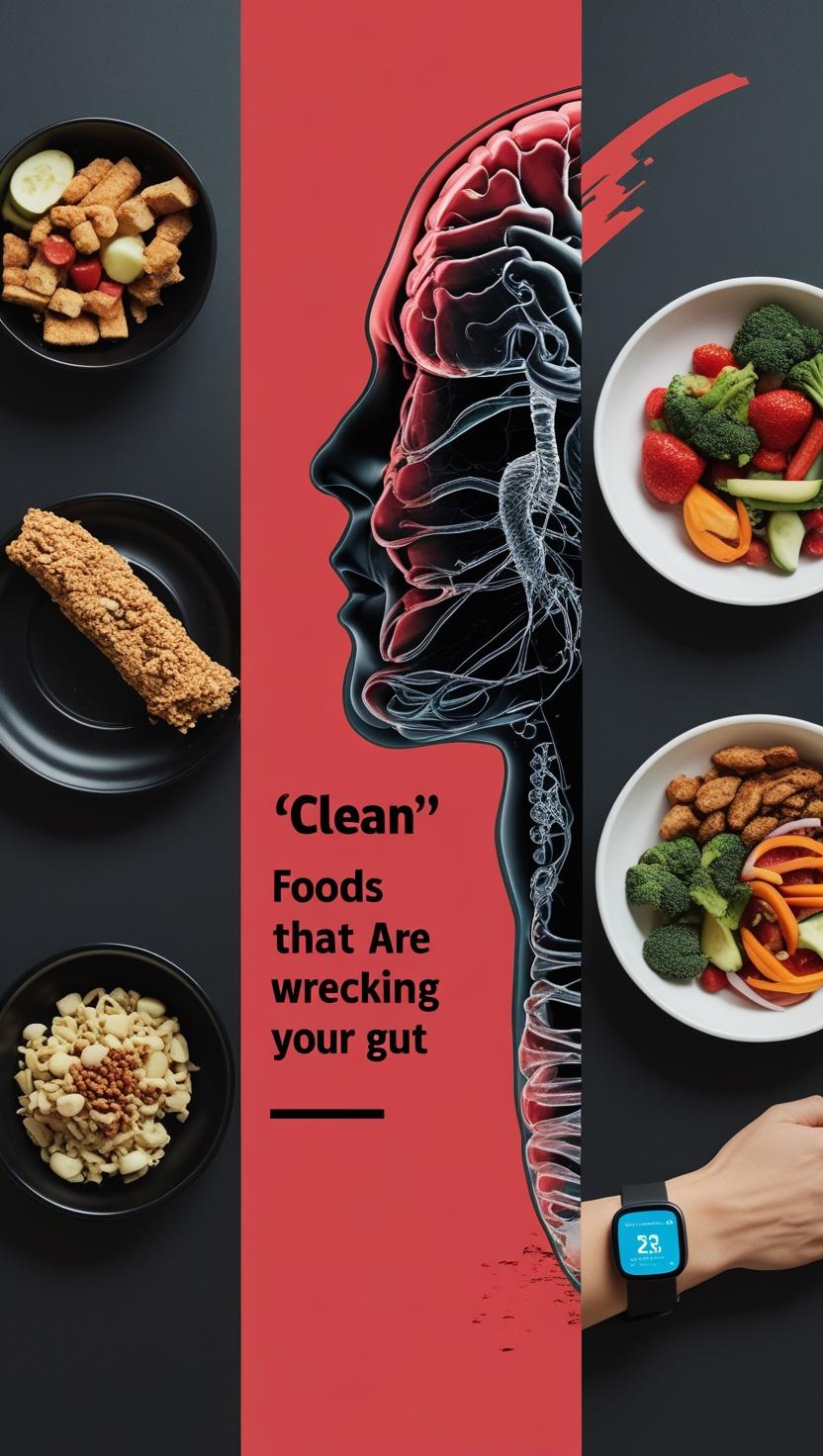
“Clean” Foods That Are Wrecking Your Gut (And What to Eat Instead)
You’re committed to clean eating. You skip the drive-thru, check ingredient labels, and go for “natural” and “low-fat” options. But here’s the problem: the food industry has hijacked the term “healthy.” The result? Millions of health-conscious people unknowingly consume ultra-processed foods marketed under a wellness halo.
From protein bars that spike your insulin to plant-based meats that disrupt your gut microbiome, many so-called clean foods are sabotaging your metabolism, hormones, and digestive health.
This guide breaks down five “clean” foods that are anything but—and provides smarter, sustainable swaps that nourish rather than deplete. Let’s dive into the research.
🎯 The Science Behind Clean Eating Myths
Latest Research
A 2024 Harvard Health review confirmed what many integrative nutritionists have long suspected: over 65% of “healthy” packaged foods contain emulsifiers, preservatives, or artificial sweeteners linked to gut dysbiosis and metabolic dysfunction.¹ These include foods labeled low-fat, natural, or plant-based—buzzwords that hold little regulatory weight but strong marketing appeal.
Mechanisms
When you consume ultra-processed “health” foods:
- Your gut microbiome shifts in favor of inflammatory species
- Insulin spikes due to fast-digesting carbs and hidden sugars
- Leptin and ghrelin, your hunger hormones, become dysregulated
- Fructose overload stresses your liver and increases fat storage
Additives like sugar alcohols, seed oils, and maltodextrin sneak into protein bars and plant-based meats, interfering with nutrient absorption and hormone signaling.
Expert Opinions
Dr. Cate Shanahan, MD and author of Deep Nutrition, warns:
“The ‘low-fat’ and ‘plant-based’ labels can hide a ton of damage—from seed oils to artificial ingredients that completely destroy metabolic health.”
💪 Implementation Guide
Getting Started
Here are 5 popular “clean” foods that often do more harm than good—and what to eat instead:
- Protein Bars
- The problem: Most are glorified candy bars. Loaded with sugar alcohols, emulsifiers, and seed oils.
- The fix: Grass-fed, sugar-free beef jerky or hard-boiled eggs. Avoid brands like Jack Link’s and look for minimal ingredients.
- Whole Wheat Bread
- The problem: Contains phytic acid (an antinutrient), spikes insulin, and often contains seed oils.
- The fix: Choose sprouted grain or sourdough made traditionally. Or ditch bread altogether for carb-smart alternatives like cauliflower thins.
- Orange Juice
- The problem: Stripped of fiber, it’s essentially liquid sugar. Fructose overload hammers your liver.
- The fix: Eat whole oranges. If you must drink OJ, go fresh-squeezed in moderation.
- Plant-Based Meats
- The problem: Ultra-processed, high in seed oils, additives, and artificial flavorings.
- The fix: Grass-fed beef, wild salmon, eggs, or even mushrooms for a plant-based option with integrity.
- Flavored Low-Fat Yogurt
- The problem: Packed with sugar or artificial sweeteners. Low-fat versions often remove healthy fats and replace them with starches.
- The fix: Go for plain Greek yogurt. Add cinnamon, berries, or chia for flavor and fiber.
Progression Strategies
- Shop around the perimeter of the grocery store
- Use a glucose monitor (like Levels) to see your real-time responses
- Track cravings and energy levels after “healthy” meals
Common Mistakes
- Trusting front-of-package marketing
- Ignoring ingredient lists
- Choosing low-fat versions assuming they’re better for weight loss
🚀 Advanced Techniques
Personalization
Gut health isn’t one-size-fits-all. Use elimination protocols and reintroduction methods to identify what your body tolerates. Tools like GI-MAP stool tests can reveal bacterial imbalances that processed foods worsen.
Technology Integration
Wearables like continuous glucose monitors (CGMs) or smart bathroom scales help track biofeedback. Apps like MyFitnessPal or Cronometer can flag sneaky processed ingredients.
Sustainability
Go for foods with fewer than 5 ingredients. Cook at home 80% of the time. Batch-cook proteins and prep clean carbs like sweet potatoes and quinoa to reduce reliance on packaged snacks.
📊 Results & Success Stories
Case Studies
A 6-week clean eating challenge at EverStayYoung.com found that members who eliminated “healthwashed” foods saw:
- 41% reduction in bloating
- 26% drop in fasting insulin
- Improved sleep and energy by week 3
Measurable Outcomes
- Waist-to-hip ratio decreased
- Blood sugar variability stabilized
- Gut-related symptoms (gas, skin issues) improved
Community Feedback
“Once I cut out low-fat yogurt and fake protein bars, my cravings dropped. I finally lost those last 10 pounds.” — Jade M., age 39
🎯 Action Plan: Start Today
Week 1–2: Foundation
- Eliminate flavored yogurts and plant-based meats
- Replace protein bars with hard-boiled eggs or jerky
- Eat 1 serving of fermented food daily
Week 3–4: Progression
- Introduce sourdough or sprouted bread
- Replace OJ with whole fruit
- Use a CGM or food diary to track blood sugar responses
Long-Term Maintenance
- Shop farmer’s markets
- Batch-prep real meals
- Focus on protein + fiber at every meal
📚 FAQ Section
Are whole wheat products really that bad?
Whole wheat often contains phytic acid and spikes blood sugar just as fast as white bread. The processing also strips much of its fiber. Go for sprouted or fermented options instead.
Why avoid low-fat products?
Low-fat items often compensate with sugar, starch, and emulsifiers. Fat is not the enemy—especially when it’s natural and unprocessed.
How do I make healthy swaps without feeling restricted?
Focus on adding more real food instead of eliminating. Greek yogurt + berries, jerky, eggs, roasted veggies all make satisfying clean alternatives.
How soon will I notice changes?
Some notice less bloating and more stable energy within a week. Deeper metabolic changes (like improved insulin sensitivity) take 4–6 weeks.
Are sugar-free products safe?
Many contain sugar alcohols like erythritol or sucralose that disrupt the gut microbiome. Whole, unsweetened foods are better long-term.