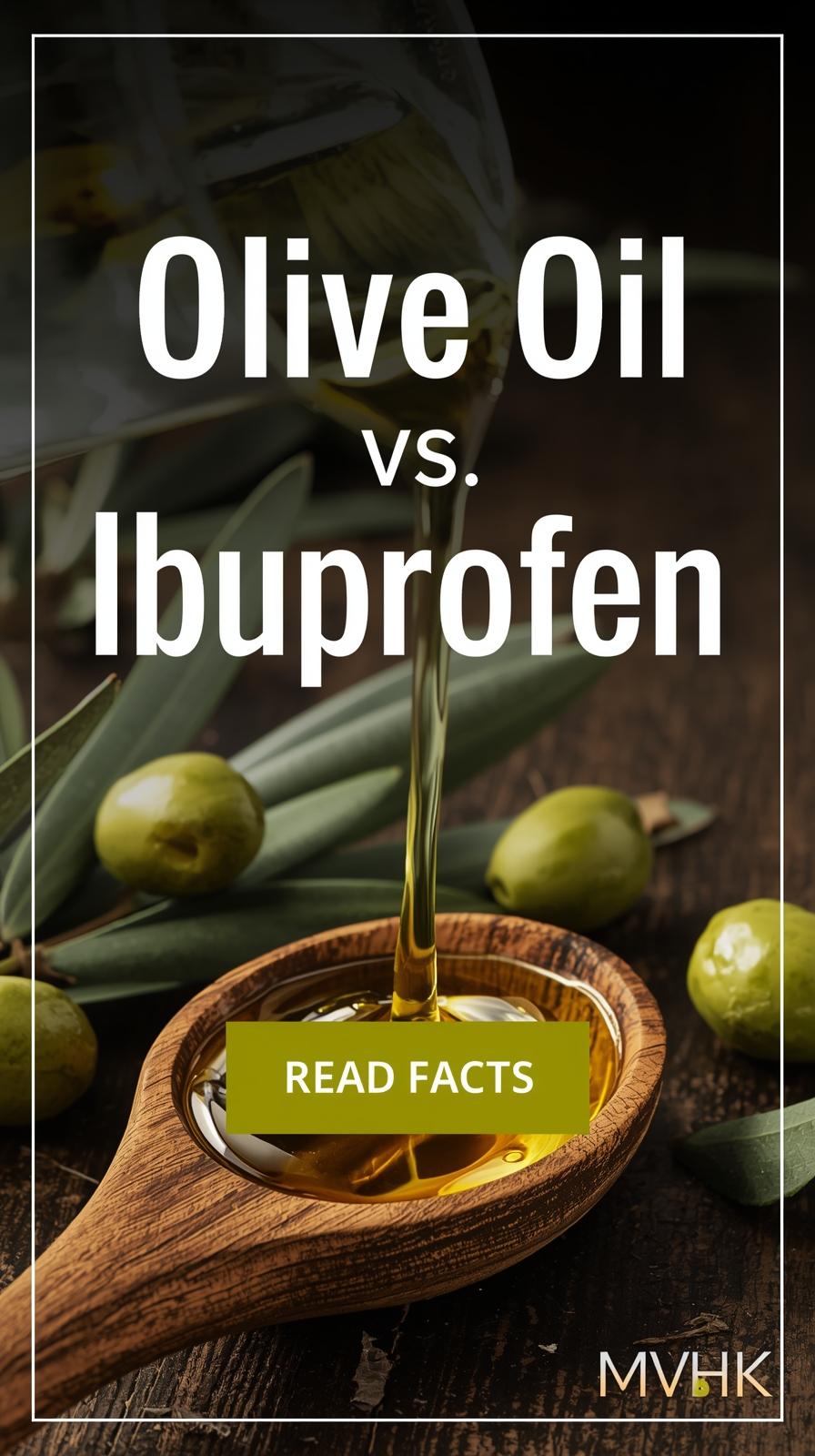
Can Olive Oil Replace Ibuprofen? What the Science Actually Says
💡 Key Takeaways
- Extra virgin olive oil reduces inflammation via the same COX-2 pathway as ibuprofen
- The active compound oleocanthal is responsible for the peppery throat burn
- EVOO supports chronic inflammation reduction, not acute pain relief
- Only high-quality, fresh, polyphenol-rich olive oil delivers benefits
- Olive oil cannot replace ibuprofen, but it supports long-term inflammatory health
Introduction
Can a kitchen staple really work like a pharmaceutical drug? That question has fueled countless headlines claiming that olive oil is “nature’s ibuprofen.” While that framing is misleading, the underlying science is surprisingly solid.
Chronic low-grade inflammation is a key driver of aging, joint degeneration, cardiovascular disease, and metabolic dysfunction. Most people rely on NSAIDs like ibuprofen for relief, yet long-term use is associated with gastrointestinal damage, kidney stress, and cardiovascular risk.
Extra virgin olive oil (EVOO), a cornerstone of the Mediterranean diet, has repeatedly been associated with lower inflammation and reduced disease risk. Researchers discovered that EVOO contains oleocanthal, a phenolic compound that targets the same inflammatory enzymes as ibuprofen — albeit much more gently.
So is this legitimate science or wellness hype? Let’s break it down precisely.
What Is the Science Behind Olive Oil’s Anti-Inflammatory Effects?
Direct answer: Extra virgin olive oil reduces inflammation by inhibiting COX-1 and COX-2 enzymes through the phenolic compound oleocanthal, the same enzymatic pathway targeted by ibuprofen.
Oleocanthal was identified in 2005 by researchers at the Monell Chemical Senses Center. They noticed that high-quality EVOO caused a distinctive peppery sting in the back of the throat, remarkably similar to the irritation caused by liquid ibuprofen. Chemical analysis confirmed why.
COX-2 Inhibition Explained
- COX-2 enzymes produce pro-inflammatory prostaglandins
- Ibuprofen blocks these enzymes aggressively and quickly
- Oleocanthal blocks them mildly but chronically
Human and animal studies show that regular consumption of high-oleocanthal EVOO:
- Lowers C-reactive protein (CRP)
- Reduces IL-6 and TNF-α signaling
- Modulates NF-κB inflammatory pathways
- Improves endothelial and joint function
However, oleocanthal is dose-dependent. Researchers estimate that ~50 grams (3–4 tablespoons) of high-polyphenol EVOO provides roughly 10% of a low ibuprofen dose in COX inhibition. This makes it unsuitable for acute pain but valuable for long-term inflammation control.
How Do You Implement Olive Oil Properly?
Direct answer: You must use fresh, high-quality, polyphenol-rich extra virgin olive oil and consume it consistently to achieve anti-inflammatory benefits.
What Actually Matters (Non-Negotiable)
Your olive oil must be:
- Extra virgin
- Cold-pressed
- Clearly labeled with a harvest date
- Stored in dark glass
- Strongly peppery when tasted
Refined or low-grade olive oils contain negligible oleocanthal, making most supermarket bottles biologically ineffective.
Daily Intake Guidelines
- 1–2 tablespoons daily for baseline inflammation support
- 3–4 tablespoons daily used raw for therapeutic effect
- Avoid overheating — oleocanthal degrades with high heat
Common Mistakes
- Cooking EVOO at high temperatures
- Using old or oxidized oil
- Confusing bitterness with peppery throat burn
- Expecting immediate pain relief
What Advanced Techniques Maximize Results?
Direct answer: Olive oil works best when stacked with complementary anti-inflammatory strategies.
Biohack Stacking
- EVOO + omega-3 fatty acids → synergistic COX modulation
- EVOO + curcumin → broader NF-κB suppression
- EVOO + resistance training → joint preservation
Personalization
- Over 50: prioritize higher polyphenol content
- Joint pain: split doses across meals
- Cardiometabolic risk: combine with Mediterranean eating pattern
Tracking Tools
- hs-CRP blood testing
- Joint stiffness and morning mobility scores
- Resting heart rate variability (HRV)
What Are the Real-World Results?
Direct answer: Benefits appear gradually over weeks, not hours.
Clinical and population studies consistently show:
- Reduced inflammatory markers within 3–6 weeks
- Improved joint comfort by weeks 6–12
- Lower cardiovascular event risk with long-term adherence
This aligns with Mediterranean populations who consume EVOO daily and show reduced incidence of inflammatory diseases without chronic NSAID use.
Action Plan: Your 4-Week Protocol
Week 1:
- Replace refined fats with EVOO
- 1 tablespoon daily, raw
Week 2:
- Increase to 2 tablespoons
- Taste for peppery throat burn
Week 3:
- 3 tablespoons daily
- Add omega-3 intake
Week 4:
- Maintain dose
- Reassess joint stiffness, recovery, and energy
Frequently Asked Questions
Can olive oil replace ibuprofen?
No. Olive oil works through a similar pathway but much more weakly and is intended for chronic inflammation, not acute pain.
Why does olive oil burn my throat?
That sensation indicates oleocanthal, the anti-inflammatory compound responsible for COX-2 inhibition.
Is more olive oil better?
Only up to a point. Quality matters more than quantity.
Can refined olive oil work?
No. Refining removes phenolic compounds, including oleocanthal.
How fast does it work?
Expect gradual benefits over weeks, not immediate pain relief.