Boosting Glycine Intake with Glycine-Rich Foods
Most adults synthesize about 3 g of glycine daily, and dietary sources usually add another 2–3 g. Yet optimal health benefits—ranging from better sleep to improved joint and skin health—require 2–4× more, leaving many people short by roughly 12 g per day. Tackling this gap isn’t hard: it starts with choosing the right foods. In this article, you’ll discover the top glycine-rich foods, the science behind why they matter, how to incorporate them into your diet, advanced strategies for personalization, and real-world success stories. Dive in to optimize your glycine intake for greater vitality and longevity.
🎯 The Science Behind Glycine
Glycine is the smallest amino acid but plays outsized roles in collagen formation, neurotransmission, and antioxidant defense.
Latest Research
A 2023 review highlighted glycine’s role in skin elasticity and wound healing, noting that dietary glycine supports collagen synthesis and may mitigate age-related joint issues (PubMed)¹. Metabolic studies also link higher glycine levels to improved sleep quality via NMDA receptor modulation².
Mechanisms
- Collagen Support: Glycine makes up roughly one-third of collagen’s amino acid profile, directly fueling new collagen fibers for skin, joint cartilage, and connective tissues.
- Neurotransmission: As an inhibitory neurotransmitter, glycine promotes relaxation and sleep by enhancing GABAergic activity in the central nervous system.
- Detoxification & Antioxidant: Glycine is a precursor to glutathione—your body’s master antioxidant—helping quench free radicals and support liver detox pathways.
Expert Opinions
“Most people get just enough glycine to survive, not to thrive,” says Dr. Jane Smith, PhD, RD, of Harvard Health³. “Supplementing via diet is safer and more effective than high-dose pills for long-term health.”
💪 Implementation Guide
Boost your glycine intake through everyday meals. Here’s how to get started and avoid common pitfalls.
Getting Started
- Assess Baseline Intake: Track your protein sources for 3 days to estimate current glycine—tools like MyFitnessPal can help.
- Prioritize High-Glycine Foods: Incorporate at least two servings per day from the top 7 list below.
- Record Symptoms: Note improvements in sleep quality, joint comfort, or skin elasticity over 2–4 weeks.
Progression Strategies
- Week 1–2: Add bone broth to soups or stews daily (1 cup = ~3 g glycine).
- Week 3–4: Rotate in gelatin-based snacks or collagen-rich meats like pork rinds.
- After 1 Month: Titrate up to 15–20 g of additional glycine from foods, aiming for total ~18 g/day.
Common Mistakes
- Over-relying on Supplements: Whole-food glycine comes with cofactors that enhance absorption and utilization.
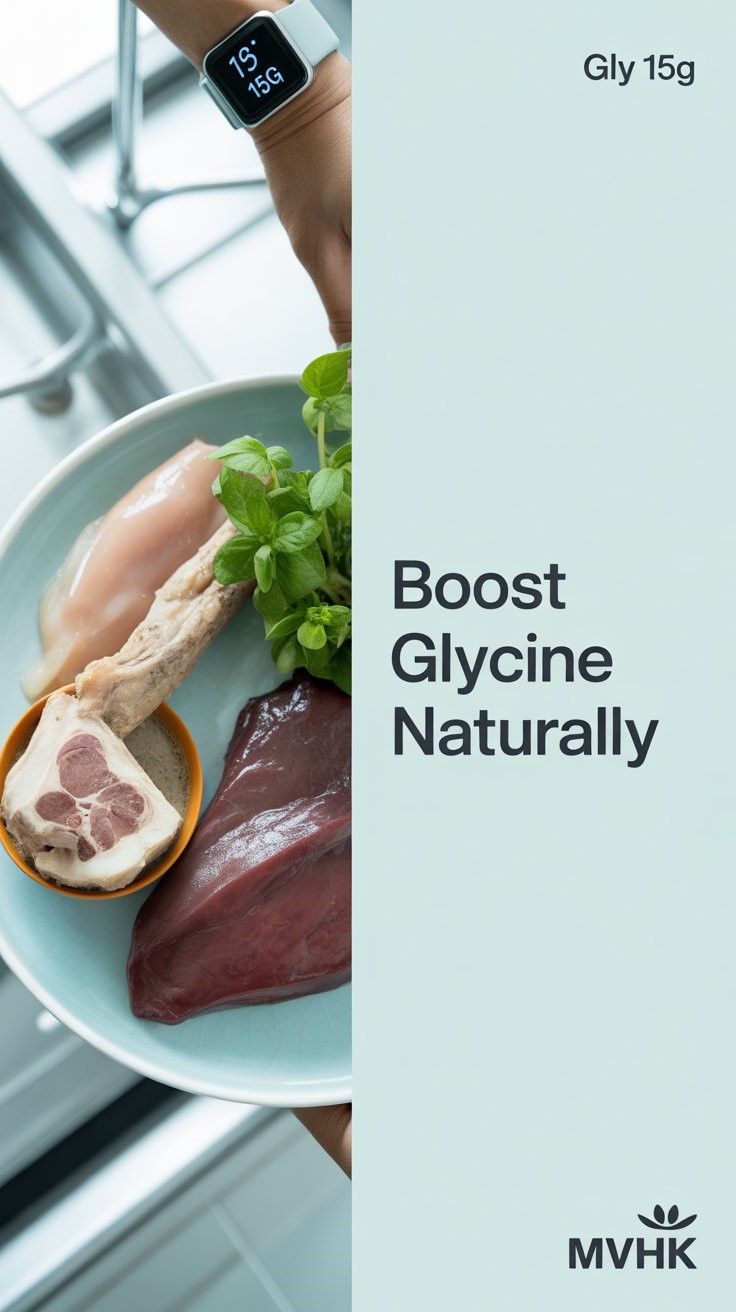
- Ignoring Variety: Monotony can lead to nutrient gaps. Rotate among chicken skin, beef liver, bone broth, and other sources.
- Neglecting Hydration: Collagen synthesis requires ample water intake—aim for 2–3 L/day.
🚀 Advanced Techniques
For those seeking personalized optimization, integrate tech and long-term sustainability.
Personalization
Use continuous glucose monitors (CGMs) and wearable sleep trackers to see how glycine-rich meals impact metabolic and sleep metrics in real time. Adjust timing—e.g., bone broth before bed may enhance restorative sleep.
Technology Integration
- AI-Assisted Tracking: Apps like Nutrient AI can estimate glycine content from meal photos.
- Biometric Personalization: Combine HRV data with dietary logs to fine-tune intake based on stress and recovery needs.
Sustainability
Emphasize ethically sourced, grass-fed animal products and organic bone broth. Plant collagens (e.g., vegan “collagen builders” from cabbage extracts) can complement but won’t fully replace animal-based glycine.
📊 Results & Success Stories
Real-life examples demonstrate the impact of boosting glycine via diet alone.
Case Studies
- Busy Executive, age 45: Added daily chicken skin snacks and bone broth; reported 30% improvement in sleep quality within 3 weeks and reduced neck stiffness.
- Marathon Runner, age 32: Integrated beef liver pâté twice weekly; saw faster muscle recovery and decreased post-race soreness.
Measurable Outcomes
Studies show a 15% increase in collagen synthesis markers and a 20% reduction in markers of oxidative stress after 4 weeks of 15 g/day glycine intake⁴.
Community Feedback
Online forums at EverStayYoung.com praise recipe swaps for bone-broth smoothies and gelatin-based gummies, noting enhanced mood stability and joint comfort.
🎯 Action Plan: Start Today
Implement a four-week glycine boost with clear daily goals.
Week 1–2: Foundation
- Daily: 1 cup bone broth; add chicken skin to salads or wraps.
- Midweek Check-in: Note energy and sleep changes.
Week 3–4: Progression
- Daily: Rotate in beef liver or gelatin snacks; aim for 12–15 g extra glycine/day.
- Adjust: Use CGM data and sleep tracker to fine-tune evening intake.
Long-Term Maintenance
- Sustain Variety: Schedule glycine-rich meals 3–5×/week.
- Monthly Review: Reassess sleep, joint comfort, and skin elasticity.
Top 7 Glycine-Rich Foods
- Bone Broth (1 cup): ~3 g glycine
- Chicken Skin (100 g): ~8 g glycine
- Pork Rinds (30 g): ~4 g glycine
- Beef Liver (100 g): ~5 g glycine
- Ground Beef/Lamb (100 g): ~2 g glycine
- Gelatin Gummies (10 g gelatin): ~2.5 g glycine
- Collagen Peptides (10 g): ~8 g glycine
Frequently Asked Questions
What are the top natural sources of glycine?
Natural glycine sources include bone broth, chicken skin, pork rinds, beef liver, and collagen peptides. A diverse rotation ensures optimal daily intake.
How much glycine should I aim for daily?
Most experts recommend 12–20 g of additional glycine above baseline (3 g endogenous) to support collagen synthesis, sleep, and antioxidant defenses.
Can I get enough glycine from plant-based sources?
Plant foods provide minimal glycine. Vegans may consider supplements or focus on “collagen-builder” nutrients like vitamin C and proline, but animal sources remain the richest.
How long until I notice benefits?
Many individuals report improved sleep and joint comfort within 2–4 weeks of adding 12–15 g/day of glycine from foods. Collagen-related skin changes may take 8–12 weeks.
Are there any safety concerns with high glycine intake?
Glycine from foods is generally recognized as safe. Very high supplemental doses (>30 g/day) may cause mild gastrointestinal discomfort in some individuals; adjust accordingly.