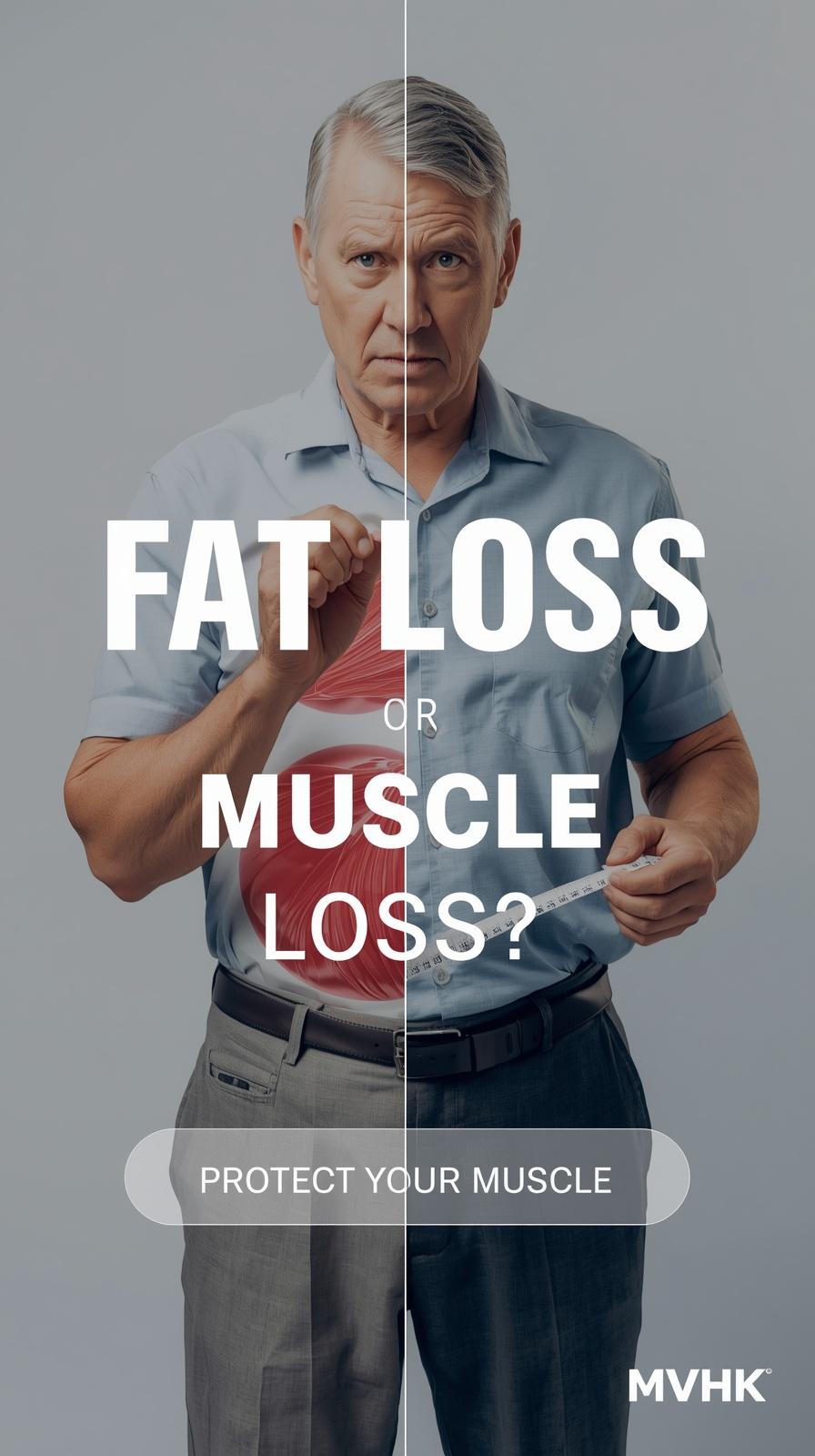
GLP-1 Weight Loss and Muscle Loss: The Hidden Longevity Risk
💡 Key Takeaways
- GLP-1 drugs drive weight loss but do not preserve muscle
- Up to ~40% of weight lost may come from lean mass
- Muscle loss reduces metabolic health and accelerates aging
- Long-term fat regain is common after discontinuation
Introduction
GLP-1 receptor agonists like Ozempic and Wegovy are reshaping obesity treatment—but there’s a critical biological trade-off that rarely gets attention: what kind of weight are you actually losing?
The focus is almost entirely on total weight reduction. But from a longevity perspective, that’s the wrong metric.
Emerging data suggests that a significant portion of GLP-1–induced weight loss comes from lean mass—muscle and bone, not just fat. At the same time, discontinuation rates are high, and weight regain is common.
This creates a dangerous asymmetry: fat returns, but muscle often does not—especially in individuals over 60.
For long-term healthspan, this shifts GLP-1 therapy from a simple fat-loss tool into a potential accelerant of sarcopenia and metabolic decline if not managed correctly.
Lose weight, keep muscle—or pay for it later.
What Is the Science Behind GLP-1 and Muscle Loss?
GLP-1 drugs alter appetite and energy intake—but they do not inherently preserve lean tissue.
Direct Answer:
GLP-1–induced weight loss reduces both fat mass and lean mass, with insufficient anabolic signaling to protect muscle.
Mechanisms:
1. Caloric Deficit Without Resistance Signal (Evidence-supported)
GLP-1 drugs reduce appetite → lower protein intake → reduced muscle protein synthesis.
Without resistance training:
- Muscle breakdown exceeds repair
- Net lean mass loss accelerates
2. Reduced Mechanical Load (Evidence-supported)
Less body weight = less daily load on muscles:
- Decreased stimulus for muscle maintenance
- Accelerated atrophy, especially in older adults
3. Hormonal Environment (Hypothesis-supported)
Weight loss may reduce:
- IGF-1 signaling
- Testosterone (in men)
These shifts impair muscle preservation.
4. Bone Density Impact (Evidence-supported)
Rapid weight loss is associated with:
- Reduced bone mineral density
- Increased fracture risk
Particularly concerning in aging populations.
5. Mitochondrial Decline (Hypothesis-supported)
Loss of muscle mass reduces:
- Mitochondrial density
- Metabolic flexibility
How Do You Apply GLP-1 Therapy Correctly?
You must actively counteract muscle loss while using GLP-1 drugs.
Direct Answer:
GLP-1 therapy should be paired with resistance training, high protein intake, and recovery optimization to preserve lean mass.
Step-by-Step Protocol:
Week 1: Baseline Protection
- Begin protein intake: 0.7–1.0g per lb body weight
- Start 2x/week resistance training
- Track weight AND strength
Week 2: Progressive Load
- Increase resistance training to 3x/week
- Focus on compound lifts (squat, push, pull)
- Maintain protein consistency
Week 3: Muscle Signaling Optimization
- Add explosive or power-based movements
- Ensure post-workout protein timing
Week 4: Metabolic Support
- Add walking or Zone 2 cardio
- Monitor recovery (sleep, HRV)
Safety Notes:
- Older adults require higher protein per kg
- Bone density monitoring may be necessary
- Avoid aggressive caloric restriction beyond drug effect
GLP-1 can reduce weight. It won’t protect your muscle
What Advanced Strategies Improve Results?
Direct Answer:
Muscle preservation improves when GLP-1 therapy is combined with targeted anabolic and metabolic strategies.
1. Creatine Supplementation (Muscle Preservation)
Supports strength and intracellular hydration
2. Leucine Threshold Targeting
Ensure ~2.5–3g leucine per meal to trigger muscle synthesis
3. VO2 Max Training (Longevity Link)
Improves metabolic resilience and reduces regain risk
4. Continuous Glucose Monitoring
Stabilizes insulin response and prevents rebound fat gain
5. DEXA Scanning
Tracks fat vs lean mass changes precisely
What Results Can You Realistically Expect?
Direct Answer:
You can preserve most lean mass during GLP-1 use—but only with intentional intervention.
Without Intervention:
- Significant muscle loss
- Lower metabolic rate
- Higher fat regain probability
With Proper Strategy:
- Majority of weight loss from fat
- Maintained strength and function
- Improved long-term metabolic health
Timeframes:
0–8 weeks:
- Rapid weight loss phase
- Highest muscle loss risk
2–6 months:
- Adaptation phase
- Muscle preservation becomes critical
Post-discontinuation:
- High risk of fat regain
- Muscle recovery is slow and incomplete
Anti-Hype Reality:
- GLP-1 is not a complete solution
- Weight loss ≠ health improvement
- Lean mass determines longevity trajectory
4-Week Practical Action Plan
Week 1:
Establish protein baseline and begin resistance training
Week 2:
Increase training intensity and consistency
Week 3:
Optimize nutrient timing and recovery
Week 4:
Track body composition and adjust
Repeat with progressive overload.
Frequently Asked Questions
1. Are GLP-1 drugs dangerous for muscle?
Not inherently, but without intervention they significantly increase the risk of muscle loss due to reduced intake and lack of anabolic stimulus.
2. Can you lose only fat on GLP-1?
Yes, but only with resistance training, sufficient protein, and metabolic support strategies in place.
3. Why is muscle so important for longevity?
Muscle regulates glucose, supports metabolism, and reduces mortality risk—especially with aging.
4. Does muscle come back after stopping GLP-1?
Not easily. Muscle regain is slower than fat regain, particularly after age 60.
5. Should older adults avoid GLP-1 drugs?
Not necessarily, but they require stricter muscle-preservation protocols and medical supervision.
References
- Wilding JPH et al. NEJM (STEP trials)
- Rubino D et al. NEJM
- Bhasin S et al. Lancet Diabetes & Endocrinology
- Wolfe RR. Journal of Nutrition
- Mitchell WK et al. Cell Metabolism
- NIH Body Composition Studies
- Frimel TN et al. Obesity