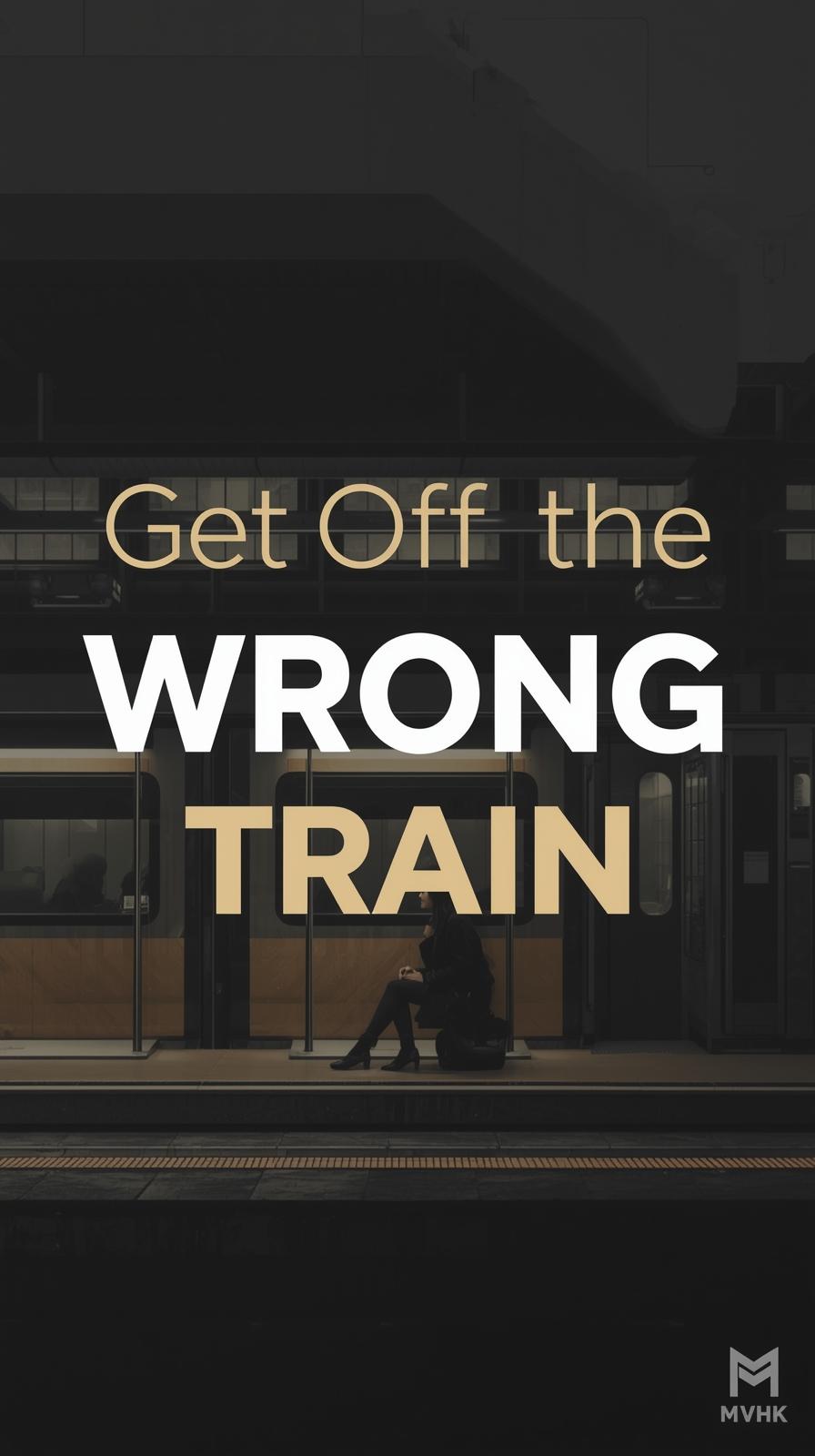
Wrong Train, Hard Truth: How to Get Your Life Back on Track
Have you ever looked around and thought, “How did I end up here?” Whether it’s staying too long in a toxic relationship, holding onto a draining job, or ignoring health red flags, we’ve all had moments where we realize we’ve boarded the wrong train. But here’s the kicker: the longer we stay on that train, the more painful—and costly—it becomes to return to ourselves.
In this article, we’ll break down why it’s so hard to pivot, what science says about change and stuck patterns, and exactly how to reverse course—without guilt, shame, or more wasted time. If you feel off-track, this is your wake-up call.
🎯 The Science Behind Feeling “Stuck”
Why do we stay on the wrong path?
It’s rarely laziness or ignorance. It’s neuroscience. Our brains are wired to favor comfort, even in discomfort. According to Dr. Judson Brewer, a neuroscientist and author of Unwinding Anxiety, we tend to repeat familiar behaviors because they reduce uncertainty—even if they lead to unhappiness.
Behavioral economics backs this up.
The “sunk cost fallacy” shows we often continue investing time, energy, or emotion simply because we already have—regardless of future benefit.
Cortisol and chronic stress
Long-term dissatisfaction releases cortisol, the stress hormone, which over time, contributes to brain fog, fatigue, and even memory issues. Studies from the APA (American Psychological Association) highlight that chronic stress leads to risk-averse decision-making—keeping us stuck longer.
Expert Insight
Dr. Brene Brown, researcher and bestselling author, puts it bluntly: “You can’t skip the part where it gets uncomfortable.” Getting off the wrong train will always be scary, but staying on it too long costs your future self everything.
💪 Implementation Guide: How to Get Off the Wrong Train
1. Acknowledge the train you’re on
Name it. Is it a draining job? A friendship that chips away at your confidence? A habit harming your body or mind? Clarity is the first step.
Tip: Journal for 5 minutes each morning about what’s not serving you.
2. Challenge the sunk cost
You don’t owe the past anything. Just because you’ve spent 5 years in a job or relationship doesn’t mean you should spend 5 more.
Ask: “If I weren’t already in this, would I choose it today?”
3. Make a micro-decision
You don’t need to blow up your life overnight. Start by shifting one small thing: update your resume, schedule a therapy session, skip one toxic event.
4. Build a support structure
Surround yourself with those who encourage change. This could be a coach, therapist, online community, or trusted friend. Accountability transforms intentions into momentum.
5. Expect resistance
Your brain and body may rebel against change. You’ll want to go back to the familiar. Anticipate this and create rituals to anchor your new path.
🚀 Advanced Techniques for Staying Off the Wrong Train
Biometric feedback
Use smartwatches or wearables to track stress, heart rate variability, and sleep to monitor how different environments affect your well-being.
AI-assisted journaling
Apps like Reflectly or Replika now use AI to help people track emotional trends and thought patterns—helpful in understanding when you’re spiraling or growing.
Sustainable change model
Dr. James Prochaska’s Transtheoretical Model shows that real change happens in six stages: precontemplation, contemplation, preparation, action, maintenance, and termination. Knowing where you are on this timeline helps you take the right action—not just any action.
📊 Results & Success Stories
Case Study: Maria, 42, Left Corporate Burnout
After 18 years in finance, Maria realized her body was in pain from stress. She started therapy, transitioned to a remote consulting role, and now runs a wellness blog.
“I thought I was too deep in to leave. Turns out, it’s never too late to change tracks.”
Survey Data:
A 2025 Gallup study showed that 64% of people who made a major life shift reported increased energy and better mental clarity within 6 months.
Community Voices:
On Reddit’s r/DecidingToBeBetter, users post weekly about getting out of wrong relationships, jobs, or habits—and how their lives improved once they made the leap.
🎯 Action Plan: Start Today
Week 1–2: Clarity Phase
- Journal daily for 10 minutes
- Make a list of things draining you
- Rate each on a scale of 1–10 (emotional cost)
Week 3–4: Pivot Phase
- Choose one small decision per week to change
- Tell one trusted person about your shift
- Begin tracking mood and energy daily
Long-Term Maintenance
- Set a weekly “course correction” review
- Celebrate monthly wins—even small ones
- Repeat this mantra: “It’s better to lose time than lose myself.”
🧠 Frequently Asked Questions
How do I know I’m on the wrong path?
If your energy drops consistently, you dread routine, or you feel emotionally numb, these are red flags that you’re off-course.
But what if I’ve invested too much to leave?
That’s the sunk cost fallacy. Staying longer won’t refund your past. Leaving can prevent deeper losses.
How do I start without blowing up my life?
Start micro. Change your morning routine, say no once, reach out to one person. Small pivots become full resets.
How long does it take to feel better after leaving?
Initial clarity comes fast—within 2–4 weeks. Emotional recovery can take 3–6 months, depending on the depth of change.
Is it selfish to choose my own peace?
No. It’s responsible. Your peace makes you better for everyone around you.