Temptation Bundling: Rewire Habits with Psychology
Ever struggled to drag yourself to the gym or start that pile of laundry? You’re not lazy—your brain just isn’t wired for delayed gratification. Enter temptation bundling: a proven strategy to pair things you should do with things you want to do. This mental hack, backed by behavioral science, turns chores into rewards and makes consistency effortless. In this article, you’ll learn how to master temptation bundling and apply it to everything from fitness to productivity—without relying on willpower alone.
🎯 The Science Behind Temptation Bundling
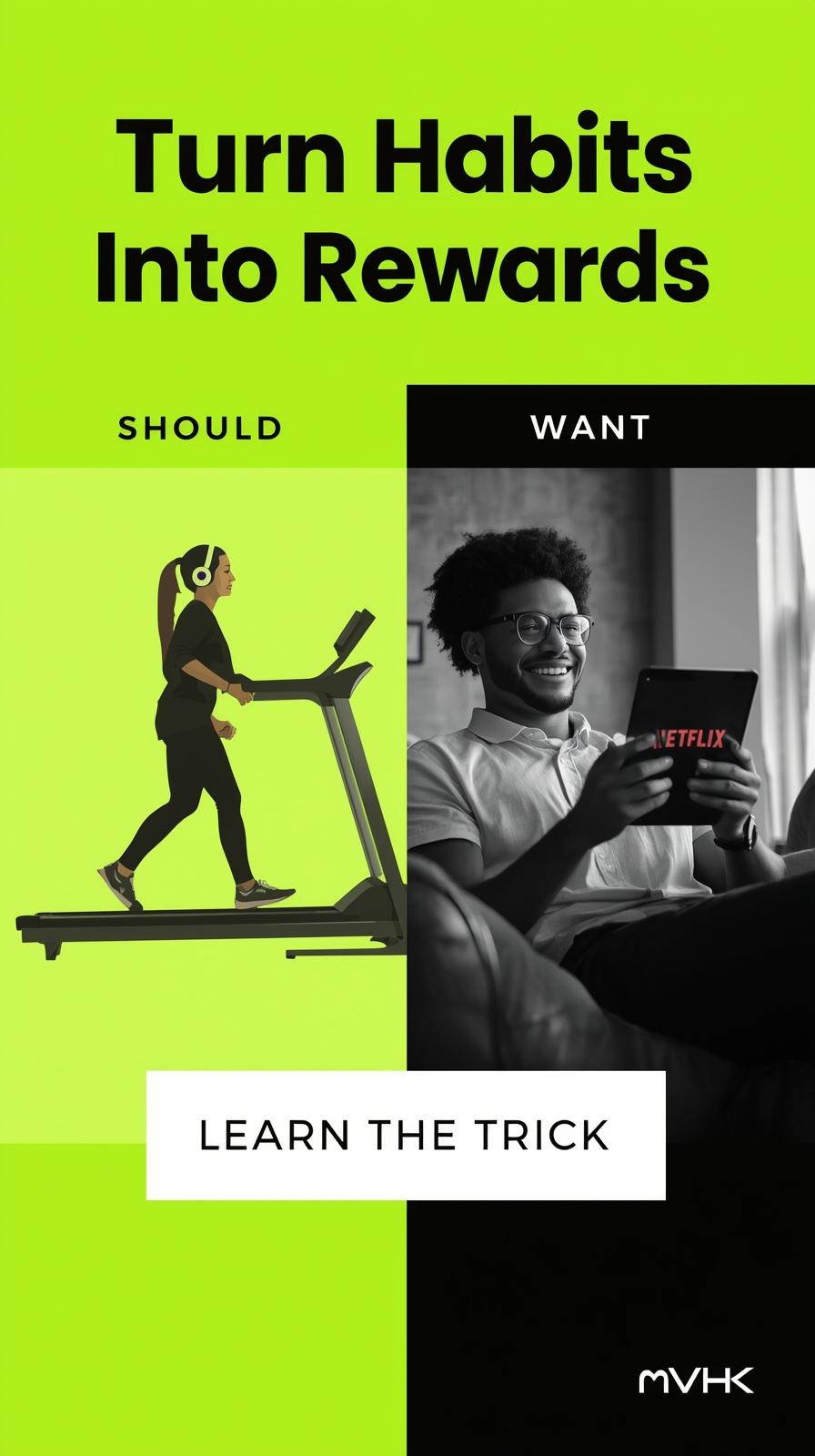
Temptation bundling is the concept of linking an instantly rewarding activity with a long-term beneficial one. Coined by behavioral economist Katherine Milkman, the idea stems from the principle of hyperbolic discounting—our brain’s preference for short-term pleasure over long-term gains.
In a 2013 study titled Holding the Hunger Games Hostage at the Gym, Milkman and colleagues found that participants were 29% more likely to exercise when they could only listen to a favorite audiobook while at the gym. The results were clear: by bundling temptations with obligations, people stuck to their goals more often.
Mechanism Explained:
- Dopamine Anticipation: Bundling creates a dopamine-driven association with the “should” task.
- Cognitive Association: Over time, your brain starts linking the desirable activity with the productive one.
- Reward Pairing: You train yourself to look forward to chores, workouts, and admin tasks.
Expert Opinion:
“Temptation bundling is one of the simplest yet most effective habit hacks. It makes self-control feel like indulgence.”
– Dr. Wendy Wood, author of Good Habits, Bad Habits
💪 Implementation Guide
Getting Started
Step 1: Identify a “should” task (e.g., running, cleaning, admin work).
Step 2: Pair it with a “want” task (e.g., true crime podcast, new show episode).
Step 3: ONLY allow yourself to enjoy the “want” activity during the “should” task.
Examples:
- Only watch your favorite show while on the treadmill
- Listen to a podcast only while folding laundry
- Sip a gourmet latte only while answering emails
Progression Strategies
- Use an if-then rule: “If I walk, then I get to watch Netflix.”
- Stack habits with time blocking: Schedule the bundle into your calendar.
- Track behavior: Use apps like Streaks or Habitica to reinforce the loop.
Common Mistakes to Avoid
- Letting the “want” activity creep outside the bundle
- Pairing tasks that require equal focus (e.g., reading and writing)
- Not setting clear boundaries (e.g., “only on weekdays” or “during workout”)
🚀 Advanced Techniques
Personalization
Not all temptations work the same for everyone. Some people respond better to entertainment rewards, others to culinary treats or social engagement. Find what lights up your reward circuits.
Tech Integration
- Use apps that lock/unlock access (e.g., Freedom, Cold Turkey)
- Smart headphones with auto-play triggers when movement is detected
- Treadmills with tablet holders or built-in entertainment
Sustainability
- Rotate reward content to avoid burnout
- Build in “free choice” days to avoid dependence
- Shift from extrinsic to intrinsic motivation over time
📊 Results & Success Stories
Case Study: Amanda, Busy Mom of 2
Amanda used to dread folding laundry. After bundling it with true crime podcasts, she reported “looking forward to laundry day” and stuck with the habit for 9 straight months.
Case Study: Rahul, Remote Worker
Rahul combined podcast learning with 15-minute daily walks. Over 12 weeks, he logged 85% more steps and completed 14 audiobooks.
Community Feedback
Surveys show that over 67% of users who try temptation bundling report increased habit adherence within the first 30 days.
🎯 Action Plan: Start Today
Week 1–2: Foundation
- List 3 “should” tasks and 3 “want” activities
- Create one new bundle
- Track consistency with a simple habit tracker
Week 3–4: Progression
- Add a second bundle
- Use tech to reinforce pairing
- Check in weekly on your mood and consistency
Long-Term Maintenance
- Switch reward content monthly
- Use temptation bundling for new habits (e.g., language learning + walking)
- Share your system with others for accountability
🧠 FAQ Section
What is temptation bundling?
Temptation bundling is the practice of pairing a task you should do with one you want to do to increase habit consistency.
Why does temptation bundling work?
It leverages the brain’s dopamine reward system to make productive tasks feel enjoyable by association.
How do I implement temptation bundling?
Start by choosing a fun activity you’ll only do while performing your less-desired task. The consistency of pairing creates a lasting habit loop.
How long before I see results?
Most people notice increased consistency within 2–4 weeks. Long-term behavior change depends on sustained bundling and routine.
Is this method safe or recommended by experts?
Yes—it’s supported by behavioral economists and psychologists as a low-risk, high-impact method for behavior change.