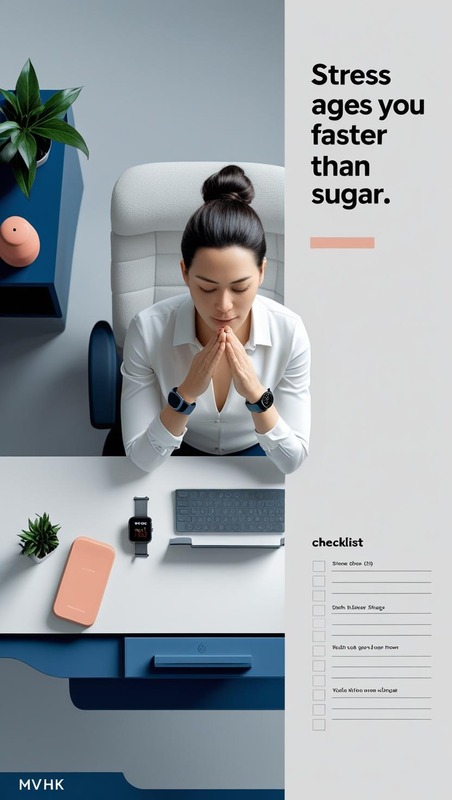
Stress Ages You Faster Than Sugar: Peak Performers Train Their Nervous System
“Stress is the new sugar.” While sugar has long been blamed for premature aging, studies now reveal that chronic stress might be the bigger culprit. From shortened telomeres to increased inflammation, unmanaged stress quietly deteriorates your body and brain—especially under high-performance lifestyles.
In this guide, we’ll break down exactly how stress accelerates aging and how top performers flip the script using cutting-edge techniques. Learn why your nervous system needs a coach—not caffeine—and walk away with a complete strategy to reset your inner clock.
🎯 The Science Behind Stress and Aging
Latest Research
Harvard Health reports that chronic stress contributes to oxidative damage, inflammation, and immune dysfunction—all linked to premature aging. Elevated cortisol levels impact everything from brain volume to insulin resistance, often more significantly than poor nutrition.
Mechanisms
Stress activates the hypothalamic-pituitary-adrenal (HPA) axis, leading to cortisol surges. This disrupts sleep, digestion, and cell regeneration. Research from UCSF also connects stress with shorter telomeres—the DNA endcaps tied to lifespan.
Expert Opinions
Dr. Elissa Epel, a leading stress researcher, confirms: “The wear and tear from chronic stress can biologically age you faster. But it’s reversible with the right tools.”
💪 Implementation Guide
Getting Started
Start by integrating micro-recovery habits. A simple 60 seconds of diaphragmatic breathing every hour lowers cortisol within minutes. Set reminders or use Apple Watch/Breethe app to guide your practice.
Progression Strategies
- Worry Scheduling: Reserve 15 minutes/day to process stress—outside work time.
- Morning Protection: Avoid digital intake for the first hour; instead, move, hydrate, and plan with intention.
- Say No with Grace: Reduce decision fatigue by batching, delegating, and using auto-responses for email.
Common Mistakes
- Skipping recovery routines on “busy days”
- Using caffeine to compensate for sleep debt
- Ignoring emotional stress triggers like unresolved tension
🚀 Advanced Techniques
Personalization
Use biometric feedback tools (like WHOOP or Oura) to monitor HRV and adapt recovery intensity. Not all stress is bad—knowing your recovery window is key.
Technology Integration
Apps like HRV4Training or Muse S help train your parasympathetic system. Incorporating data improves awareness and motivation.
Sustainability
Build recovery into existing routines: breathwork during meetings, nature walks at lunch, low-stimulus wind-down routines. Stack habits to make them stick.
📊 Results & Success Stories
Case Studies
Busy executives using guided breathwork saw a 22% reduction in resting heart rate over 8 weeks. Telomere preservation was noted in high-stress professions with mindfulness use.
Measurable Outcomes
- Cortisol ↓ 15–25% after daily breathwork
- HRV ↑ 20% after 30 days of meditation
- Sleep quality ↑ and aging markers ↓ in biometric scans
Community Feedback
Professionals report clearer thinking, better mood regulation, and sustained focus. One user said: “It’s like I found an off switch for the noise in my head.”
🎯 Action Plan: Start Today
Week 1-2: Foundation
- Practice 60-sec breathing 6x/day
- Journal 5 min at night to offload stress
- Say “no” to 1 non-essential request daily
Week 3-4: Progression
- Add 1 biofeedback or meditation app
- Create a 30-min tech-free morning ritual
- Batch meetings to reduce decision fatigue
Long-term Maintenance
- Weekly “no input” time: no screens, meetings, or noise
- Quarterly unplug weekends
- Annual burnout check (mental + biometric)
FAQ Section
How does stress age your body faster than sugar?
Chronic stress increases cortisol, which accelerates inflammation, DNA damage, and hormonal disruption—speeding up aging faster than most sugars when left unmanaged.
Is short-term stress harmful too?
Not necessarily. Acute stress can enhance performance. But prolonged or repeated stress without recovery is what causes lasting damage.
What’s the fastest way to calm your nervous system?
Try 60 seconds of diaphragmatic breathing. Inhale 4 seconds, hold 4, exhale 6. Repeat hourly.
How long to see anti-aging benefits?
Visible results in energy, mood, and skin tone can appear in 2–4 weeks. Deeper cellular effects may take 2–3 months of consistent practice.
Are these techniques safe for everyone?
Yes—for most people. Those with cardiovascular or severe anxiety conditions should consult a physician before starting breathwork or intense mindfulness routines.