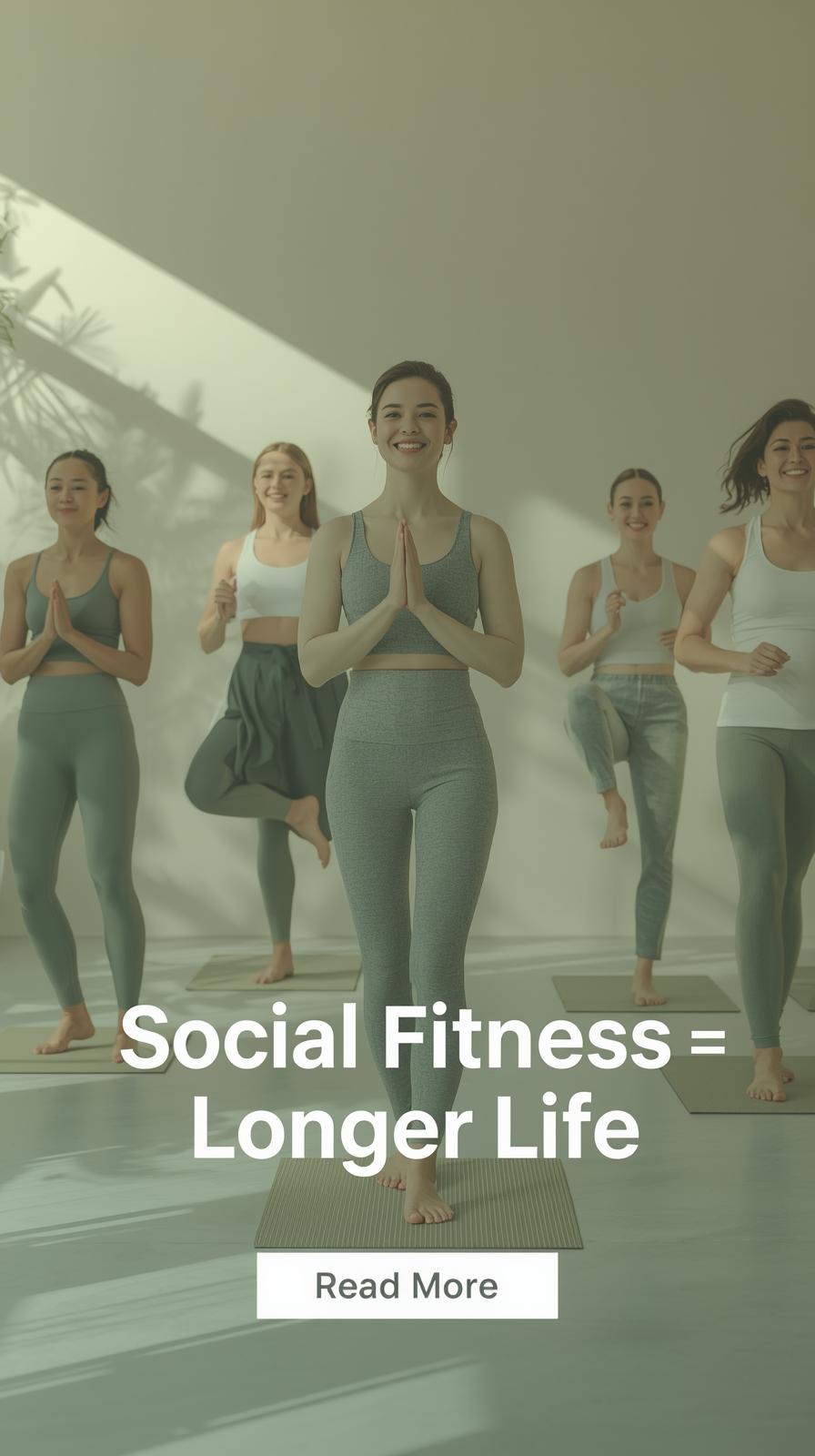
Social Fitness and Longevity: How Connection Adds Years to Your Life
Feeling lonely isn’t just emotionally painful—it could actually shorten your life. According to research from Brigham Young University, chronic loneliness can be as harmful to your health as smoking up to 15 cigarettes per day. In a world of hyper-connectivity yet increasing isolation, one of the most effective and overlooked wellness strategies is social fitness—the practice of combining physical activity with meaningful social interaction.
Whether it’s playing doubles tennis, joining a local running group, or simply walking with a friend, social fitness nurtures both the body and brain. This article explores the emerging science of social connectedness as a longevity booster, and how you can integrate it into your routine for maximum healthspan.
🎯 The Science Behind Social Fitness and Life Extension
Latest Research
Several studies have firmly established a link between social bonds and longevity. The Harvard Study of Adult Development—spanning over 80 years—found that close relationships, more than money or fame, are what keep people happy and healthy. In fact, participants with strong social ties lived longer and had fewer health issues than their isolated counterparts.
A meta-analysis published in PLoS Medicine (Holt-Lunstad et al., 2010) revealed that individuals with solid social relationships had a 50% increased likelihood of survival, regardless of age, gender, or health status. That’s a better survival rate than most clinical interventions.
Mechanisms
How exactly does socializing affect lifespan?
- Stress Reduction: Group activities lower cortisol and help regulate the stress response.
- Hormonal Benefits: Social connection triggers the release of oxytocin, promoting emotional stability and cardiovascular health.
- Neuroplasticity: Engaging in shared activities boosts brain function, memory, and learning.
- Immune Support: Studies show better immune function in socially active individuals.
Expert Opinions
Dr. Julianne Holt-Lunstad, a pioneer in this field, asserts:
“The magnitude of the effect of social relationships on mortality is comparable with well-established risk factors such as smoking and alcohol consumption.”
Dr. Robert Waldinger, director of the Harvard Study of Adult Development, adds:
“Loneliness kills. It’s as powerful as smoking or alcoholism. The people who are more socially connected to family, to friends, to community, are happier, physically healthier, and they live longer.”
💪 Implementation Guide
Getting Started
If you’re not already blending fitness and social life, start with low-pressure approaches:
- Invite a friend for daily walks.
- Join a community fitness class or hiking group.
- Try partner workouts—yoga, resistance band circuits, or dance classes.
Progression Strategies
- Set shared fitness goals with a friend or partner.
- Organize weekly fitness meetups or friendly competitions.
- Use apps like Meetup, Strava, or Fitbit Challenges to connect with local or global workout communities.
Common Mistakes
- Overcommitting: Don’t overbook yourself—quality > quantity.
- Forcing fit: Don’t push relationships that feel forced or competitive.
- Solo isolation in crowds: Attending group classes but not engaging socially doesn’t reap the same benefits. Make conversation!
🚀 Advanced Techniques
Personalization
Social fitness isn’t one-size-fits-all. Consider your preferences:
- Introverts: Small group hikes, partner workouts, or wellness book clubs.
- Extroverts: Dance parties, CrossFit, or community sports leagues.
- Couples: Shared fitness goals and date nights centered around activity.
Technology Integration
- Wearables now track Heart Rate Variability (HRV) and stress response—monitor how social fitness affects your biometrics.
- AI apps like Woebot and Replika are experimenting with socially supportive digital interaction.
- Smart rings and watches help monitor sleep and mood affected by social engagement.
Sustainability
To make it stick:
- Stack habits: Combine fitness with socializing and another enjoyable activity (e.g., smoothie bar post-run).
- Anchor in values: Focus on connection over competition.
- Celebrate consistency, not perfection.
📊 Results & Success Stories
Case Studies
- Sara (42) joined a weekend trail-running group and reported losing 10 pounds in 3 months—without feeling like she was “exercising.”
- Dan and Lily, a retired couple, added ballroom dancing to their weekly routine. Both reported lower blood pressure and improved mood.
Measurable Outcomes
- Participants in a UK social prescribing pilot showed a 60% improvement in self-reported well-being after joining fitness-based social groups.
- In Japan’s Blue Zones, elders participating in “moai” (social support circles) show lower rates of heart disease and dementia.
Community Feedback
From Reddit to Facebook groups, countless fitness communities confirm:
“I stuck with it because of the people.”
“My gym is my therapy.”
“The accountability made the difference.”
🎯 Action Plan: Start Today
Week 1–2: Build a Base
- Identify 1-2 people to invite for a weekly walk or workout.
- Try one new group fitness class.
Week 3–4: Deepen the Habit
- Join a recurring club or fitness meet-up.
- Set a shared challenge (e.g., steps per day, yoga streak).
Long-term Maintenance
- Rotate activities to keep things fresh (seasonal sports, themed walks).
- Host a quarterly “Fit & Fun” gathering—potluck + workout.
🧠 FAQ: Social Fitness & Longevity
Is social fitness really better than solo workouts?
Yes. While solo workouts benefit physical health, social fitness adds emotional, cognitive, and hormonal benefits linked to longer lifespan.
What if I’m shy or introverted?
Start small. Partner workouts or calm environments like yoga or nature walks can provide connection without social overload.
How do I make new fitness friends?
Use local Facebook groups, apps like Meetup or Strava, or join community centers and fitness studios with social focus.
When will I see benefits?
Mood improvements can happen immediately. Longevity and physical markers (HRV, BP) show within 3–6 months of consistent social activity.
Is there a risk of overdoing it?
Yes—avoid burnout or toxic dynamics. Choose environments that feel emotionally safe and uplifting.