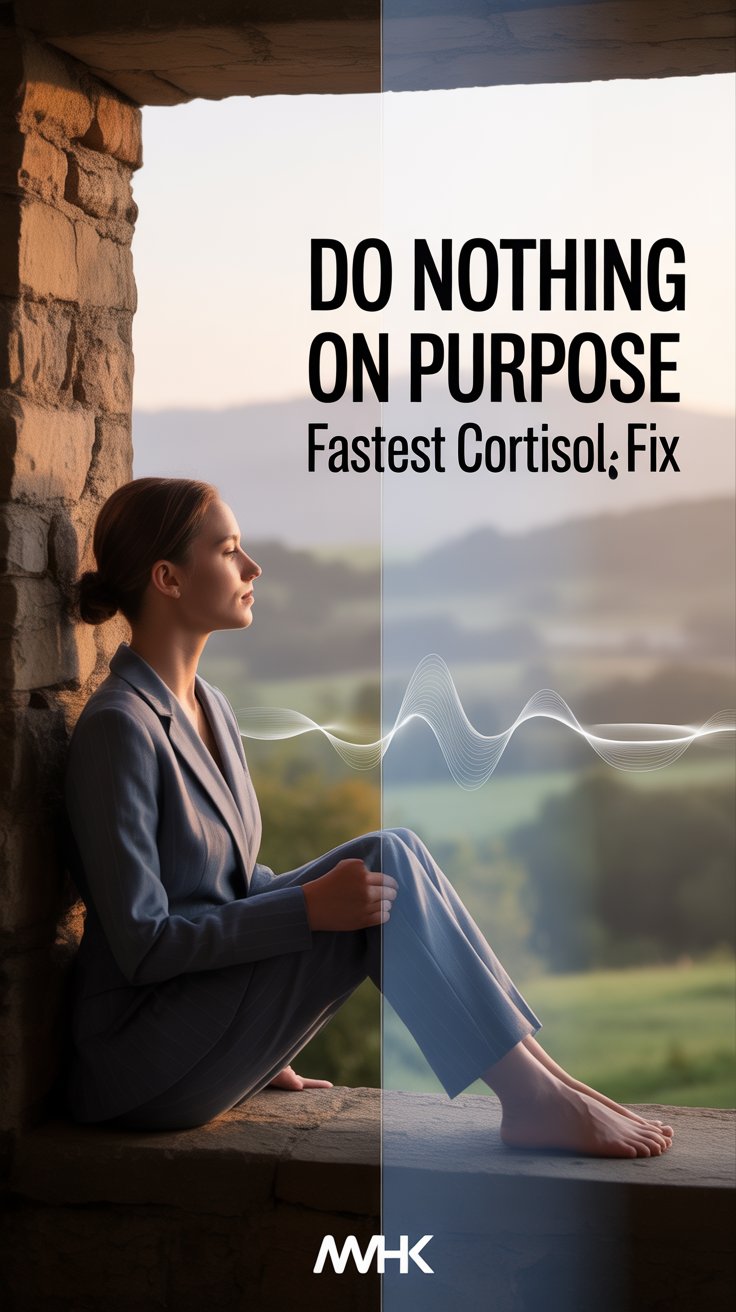
Do Nothing on Purpose: Fastest Way to Lower Cortisol
Ever feel exhausted but unable to relax? That’s cortisol wreaking havoc. It’s your body’s main stress hormone, and in 2025’s hustle culture, it’s elevated more than ever.
The fastest fix? Stillness—but not just rest. We’re talking deliberate stillness, a science-backed practice known as NSDR (Non-Sleep Deep Rest) or “deliberate boredom.” In this article, you’ll uncover how sitting still, doing absolutely nothing, can reset your nervous system, stabilize blood sugar, and even improve fat loss.
🎯 The Science Behind NSDR & Cortisol
Latest Research
High cortisol doesn’t just affect stress—it impacts sleep, blood sugar, inflammation, memory, and weight gain. According to Harvard Health, relaxation practices can rapidly downregulate the HPA axis, the body’s central stress response system.
Mechanisms
When you sit quietly, your parasympathetic nervous system kicks in. Heart rate drops. Breathing slows. The body shifts from “fight or flight” to “rest and digest,” reducing cortisol secretion from the adrenal glands.
Expert Opinions
Dr. Andrew Huberman, neuroscientist at Stanford, emphasizes NSDR as a core pillar of daily recovery. “It’s the fastest way to engage neuroplasticity and lower stress hormones without drugs or supplements,” he says.
💪 Implementation Guide
Getting Started
- Find a quiet space (window seat, park bench, quiet room)
- Set a timer for 10 minutes
- No phone, no talking, no input—just sit and breathe
Progression Strategies
- Start with 3–5 minutes, increase to 20 minutes over weeks
- Pair with breathwork: inhale 4 seconds, exhale 6 seconds
- Use post-lunch or post-work as your reset anchor
Common Mistakes
- Thinking you’re “wasting time”
- Bringing in podcasts or music (avoid input)
- Treating it like meditation (NSDR is passive, not focus-intensive)
🚀 Advanced Techniques
Personalization
Busy professionals might prefer micro-breaks: 2-minute window gazing between meetings. Others benefit from longer evening wind-downs before bed.
Technology Integration
While NSDR is no-tech, apps like Reveri or Brain.fm (NSDR mode) can ease beginners into the practice with audio cueing—used initially, then phased out.
Sustainability
Integrate NSDR into lunch breaks, post-gym cooldowns, or transitions between tasks. Build it into your habit stack: “After lunch, I sit quietly for 10 minutes.”
📊 Results & Success Stories
Case Studies
- A corporate executive in NYC replaced afternoon coffee with NSDR. After 2 weeks: improved sleep, reduced headaches, and normalized blood pressure.
- Fitness coach Maria used it post-workout instead of phone scrolling and noticed a 2lb fat loss in 3 weeks—same workouts, less cortisol.
Measurable Outcomes
- Decrease in resting heart rate by 8 bpm
- Improved HRV (Heart Rate Variability) scores
- Deeper, more restorative sleep (tracked via Oura Ring)
Community Feedback
“NSDR saved me from burnout.”
“It feels like a reset button for my brain.”
“This is the first time I lost weight by doing less.”
🎯 Action Plan: Start Today
Week 1–2: Foundation
- 5 minutes of sitting still daily
- Anchor it to a regular habit (after breakfast, before bed)
- Journaling your response afterward
Week 3–4: Progression
- Increase to 10–15 minutes
- Remove all external cues (apps, audio)
- Add slow walking (no headphones) as an alt NSDR mode
Long-term Maintenance
- Use NSDR pre-sleep, during high-stress phases, or mid-day slumps
- Teach it to family, kids, or coworkers
- Consider deliberate boredom Sundays (no devices, no agenda)
🔍 Frequently Asked Questions
What is non-sleep deep rest (NSDR)?
NSDR refers to a state of deep physical and mental relaxation without actual sleep. It uses parasympathetic activation to restore nervous system balance.
How fast can NSDR reduce cortisol?
Within minutes. Studies show that even 10 minutes of deep rest can reduce serum cortisol levels measurably.
How do I start NSDR as a beginner?
Start with sitting quietly, eyes open or closed, no input, for 3–5 minutes. Focus on breath and letting thoughts pass without judgment.
How long until I see results?
Most people report better sleep and calmer moods within one week. Body composition and blood sugar regulation typically improve by week 3–4.
Is NSDR safe for everyone?
Yes. It’s non-invasive, passive, and free. However, individuals with PTSD or trauma history may want to consult a therapist before starting intensive stillness practices.