Anxiety Isn’t Just in Your Head: How to Release It From the Nervous System
💡 Key Takeaways
- Anxiety is a physiological nervous system state, not just a mental one
- Body-based interventions can rapidly shift autonomic balance
- Simple sensory inputs (cold, movement, vision) directly affect vagal tone
- Consistent nervous-system regulation outperforms willpower alone
Introduction
Anxiety is often treated as a thinking problem—but neuroscience tells a very different story. Anxiety is a state of the nervous system, embedded in sensory processing, threat detection, and autonomic imbalance. This explains why “just calm down” never works.
Modern stressors keep your body locked in sympathetic dominance, even when danger is absent. Over time, this leads to panic attacks, hypervigilance, rumination, and exhaustion.
The solution isn’t suppressing anxiety—it’s discharging it from the body. Below are evidence-based, medication-free techniques that directly regulate the nervous system using ancient reflexes and modern neuroscience.
What Is the Science Behind Body-Based Anxiety Release?
Direct Answer: Body-based techniques work because they shift autonomic nervous system signaling faster than cognitive strategies.
Anxiety reflects dysregulation between the sympathetic (“threat”) and parasympathetic (“safety”) branches. Research published in Nature Neuroscience and Cell shows that sensory input reaches autonomic centers before conscious thought.
Cold exposure, rhythmic motion, and visual expansion activate brainstem circuits connected to the vagus nerve, nucleus tractus solitarius, and vestibular system—bypassing overactive cortical loops.
Key mechanisms include:
- Increased vagal tone
- Reduced Default Mode Network rumination
- Downregulation of salience network threat tagging
- GABAergic inhibitory signaling
These pathways explain why body-first interventions often work when talk therapy alone does not.
How Do You Implement These Techniques Properly?
Direct Answer: You apply them during heightened arousal to interrupt the stress loop at the nervous-system level.
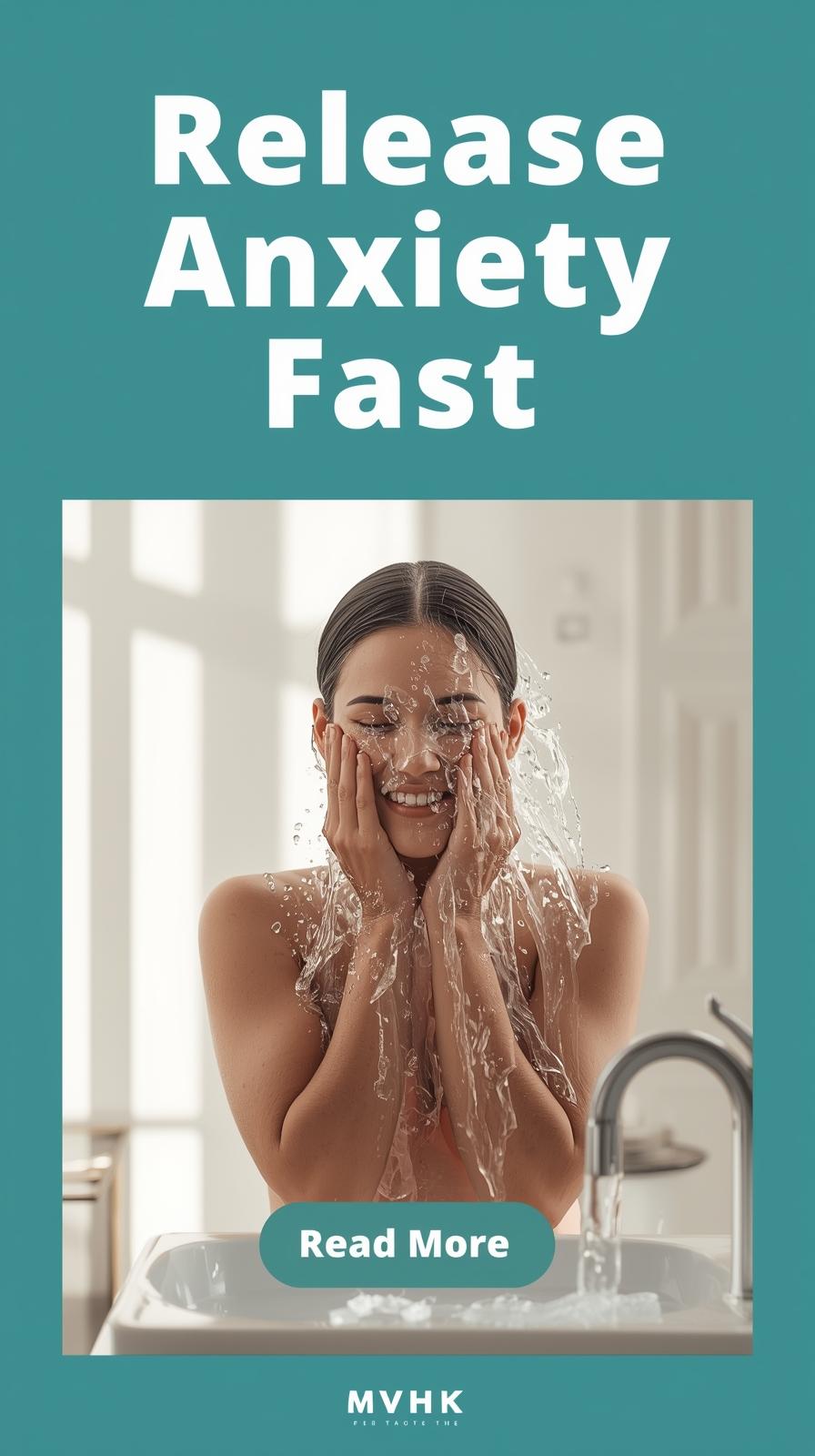
1. Cold Water on Your Face
Input preserved exactly
Cold water on your face triggers the mammalian diving reflex → increases parasympathetic (vagal) activity and slows your heart rate, which helps interrupt panic attacks.
Cold water also signals GABAergic release, giving you a quick, refreshing, invigorating feeling. It’s a sure-fire way to interrupt negative thought loops.
How to use:
- Splash cold water for 20–30 seconds
- Best during panic or racing thoughts
2. Device-Free Walking
Input preserved exactly
Device-free walking resets threat scanning. Rhythmic movement and sensory flow reduce sustained threat monitoring. It lowers maladaptive mind-wandering (DMN rumination).
The salience network is not jolted with urgent pings, and walking helps metabolize stress-related chemicals such as catecholamines.
How to use:
- 10–30 minutes
- Outdoors preferred
- No phone or music
3. Eye Softening
Input preserved exactly
Threat states narrow our visual attention, creating tunnel vision. Softening or widening your gaze reduces defensive narrowing and sends a safety cue through the orienting system.
It shifts the freeze response and reduces attentional bias linked to anxiety.
How to use:
- Gently expand peripheral vision
- Maintain for 60–90 seconds
4. Rocking Movements
Input preserved exactly
Rocking movements are self-soothing. Rhythmic vestibular stimulation reduces arousal by entraining a steady rhythm and shifting attention to bodily sensation.
Best use: slow rocking or sway for 1–3 minutes during high agitation.



4
What Advanced Techniques Maximize Results?
Direct Answer: Stacking nervous-system inputs compounds regulation effects.
- Cold exposure + slow exhale breathing
- Walking + eye softening
- Rocking + nasal breathing
Wearables measuring HRV can track improvements in autonomic flexibility.
What Are the Real-World Results?
Direct Answer: Most people experience measurable calm within minutes, not weeks.
Clinical observations show:
- Reduced panic frequency within days
- Improved sleep latency
- Lower baseline muscle tension
- Improved emotional regulation
Long-term practice reshapes threat sensitivity at the nervous-system level.
Action Plan: Your 4-Week Protocol
Week 1: Cold water + eye softening
Week 2: Add device-free walking
Week 3: Stack techniques
Week 4: Personalize timing and duration
Consistency beats intensity.
Frequently Asked Questions
Is anxiety really stored in the body?
Yes. Anxiety reflects autonomic patterning, muscle tone, breathing, and sensory bias—not just thoughts.
How fast do these techniques work?
Many work within 30–120 seconds by activating brainstem reflexes.
Can this replace medication?
These techniques support regulation but do not replace medical care when needed.
Why doesn’t thinking my way out work?
Because autonomic signals precede conscious thought.
Are these safe daily?
Yes—these are natural regulatory inputs your nervous system evolved to use.