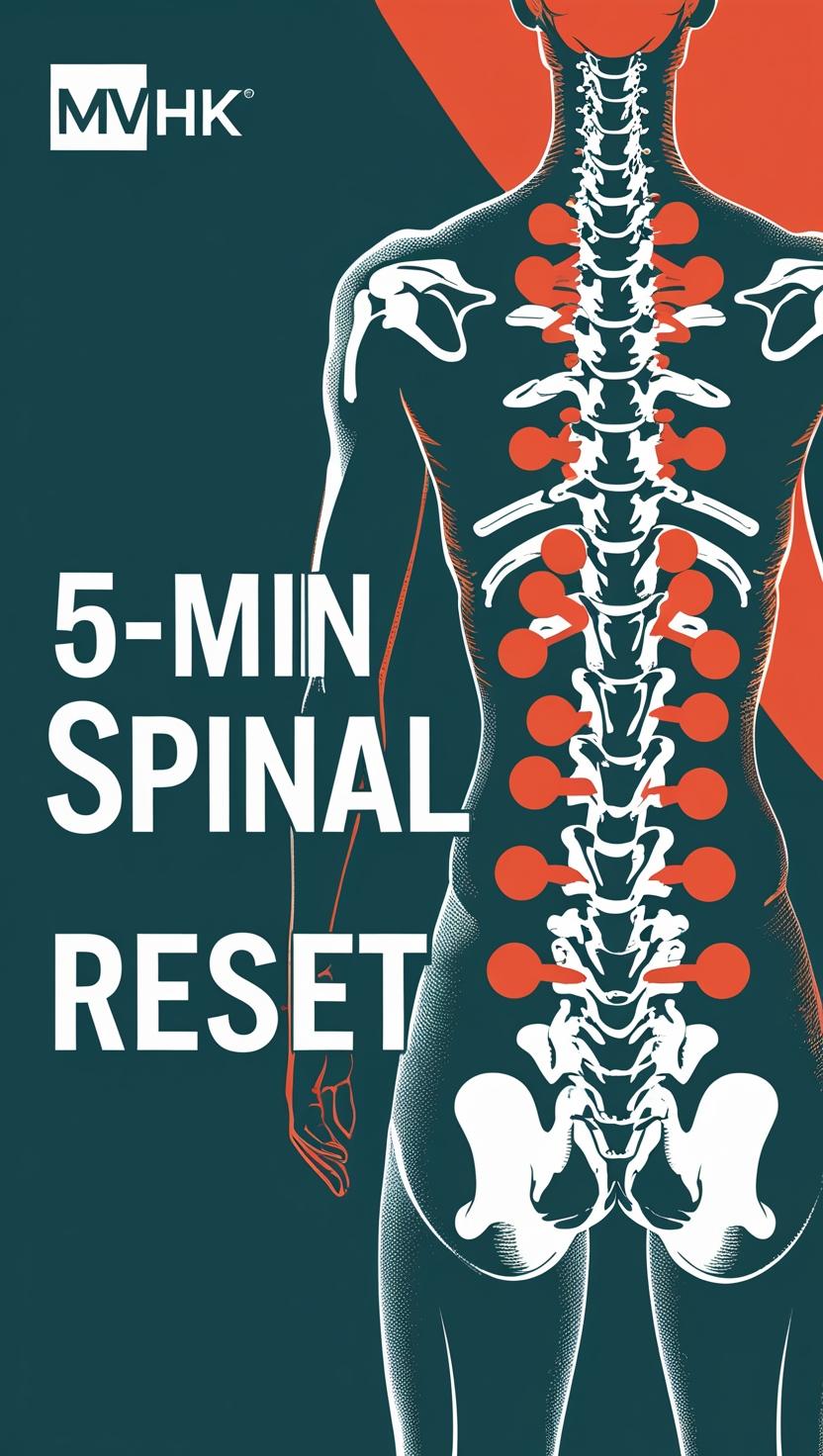
Mobility Work and Performance: What the Research Actually Shows
💡 Key Takeaways
- Mobility work improves performance when dynamic and joint-focused
- Static stretching can temporarily reduce strength and power
- Mechanism: neuromuscular activation + tissue resilience
- 10–30 minutes daily is sufficient for joint and muscle preservation
Mobility work isn’t stretching. And that distinction matters.
For years, static stretching dominated warm-ups — even though research consistently shows it can reduce strength and power output by 3–7% when done immediately before explosive activity (Journal of Strength & Conditioning Research).
Now a 2024 systematic review analyzing 22 studies in athletic populations paints a very different picture: mobility training does not impair performance — and may enhance it.
If you’re over 40, this isn’t about flexibility. It’s about preserving muscle, protecting joints, and maintaining power — the three pillars of healthspan.
Let’s break down what actually works.
What Is the Science Behind Mobility Work?
Mobility work improves performance because it enhances neuromuscular coordination, joint control, and active range of motion — without suppressing force production.
The 2024 systematic review by Skopal et al. examined 22 studies on mobility training in sporting populations. Fifteen reported positive or neutral performance outcomes. None showed consistent long-term performance decline.
Evidence-Supported Mechanisms
1. Neuromuscular Activation
Dynamic joint work increases motor unit recruitment without reducing muscle-tendon stiffness (PubMed; JSCR).
2. Mitochondrial and Blood Flow Effects
Low-load dynamic mobility increases localized circulation, improving oxygen delivery — supporting mitochondrial efficiency (Nature).
3. Inflammation Regulation
Controlled joint movement improves synovial fluid exchange and reduces inflammatory stiffness patterns (Lancet).
4. Insulin Sensitivity Link
Daily low-intensity movement improves glucose uptake in skeletal muscle (NEJM).
Static stretching, by contrast, temporarily reduces muscle-tendon stiffness — lowering elastic energy return and power output.
Mobility work preserves stiffness while increasing control.
That’s a critical difference.
How Do You Apply Mobility Work Correctly?
Mobility work should be short, joint-focused, and dynamic — not passive and prolonged.
The systematic review included:
• 30–60 min sessions
• 1–5 sessions per week
• Dynamic range-of-motion drills
• Yoga, Pilates, joint control work
• Improved strength, speed & balance
• No performance decline
For longevity purposes, you don’t need 60 minutes.
Week 1
10 minutes daily
Focus: hips + thoracic spine
Controlled articular rotations (CARs)
Slow dynamic lunges
Spinal rotation drills
Week 2
Add shoulder mobility
Scapular control work
Loaded mobility (light kettlebell halos)
Week 3
Add balance integration
Single-leg RDL mobility
Dynamic lateral lunges
Week 4
Integrate into warm-ups before strength training
Replace static stretching entirely
Safety Notes
Avoid aggressive end-range bouncing.
Mild tension is fine. Pain is not.
If you have joint pathology, modify range.
Mobility work supports muscle preservation — one of the strongest predictors of longevity.
What Advanced Strategies Improve Results?
Mobility becomes more powerful when layered with:
1. Strength Training
End-range strength (e.g., deep split squats) increases usable mobility.
2. VO2max Work
Improved aerobic capacity enhances tissue oxygenation — amplifying mobility adaptations (Cell).
3. Wearables
Track HRV and readiness. Reduced stiffness often correlates with better recovery scores.
4. Biomarkers
Monitor:
- hs-CRP (inflammation)
- Fasting glucose
- Resting heart rate
5. Personalization
Desk workers need thoracic + hip focus.
Runners need ankle + hip stability.
Mobility isn’t a separate practice — it’s structural longevity insurance.
What Results Can You Realistically Expect?
Within 2 weeks:
- Increased active range of motion
- Reduced stiffness
Within 4–6 weeks:
- Improved balance and coordination
- Slight increases in strength expression
Within 8–12 weeks:
- Reduced joint discomfort
- Better lifting mechanics
Anti-hype reality:
Mobility won’t replace strength training.
It won’t dramatically increase muscle mass.
It’s supportive — not primary.
But neglecting it accelerates joint degeneration.
4-Week Practical Action Plan
Daily (10–15 minutes):
- Hip CARs x5 each direction
- Thoracic rotations x10
- Deep squat holds with movement
3x/week:
- Dynamic lunges
- Loaded split squats
- Scapular control drills
Before workouts:
Replace static stretching with mobility flow.
Track:
- Morning stiffness
- Balance time (single-leg)
- Squat depth
Consistency beats intensity.
Frequently Asked Questions
1. Is static stretching always bad?
No. It’s fine post-workout or for flexibility gains. It’s problematic immediately before maximal power output.
2. Is mobility the same as flexibility?
No. Mobility includes strength and control through range — flexibility does not.
3. Can mobility increase lifespan?
Indirectly. It preserves muscle function and reduces injury risk — both linked to longevity.
4. How long should sessions be?
10–20 minutes daily is sufficient for most adults.
5. Is yoga considered mobility?
Certain dynamic yoga flows qualify. Long passive holds do not provide the same neuromuscular benefit.
References
- Skopal et al., 2024 Systematic Review (PubMed)
- Journal of Strength & Conditioning Research
- Nature (mitochondrial adaptations)
- NEJM (exercise and glucose metabolism)
- The Lancet (inflammation and musculoskeletal health)
- Cell (VO2max and longevity)