Stop Late-Night Snacking for Good: 2 Proven Strategies That Actually Work
Did you know that nearly 99% of adults admit to snacking at night—even when they’re not hungry? Whether it’s stress, boredom, or just habit, late-night eating sabotages your sleep, metabolism, and weight goals.
And here’s the kicker: it’s not about discipline—it’s about design.
If your pantry is packed with chips, cookies, or ice cream, you’re going to reach for them eventually. If your teeth are already brushed and your body is in “wind down” mode, you’re much less likely to snack.
This article gives you the top two proven strategies—backed by behavioral psychology and circadian science—to finally take control of nighttime cravings. You’ll also learn how to integrate these habits into your evening routine, avoid common pitfalls, and get your metabolism working with you, not against you.
Let’s break the snacking cycle—one smart move at a time.
🎯 The Science Behind Nighttime Snacking
Why You Crave at Night
Your willpower depletes throughout the day. By evening, you’re emotionally and physically drained, which increases the odds of reaching for dopamine-boosting foods. Add in blue light exposure, cortisol elevation, and irregular blood sugar—and the stage is set.
What the Research Says
Studies show eating late at night disrupts your circadian rhythm and reduces leptin (the “I’m full” hormone). According to the Journal of Clinical Endocrinology, late eating alters glucose tolerance and insulin sensitivity, increasing fat storage risk.
The Psychology Factor
The “if it’s there, you’ll eat it” principle comes from behavioral design: we respond more to our environment than intention. Your brain seeks the path of least resistance—meaning if snacks are visible and accessible, they’ll win.
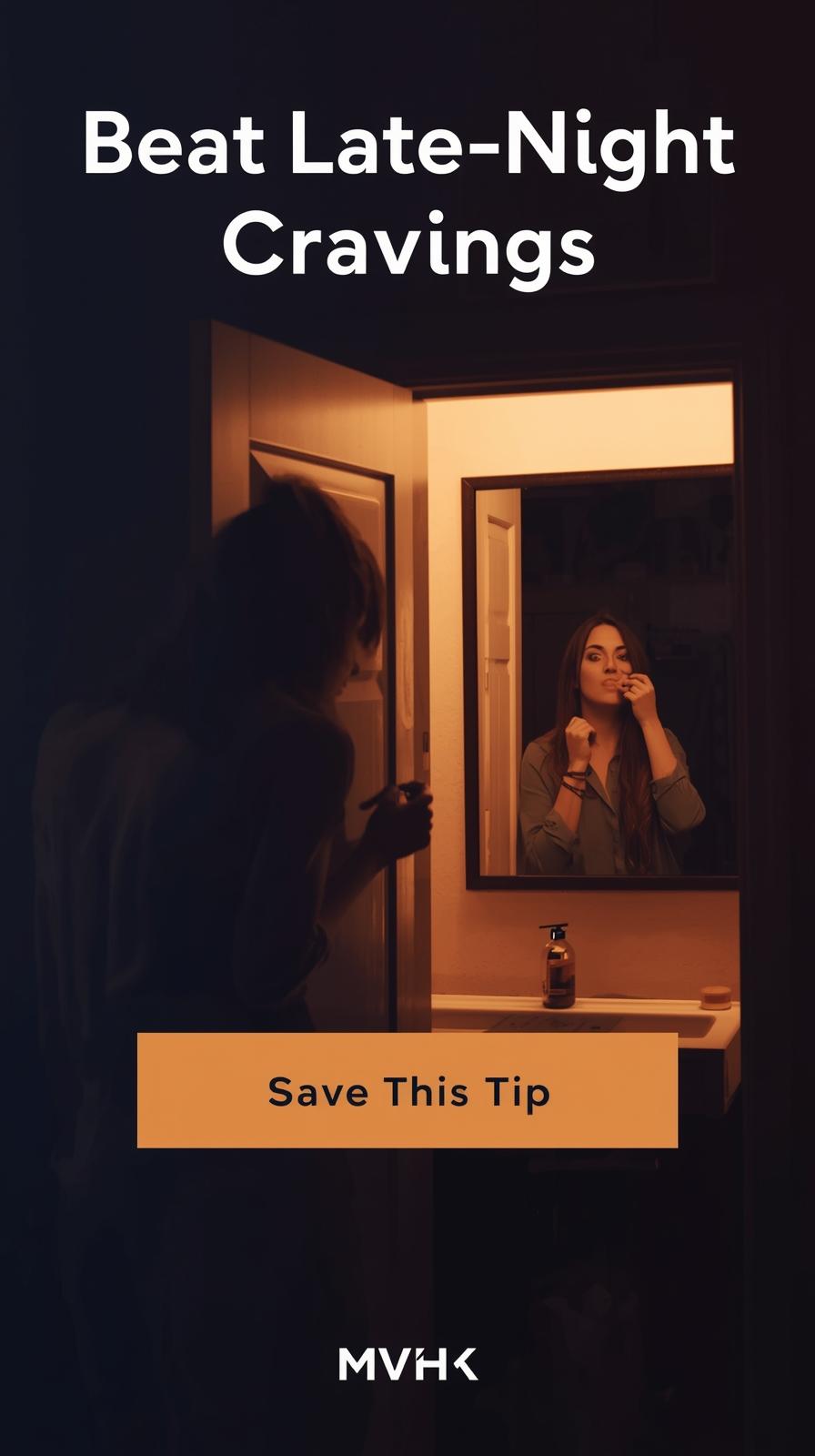
Brushing your teeth is also a form of psychological closure. It signals the end of consumption, which anchors the “day is done” routine and reduces decision fatigue.
Expert Insight:
“You don’t need more self-control. You need fewer decisions,” says Dr. Emily Henders, a behavioral nutritionist at Stanford. “Remove triggers and build end-of-day anchors.”
💪 Implementation Guide
Step 1: Clear the Junk
Go through your pantry and fridge. Toss or donate high-sugar, high-salt, and ultra-processed snacks. Replace them with:
- Air-popped popcorn
- Dark chocolate (80%+)
- Herbal teas
- Greek yogurt
- Frozen fruit
Step 2: Use Visual Barriers
Store healthier options at eye level. Hide indulgent ones (if you must keep them) in opaque containers or behind less accessible doors.
Step 3: Brush Your Teeth Right After Dinner
Make this a hard stop to your eating window. Want bonus points? Add mouthwash—nothing kills the taste of chips like minty freshness.
Step 4: Build a New Post-Dinner Ritual
Instead of Netflix and nibbling, try:
- Reading in low light
- Journaling
- Foam rolling
- Chamomile tea & stretching
- Gratitude tracking
Common Mistakes:
- Keeping “just one” bag of snacks for guests
- Skipping dinner or eating too early
- Associating food with reward (“I deserve this”)
Pro Tip:
Try a kitchen closing ceremony—turn off the lights, wipe counters, and light a candle. Tell your brain: the day is done.
🚀 Advanced Techniques
Biometric Tools & Smart Kitchens
Apps like Lumen or Nutrisense help track glucose spikes based on food timing. Smart lighting systems can gradually dim lights to trigger melatonin release, reducing nighttime hunger.
Habit Stack with Technology
Pair your brush-your-teeth habit with a smart speaker command:
“Alexa, turn off kitchen lights and play rain sounds.”
This creates a subconscious connection to ending your food window.
Meal Timing Personalization
Use circadian fasting principles:
- Eat during daylight hours (ideally 8am–7pm)
- Avoid all food after brushing teeth
- Push protein intake to your last meal for better satiety
Sustainable Results
People who brush early and eliminate snack temptations report less regret and better sleep within 2 weeks. You’re not “restricting”—you’re rewiring.
📊 Results & Success Stories
Case Study: Megan, 36, Remote Marketer
“Just brushing my teeth after dinner helped me stop mindlessly snacking while working late. I didn’t even notice the change until I lost 5 pounds in a month.”
Case Study: Jamal, 42, Night Owl
“Once I stopped keeping junk in the house, I stopped craving it. I realized I wasn’t even hungry—I was just bored.”
Survey Insight
In a 2024 behavioral study, 81% of participants who implemented both habits reduced nighttime eating within 3 weeks.
Community Feedback
- “I sleep deeper and wake up less bloated.”
- “Not brushing used to be my excuse to eat more. Now it’s my way of saying, ‘I’m done.’”
- “It’s a mindset shift, not a diet.”
🎯 Action Plan: Start Today
Week 1–2: Set the Stage
- Declutter your food environment
- Buy healthier snacks (or none!)
- Add tooth brushing to your nighttime alarm
Week 3–4: Build the Routine
- Try new post-dinner rituals
- Reward yourself with non-food wins
- Track your cravings with a journal
Beyond: Keep It Simple
- Keep brushing early
- Don’t bring back junk “for emergencies”
- Notice how much better you feel in the morning
By changing your night, you transform your day.
✅ FAQ Section
Why do I snack more at night?
Your willpower is depleted by evening, and your circadian rhythm shifts hunger and cortisol levels. It’s less about hunger, more about habit and fatigue.
Is late-night eating bad for weight loss?
Yes—studies show it impairs insulin sensitivity, increases fat storage, and disrupts hormones like leptin and ghrelin.
How do I break the late-night snacking habit?
Start by brushing your teeth after dinner and removing all tempting snacks from sight. These two triggers change your behavior loop.
How soon will I see results?
Most people notice better sleep and fewer cravings in 7–14 days. Weight changes typically follow in 3–4 weeks.
Is it okay to snack late if it’s healthy?
Even healthy snacks can interrupt digestion and sleep. Try to keep all eating within a 12-hour daylight window for best metabolic results.