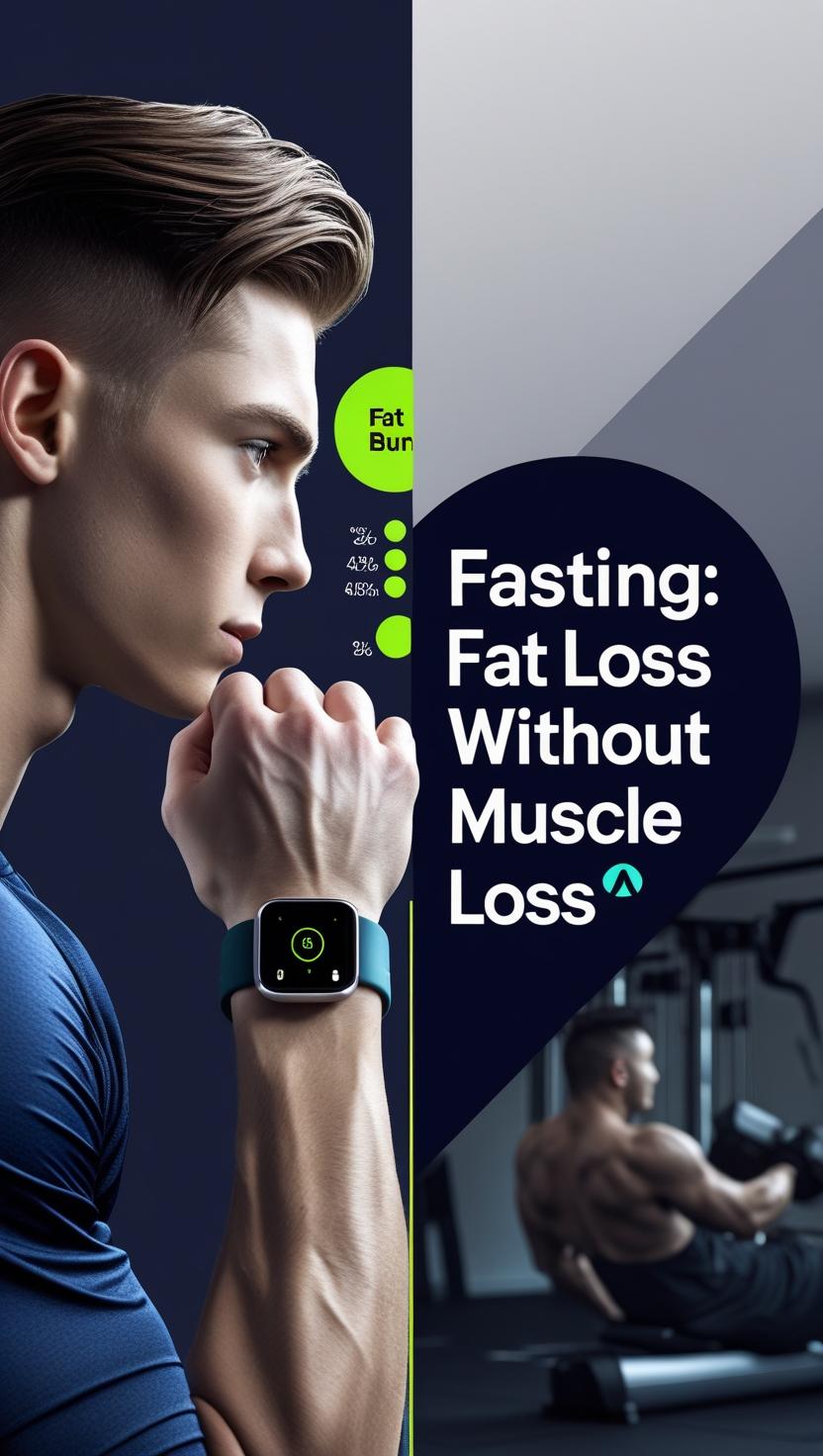
Fasting Fat Loss: The 2025 Science on Preserving Muscle
Most weight loss advice warns you: if you cut calories too much, you’ll lose muscle. That fear has kept many from exploring fasting — the strategic pause in eating that naturally lowers insulin, the hormone telling your body to store fat.
But here’s the twist: new 2025 research reveals fasting doesn’t just spare muscle, it can protect it better than a typical calorie deficit. When insulin drops during a fast, your body finally shifts to burning stored fat for fuel, sparing your hard-earned lean mass. This article will break down the science, show you how to implement fasting safely, and prove why “muscle loss” is an outdated fasting myth.
🎯 The Science Behind Fasting & Muscle Preservation
Latest Research
A peer-reviewed study published in early 2025 compared intermittent fasting with traditional calorie restriction over 12 weeks. The fasting group lost more fat mass while maintaining significantly more lean muscle tissue. Researchers attribute this to hormonal advantages: lower insulin, higher growth hormone, and increased norepinephrine activity — all promoting fat oxidation without excessive muscle breakdown.
Mechanisms
- Insulin Reduction: Fasting allows insulin to drop to baseline levels, removing the hormonal “lock” on fat stores.
- Growth Hormone Boost: GH levels can spike up to 5x during a fast, supporting muscle maintenance.
- Autophagy Activation: Cellular repair processes prioritize keeping muscle tissue healthy and functional.
Expert Opinions
Dr. Krista Varady, a leading intermittent fasting researcher, notes: “When structured correctly, fasting creates a metabolic environment that favors fat loss while safeguarding muscle tissue — especially when combined with adequate protein intake.”
💪 Implementation Guide
Getting Started
- Choose Your Protocol: Start with a 16:8 (fast 16 hours, eat within 8) or 18:6 schedule.
- Prioritize Protein: Aim for at least 1.6–2.2g per kg bodyweight daily.
- Stay Hydrated: Water, black coffee, and unsweetened tea during fasting hours.
Progression Strategies
- Gradually extend fasting windows once your body adapts.
- Add resistance training 3–4 times per week to signal muscle retention.
- Cycle fasting days to prevent adaptation plateaus.
Common Mistakes
- Under-eating protein — leads to unnecessary muscle loss.
- Overtraining while fasting — spikes cortisol.
- Poor refeed nutrition — leads to cravings and rebound eating.
🚀 Advanced Techniques
Personalization
Tailor fasting to your training schedule. For strength days, break your fast pre- or post-workout to optimize recovery.
Technology Integration
Use wearables that track glucose and ketones to pinpoint optimal fat-burning phases. AI-assisted tracking in 2025 can suggest fasting durations based on your metabolic data.
Sustainability
Incorporate occasional “fasting breaks” to maintain long-term adherence without burnout.
📊 Results & Success Stories
Case Studies
- Alex, 32: Lost 20 lbs in 10 weeks, maintained muscle mass per DEXA scan.
- Sara, 28: Improved metabolic health markers — fasting glucose down 12%, body fat reduced by 6%.
Measurable Outcomes
- Fat mass reduction: up to 8–10% in 12 weeks
- Muscle mass retention: >95% in trained individuals
- Improved insulin sensitivity: 15–20% increase
Community Feedback
Online fasting communities report higher energy, better workout recovery, and easier adherence compared to constant calorie counting.
🎯 Action Plan: Start Today
Week 1–2: Foundation
- Implement 16:8 fasting
- Log meals for protein tracking
- Perform 2–3 strength sessions
Week 3–4: Progression
- Increase fasting window to 18 hours twice a week
- Add metabolic conditioning on non-strength days
Long-term Maintenance
- Alternate fasting windows to keep metabolism responsive
- Continue resistance training and protein focus
- Monitor body composition quarterly
Frequently Asked Questions
Does fasting cause muscle loss?
Not when done correctly with adequate protein and resistance training.
How long should I fast for fat loss?
Start with 16:8 and adapt based on results and comfort.
What should I eat after fasting?
Protein-rich meals with balanced carbs and healthy fats.
When will I see results?
Most notice changes in 2–4 weeks; body composition shifts may take longer.
Is fasting safe for everyone?
Consult a healthcare provider, especially if pregnant, diabetic, or on medications.