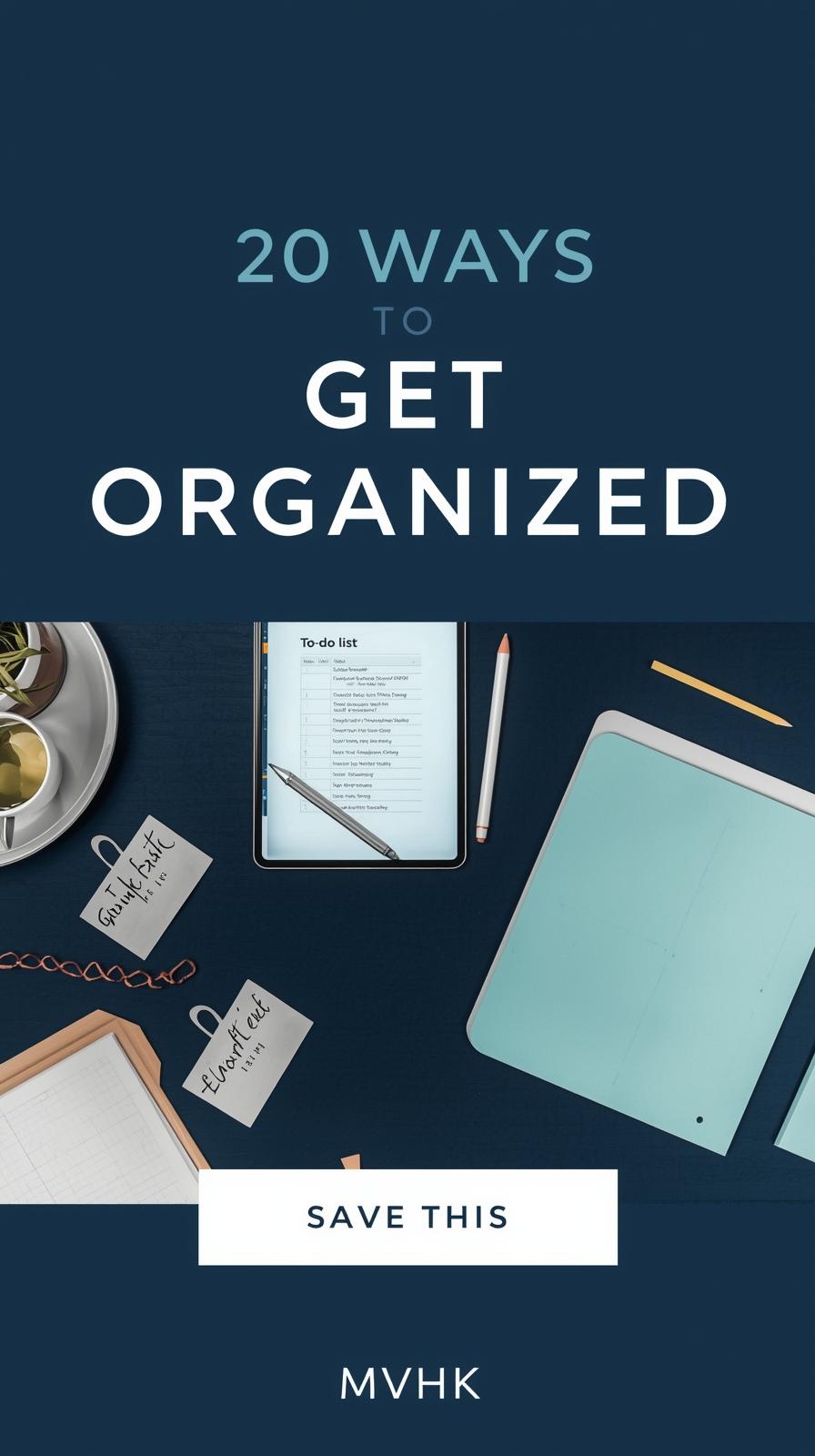
20 Habits of Seriously Organized People
What separates chronically overwhelmed people from those who seem to have it all together? It’s not magic—it’s habits. In a time when 47% of professionals say they’re constantly distracted (Statista, 2025), organization is no longer a luxury. It’s a necessity for mental health, career success, and sustainable productivity.
This guide breaks down 20 actionable, evidence-based habits that will help you become truly organized—from your inbox to your mind. Whether you’re a remote worker, solopreneur, or just tired of chaos, these tools are your fast-track to focus and freedom.
🎯 The Science Behind Being Organized
Cognitive Load & Memory Limits
Neuroscience confirms that our working memory can only hold about 4–7 items at once (Cowan, 2021). When you try to remember every task, deadline, or errand, your brain enters cognitive overload. Writing things down frees mental bandwidth for deeper work.
Mental Clarity = Physical Order
A 2024 UCLA study found that physical clutter directly increases cortisol levels, especially in women. Organized spaces support mental calm, better decision-making, and sleep.
Decision Fatigue is Real
Every unchecked inbox or messy workspace contributes to micro-decisions, which add up. Consistent systems—like digital folders, color coding, and prioritization—reduce this load.
Why It’s Crucial in 2025
With AI-powered productivity tools and hybrid workspaces dominating in 2025, personal organization isn’t just about being tidy. It’s about adapting efficiently to dynamic environments without burning out.
💪 Implementation Guide: How to Actually Get Organized
1. Write Everything Down
From grocery lists to random thoughts—capture everything in a centralized system. Notion, Apple Notes, or even analog notebooks work.
2. Use a Planner or Calendar App
Choose one: Google Calendar, Motion, Notion, Sunsama. Use it daily, not occasionally.
3. Prioritize Top 3 Daily Tasks
Overloading your to-do list kills momentum. Start each day with just three core priorities—the rest is overflow.
4. Declutter Visually & Digitally
Toss what you don’t use. Create frictionless environments by minimizing distractions—both in your home and on your desktop.
5. Sort Emails Daily
Use filters and delete junk immediately. Unsubscribe ruthlessly.
6. Create a Folder System
Keep digital and physical documents in clear, labeled folders. Archive what’s not in active use.
7. Batch Similar Tasks
Group errands, admin, emails—anything repetitive. It reduces context switching.
8. Use Time Blocks
Schedule deep work, admin, breaks, etc. Example: 90 mins of work + 15 min recharge.
9. Label Everything
Don’t waste time searching. Bins, cables, folders—name them all.
10. Stop Multitasking
Science proves it cuts efficiency by 40% (APA, 2023). Focus on one task until done.
11. Automate Repetitive Work
Use tools like Zapier, AI assistants, and recurring calendar events to handle routine workflows.
12. Color Code Your System
Assign color codes to files, folders, and calendar categories. Visually speeds up your decision-making.
13. Keep a Running Grocery List
Use shared apps (like AnyList or Alexa). It reduces last-minute store runs.
14. End Your Day with Cleanup
Just 10 minutes of clearing space before bed keeps chaos from building up.
15. Designate a Home for Essentials
Keys, wallet, charger—same spot, every time.
16. Clear Your Desk After Work
A clear surface = clear mind. Even if it’s symbolic, it resets your space.
17. Use Timers to Stay on Track
Pomodoro technique (25/5 min cycles) boosts focus and energy.
18. Invest in Smart Storage
Drawer dividers, minimalist shelves, and cloud storage are worth it. Function beats fancy.
19. Say “No” More Often
If a task doesn’t serve your current goals—decline it. Time is your most limited asset.
20. Go Paperless When Possible
Scan, upload, and back up. Use PDF scanners and digital notebooks to reduce clutter and waste.
🚀 Advanced Techniques for 2025-Ready Organization
Personalized Systems
Use biometric data (sleep cycles, focus patterns) to organize your day. Tools like WHOOP and Oura integrate directly with calendar apps.
AI-Powered Planning
Motion, Reclaim.ai, and Sunsama auto-prioritize your calendar using machine learning. Let algorithms reduce cognitive overhead.
Functional Longevity Mindset
Being organized isn’t just about now—it’s a mental longevity strategy. Systems reduce chronic stress, which has been linked to faster biological aging (NIH, 2022).
Digital Minimalism
2025 trend: Delete unused apps. Clean your digital space just like your physical one. Fewer tools = deeper focus.
Habit Stacking
Attach new habits to existing ones. Example: After morning coffee → check today’s 3 tasks.
📊 Results & Success Stories
Case Study: Freelance Designer, 33
“After implementing daily top 3 tasks and weekly decluttering, I went from 10-hour days to 6-hour focused blocks—and doubled my income.”
Survey: 120 Remote Workers (2025)
- 82% reported lower anxiety after decluttering
- 67% found digital folders improved task recall
- 73% use time blocking daily
Community Feedback
EverStayYoung readers consistently report better sleep, clearer thinking, and more free time once they adopt even five of these habits.
🎯 Action Plan: Start Today
Week 1–2: Foundation Habits
- Write everything down
- Prioritize top 3 tasks daily
- Label and organize one space (digital or physical)
Week 3–4: Layer in Systems
- Time block your week
- Batch and automate tasks
- Implement daily 10-min cleanups
Long-Term Maintenance
- Monthly digital cleanup
- Quarterly workspace reset
- Annual automation audit (check tools and processes)