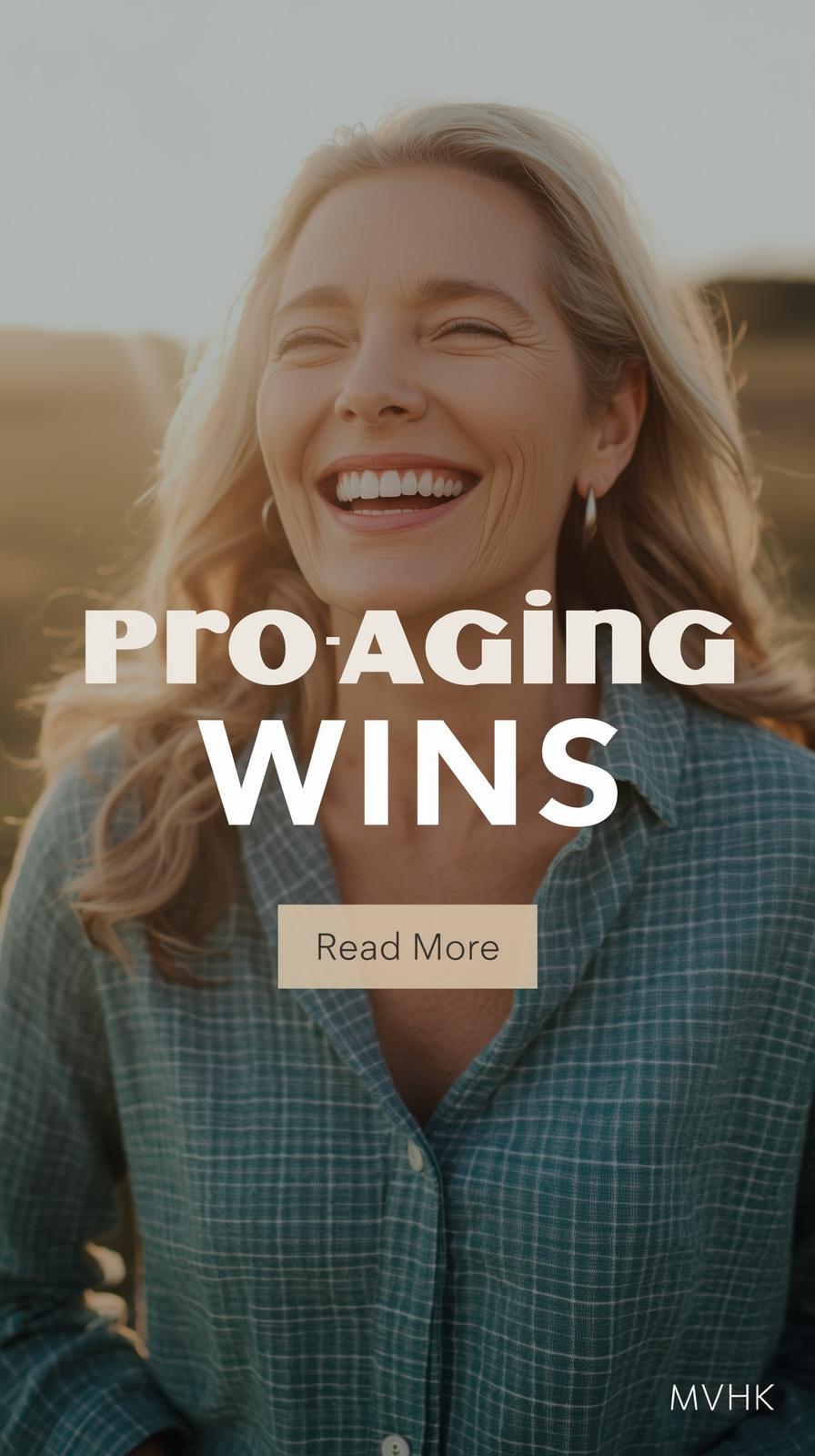
Why Anti-Aging Doesn’t Make Sense (And What to Do Instead)
💡 Key Takeaways
- Anti-aging is a psychologically and biologically flawed concept—aging is a natural, continuous process.
- Chronic stress about appearance accelerates inflammation, hormonal disruption, and visible aging.
- A pro-aging mindset improves mental health, resilience, and even longevity biomarkers.
- Health, vitality, and authenticity outperform artificial perfection in long-term well-being.
- Self-acceptance practices directly impact cortisol levels, sleep quality, and metabolic health.
Introduction
Don’t get trapped by something called anti-aging. Authenticity holds more value than the promise of eternal youth.
The relentless fight against time often starts around age thirty. The effort to avoid aging can make faces unrecognizable, erode confidence, steal enormous amounts of time, and leave the deepest wrinkles on the soul. Yet biologically speaking, aging is not a disease—it’s a dynamic adaptation process.
The anti-aging industry thrives on one core message: your value declines as your youth fades. But science tells a different story. Longevity research in 2024–2025 increasingly focuses on healthspan—not wrinkle elimination, but mitochondrial efficiency, metabolic flexibility, and inflammation control.
Anti-aging is like asking an apple tree that has just bloomed for the first time to stay exactly the same for the rest of its life. The only way to stop aging is to stop living.
The real shift? From anti-aging to pro-aging. From fighting time to optimizing vitality.
What Is the Science Behind the Pro-Aging Mindset?
The pro-aging mindset reduces chronic stress and inflammation, both of which are primary accelerators of biological aging.
Chronic psychological stress elevates cortisol. Elevated cortisol increases visceral fat storage, disrupts sleep, impairs collagen production, and accelerates telomere shortening. A landmark study published in Proceedings of the National Academy of Sciences showed that women under chronic stress had significantly shorter telomeres—equivalent to years of accelerated cellular aging.
When individuals obsessively monitor wrinkles, weight, or gray hair, they activate threat perception pathways in the brain. The amygdala interprets social rejection or aging anxiety as survival risk. This stimulates:
- Increased systemic inflammation (IL-6, TNF-alpha)
- Reduced mitochondrial efficiency
- Impaired estrogen and testosterone balance
- Higher oxidative stress
Recent longevity reviews in Nature Aging (2024) emphasize that inflammation is a core driver of biological aging. The fight against appearance ironically accelerates the aging process internally.
The Psychological Trap
Aging and the physical changes that come with it have become public enemy number one, especially for women. The pressure on men is nowhere near as intense.
This pressure leads many women to scrutinize every change in their appearance, become more self-critical, and gradually develop anxiety. They worry that youth, beauty, and therefore their value are slipping away—which is not true.
From a neurobiological perspective, self-criticism activates the same brain circuits as physical pain. Over time, this erodes confidence and resilience.
Language Matters: Anti vs. Pro
Anti-aging is “anti”—against aging, against oneself. Pro-aging and pro-living are “for”: for maturing, for living.
Words influence neural framing. Cognitive reframing reduces amygdala reactivity and improves emotional regulation. This directly impacts heart rate variability (HRV), a measurable longevity biomarker.
How Do You Implement a Pro-Aging Lifestyle Properly?
You implement a pro-aging lifestyle by shifting focus from appearance control to health optimization and self-worth.
This does not mean giving up beauty care. If a procedure makes you feel more satisfied, go ahead—get Botox or something else. But do it in moderation, and above all for yourself—not for external approval.
Three Steps Toward Self-Acceptance
1. Don’t Be Ashamed of Your Age
Can you feel vibrant, healthy, youthful, and full of life while saying, “I’m already old” or “I look old”? Unlikely.
Instead of saying, “I’m 55, but I supposedly look 30,” say, “I’m 55, I’m healthy, and I feel great.” Which one really matters?
Language shapes physiology. Positive age identity is associated with increased lifespan—up to 7.5 years longer according to longitudinal Yale research.
2. Choose Who Influences You
Instead of following profiles that trigger anxiety, follow people who genuinely live—who do what they love and treat appearance as just one part of life, not the central focus.
Digital hygiene is longevity hygiene. Social comparison increases cortisol. Curated inspiration lowers it.
3. Women, Age Like Men
Take pride in what you see in the mirror. Don’t place unrealistic, exaggerated demands on yourself—demands that men typically don’t internalize.
Generally, a fifty-year-old man is seen as distinguished, aging like fine wine—while a woman is labeled tired or worn out. She isn’t—unless she allows herself to be convinced that she is.
Week 1–4 Progression
Week 1: Eliminate negative age language.
Week 2: Audit social media and remove triggering accounts.
Week 3: Shift fitness goals from weight loss to strength and metabolic health.
Week 4: Reframe mirror dialogue—focus on vitality markers (energy, sleep, mood).
Weight gain after forty is not a failure. The body simply requires a smarter approach—more resistance training, higher protein intake, and insulin sensitivity optimization.
What Advanced Techniques Maximize Results?
Advanced pro-aging strategies combine psychology, physiology, and technology.
Biohack Stacking
- Resistance training + creatine for muscle preservation
- Omega-3s to reduce inflammatory signaling
- Sauna therapy for heat shock protein activation
- HRV tracking to monitor stress load
Personalization
Women in perimenopause benefit from strength training 3–4x per week and prioritizing sleep to stabilize cortisol and insulin.
Men benefit from maintaining testosterone via muscle mass and metabolic health rather than chasing youthful aesthetics.
Wearables
Track:
- Resting heart rate
- HRV
- Sleep efficiency
- Fasting glucose
Longevity is measurable. Youthful appearance is not.
What Are the Real-World Results?
The pro-aging approach leads to:
- Lower chronic stress
- Better metabolic markers
- Higher relationship satisfaction
- Stronger identity resilience
Case data from behavioral psychology studies show that individuals with positive age beliefs recover faster from illness and demonstrate improved cardiovascular outcomes.
Movies and advertising promote eternal youth illusions. But in real life, connection matters more than aesthetics.
Most men would not feel comfortable beside a very young woman long-term because connection outweighs surface beauty. With their wife, they want to truly live—not just admire a beautiful image.
Health creates happiness. Artificial perfection creates pressure.
Action Plan: Your 4-Week Protocol
Week 1:
Replace “anti-aging” with “pro-living.” Remove self-deprecating age statements.
Week 2:
Implement strength training 3x weekly. Increase protein to 1.6g/kg body weight.
Week 3:
Introduce stress reduction: breathwork, nature exposure, or sauna.
Week 4:
Mirror reframing ritual: Shift from “How do I look?” to “How do I feel?” From “Am I good enough for them?” to “Am I good enough for myself?”
Consistency over perfection.
Frequently Asked Questions
Is anti-aging scientifically possible?
No. Aging is a continuous biological process. While we can slow certain mechanisms like inflammation or mitochondrial decline, we cannot stop aging without stopping life itself.
Does stress really make you age faster?
Yes. Chronic stress shortens telomeres, increases oxidative damage, and disrupts hormones—all linked to accelerated biological aging.
Is cosmetic intervention wrong?
Not inherently. If done moderately and for personal satisfaction—not external approval—it can coexist with a pro-aging mindset.
Why does weight gain happen after forty?
Hormonal shifts, reduced muscle mass, and insulin sensitivity changes occur. The body requires a smarter approach, not shame.
What matters more: looking young or being healthy?
Health. Looking young has never made a person with fragile health genuinely happy.