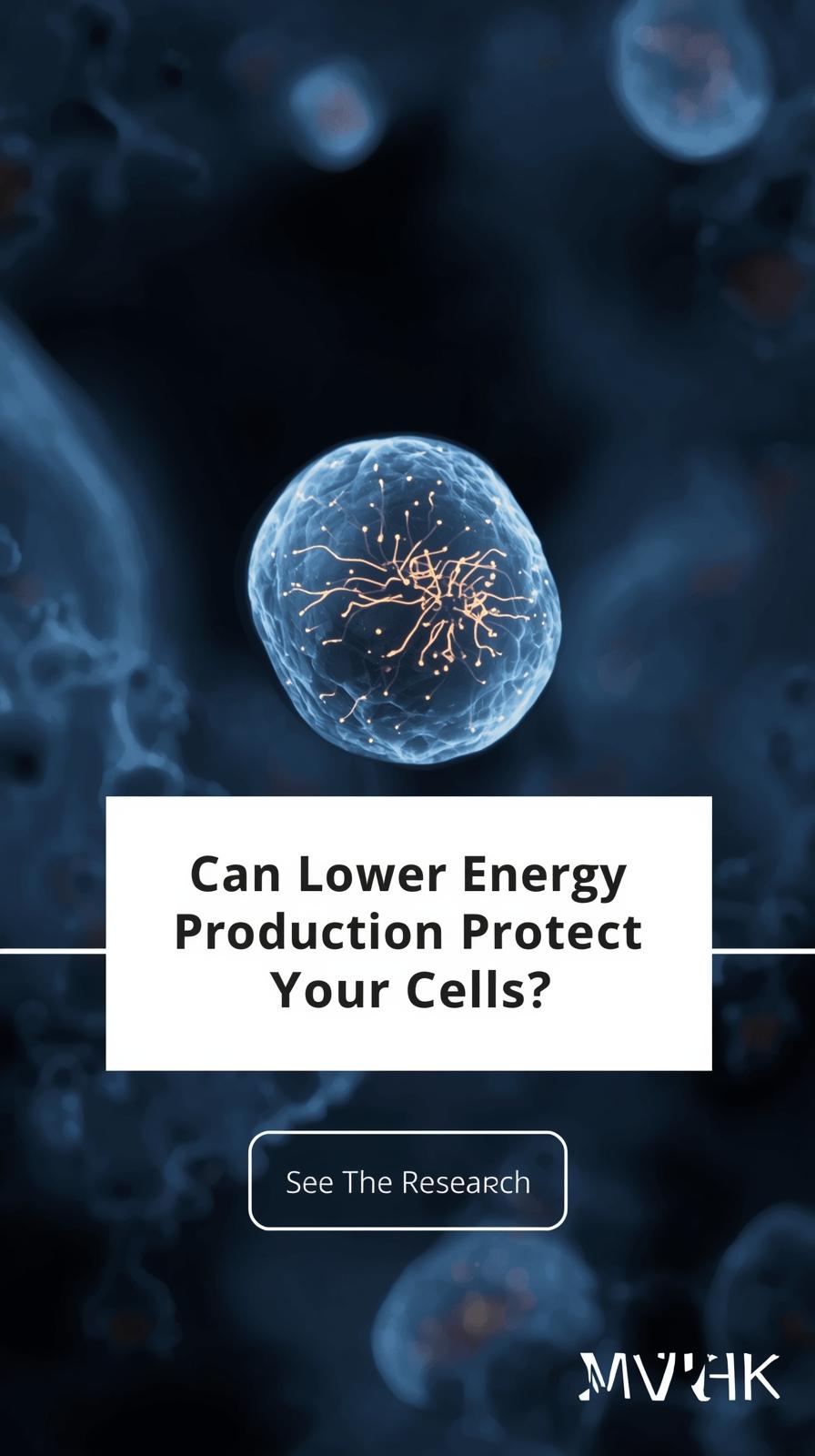
Mitochondrial Suppression and Longevity: Does Making Less Energy Protect Your Cells?
💡 Key Takeaways
- Slightly lowering mitochondrial activity protected stressed cells in a lab study.
- Less energy output meant fewer harmful byproducts and less cell damage.
- This supports the idea of “controlled stress” (mitohormesis).
- There is no safe way to intentionally suppress mitochondria in humans right now.
Introduction
For the last 10–15 years, the message in the longevity world has been clear:
Boost your mitochondria.
More energy equals better aging.
Exercise, cold exposure, NAD+ supplements — everything has been framed around increasing mitochondrial performance.
But a recent study published in Science suggests something unexpected: when cells slightly reduce their energy production, they may actually become more resistant to certain types of damage.
That doesn’t mean low energy is good. It means constant maximum output may not be ideal.
To understand why, we need to look at how mitochondria actually work.
What Is the Science Behind Lowering Mitochondrial Activity?
In simple terms: when mitochondria produce energy, they also produce waste.
That waste includes reactive oxygen species (ROS). In small amounts, ROS are normal. In large amounts, they damage cells.
In this study, researchers slightly reduced activity in the mitochondrial electron transport chain (the part responsible for energy production).
Here’s what happened:
- Cells made less energy
- They produced fewer damaging byproducts
- They had less calcium overload
- Fewer cells died under stress
This is especially important in the brain, where excess stimulation can cause “excitotoxic” damage.
So the takeaway isn’t “energy is bad.”
It’s that overactivity during stress can increase damage.
How Do You Apply This in Real Life?
Short answer: you don’t try to suppress your mitochondria directly.
There is currently no safe, proven way to lower mitochondrial activity in humans without risking serious problems.
Long-term suppression could lead to:
- Muscle loss
- Metabolic slowdown
- Fatigue
- Potential neurological problems
Instead, what we can apply is the principle behind the finding.
That principle is called mitohormesis.
It means:
Small, temporary stress → body adapts → stronger long-term resilience.
You already activate this safely through:
- Strength training
- Aerobic exercise
- Time-restricted eating
- Short fasting periods
- Cold exposure
These stress your system briefly — but they also trigger repair and adaptation.
The key difference:
Temporary challenge is good.
Chronic suppression is dangerous.
What Advanced Strategies Make Sense?
If you want to use this concept wisely, focus on balance and recovery.
- Build muscle
Muscle protects metabolism and longevity. Chronic low energy states can destroy it. - Improve aerobic fitness
Higher VO2max is strongly linked to longer lifespan. - Use stress in cycles
Hard training days followed by recovery days. - Track recovery signals
Pay attention to sleep quality, resting heart rate, and fatigue.
If performance keeps dropping and you feel constantly drained, you’re not building resilience — you’re overdoing stress.
What Results Can You Expect?
From proper metabolic cycling (exercise + recovery):
Within weeks:
- Better blood sugar stability
- Improved energy levels
Within months:
- Higher aerobic capacity
- Lower resting heart rate
- Better stress tolerance
What you should not expect:
- Guaranteed lifespan extension
- A “mitochondria suppression hack”
- A supplement that safely lowers ETC activity
Right now, this is lab-level science — not a DIY protocol.
4-Week Practical Plan
Week 1:
- 3 moderate aerobic sessions
- 2 strength sessions
- 12-hour eating window
Week 2:
- Add one higher-intensity workout
- Focus on sleep quality
Week 3:
- One slightly longer fast (if healthy and appropriate)
- Maintain strength training
Week 4:
- Reduce intensity slightly
- Focus on recovery and protein intake
Goal: challenge your system without draining it.
Frequently Asked Questions
Does this mean boosting mitochondria is bad?
No. It means balance matters. Too much stress or too little stress are both harmful.
Should I try to lower my cellular energy production?
No. There is no safe way to do this intentionally.
Is this what metformin does?
Metformin affects mitochondrial pathways, but it’s a prescription drug with risks. It’s not a general anti-aging supplement.
Is this proven to extend human lifespan?
No. The current evidence is at the cellular level, not human longevity trials.
What’s the safest takeaway?
Use exercise and recovery cycles to build resilience instead of chasing extreme biohacks.
Final Thought
Longevity isn’t about running your cells at maximum power all the time.
It’s about rhythm:
Stress → recovery → adaptation.
This study reinforces something simple:
Your body gets stronger when challenged — but only if you give it time to recover.