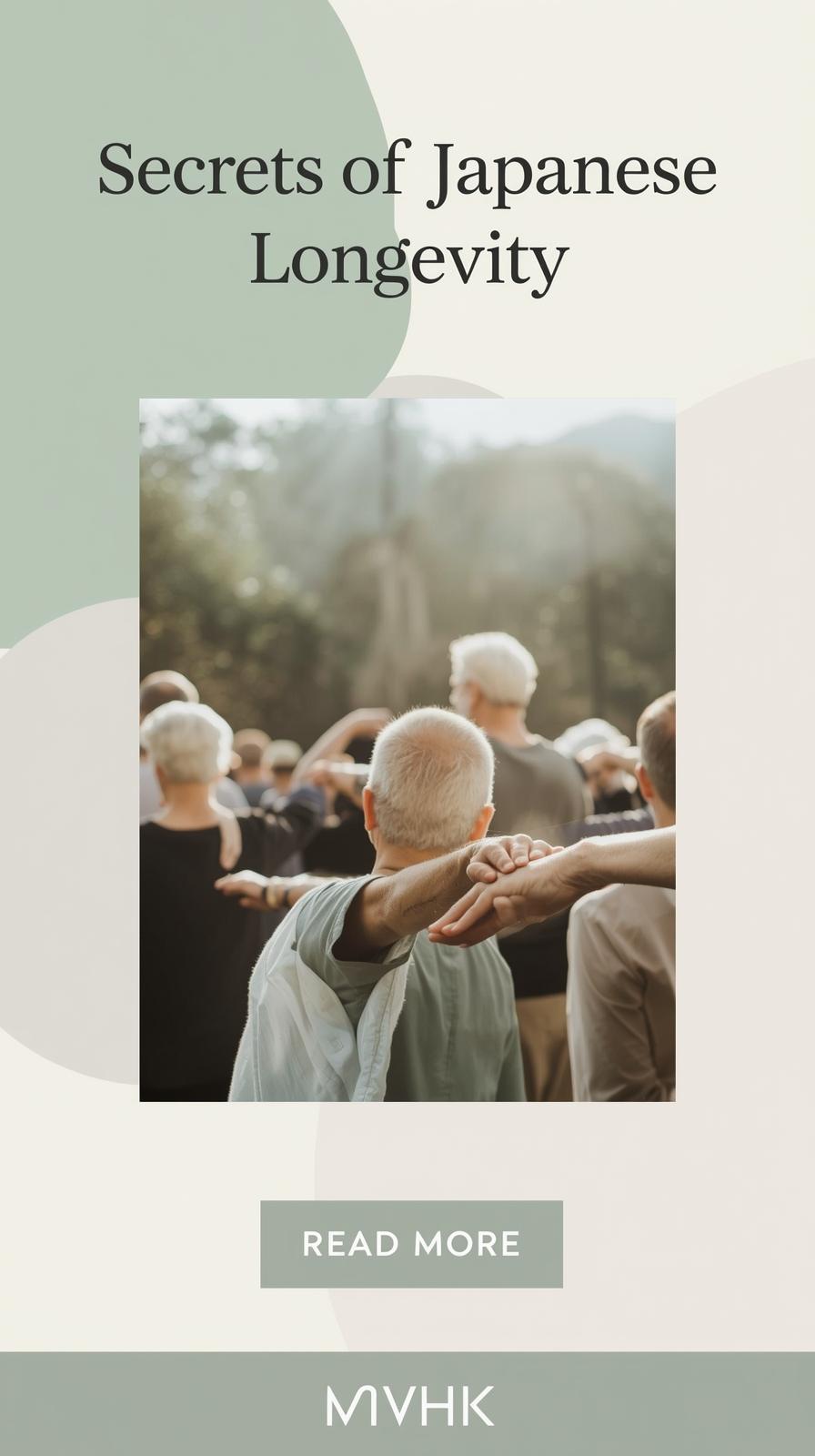
Japanese Longevity Secrets: How Japan Leads the World in Healthy Aging
What does it take to live to 100? In 1963, Japan recorded only 153 people over the age of 100. Today, that number has surged to nearly 100,000. As of 2025, Japan stands as the world’s longevity leader, with centenarians becoming a cultural norm rather than a rarity. This incredible transformation has drawn global attention—not just because of the numbers, but because of what lies behind them.
In this article, we’ll explore the science, culture, and daily practices that make Japanese aging so unique. From diet to movement rituals like Radio Taiso, we’ll uncover how Japan’s blueprint for healthy aging can be applied anywhere in the world.
🎯 The Science Behind Japanese Longevity
Latest Research
Studies show Japan consistently tops global life expectancy charts, with women averaging over 87 years and men over 81. Centenarian growth has accelerated particularly since the 1980s, reflecting a mix of medical advancement and lifestyle stability.
Mechanisms of Longevity
- Dietary Patterns: A traditional Japanese diet emphasizes fish, vegetables, seaweed, soy, and rice. It’s naturally low in saturated fat and red meat, but high in omega-3s, antioxidants, and fiber.
- Portion Control: Practices like Hara Hachi Bu—eating until 80% full—reduce overeating and metabolic stress.
- Community Engagement: Social ties and intergenerational connections reduce isolation, a known risk factor for mortality.
- Movement Habits: From Radio Taiso to walking and gardening, older adults remain physically active daily.
Expert Opinions
Gerontologists often cite the Japanese model as proof that lifestyle choices can outweigh genetics in influencing lifespan. Dr. Makoto Suzuki, who studied Okinawan elders, emphasized that their mental outlook—purpose-driven living, or ikigai—plays as vital a role as food or exercise.
💪 Implementation Guide: Adopting Japanese Longevity Habits
Getting Started
- Reframe your plate: Add vegetables to every meal. Swap processed snacks for seaweed, edamame, or fresh fruit.
- Practice mindful eating: Try the 80% rule at your next meal.
- Move every day: Incorporate short movement rituals like Radio Taiso or stretching breaks.
Progression Strategies
- Replace two weekly meat-heavy meals with fish- or plant-based alternatives.
- Create a morning or evening walking routine.
- Strengthen community connections through group activities, fitness classes, or volunteering.
Common Mistakes
- Over-focusing on supplements instead of whole foods.
- Neglecting movement in favor of diet alone.
- Ignoring the mental health dimension of longevity.
🚀 Advanced Techniques for Functional Longevity
Personalization
- Track circadian rhythms for better sleep and recovery.
- Use biometric apps to monitor heart rate variability and activity patterns.
Technology Integration
Wearables now allow older adults to align with Japanese principles while living elsewhere. For example, fitness trackers can prompt short “movement snacks” throughout the day—mirroring Radio Taiso.
Sustainability
Longevity isn’t just about individual habits; it’s about embedding them into culture. Family meals, community rituals, and shared routines help make health sustainable.
📊 Results & Success Stories
- National Data: Japan has nearly 100,000 centenarians—over half reaching the milestone in 2025 alone.
- Case Studies: In Okinawa, often called the “Land of Immortals,” seniors in their 90s remain physically active, tending gardens and practicing martial arts.
- Community Feedback: Global longevity movements often borrow from Japan’s blueprint, citing not only lifespan but healthspan—living well, not just longer.
🎯 Action Plan: Start Today
Week 1–2: Foundation
- Replace snacks with nutrient-rich Japanese-inspired options.
- Add a 5-minute Radio Taiso routine each morning.
Week 3–4: Progression
- Join a local walking group or fitness class for community connection.
- Implement mindful eating habits, stopping at 80% fullness.
Long-Term Maintenance
- Aim for balance: nutritious food, purposeful living, daily movement, and strong social ties.
- Continue to refine habits using biometrics or journaling.
Frequently Asked Questions
Why do Japanese people live so long?
A mix of diet, movement, social ties, and purposeful living create a foundation for healthy aging.
Is genetics the main reason for Japanese longevity?
No. While genetics play a role, lifestyle factors account for the majority of differences, as proven by Japanese populations who adopt Western diets showing lower lifespans.
Can I practice Radio Taiso outside Japan?
Yes. Free recordings and guides are available online—it’s a simple 3-minute daily exercise anyone can do.
How long until I see results from lifestyle changes?
Improved energy and digestion can be felt within weeks; measurable health benefits like improved blood pressure may appear within months.
Is the Japanese diet safe for everyone?
Generally yes, but anyone with specific medical conditions (e.g., kidney issues or sodium sensitivity) should adapt it under professional guidance.