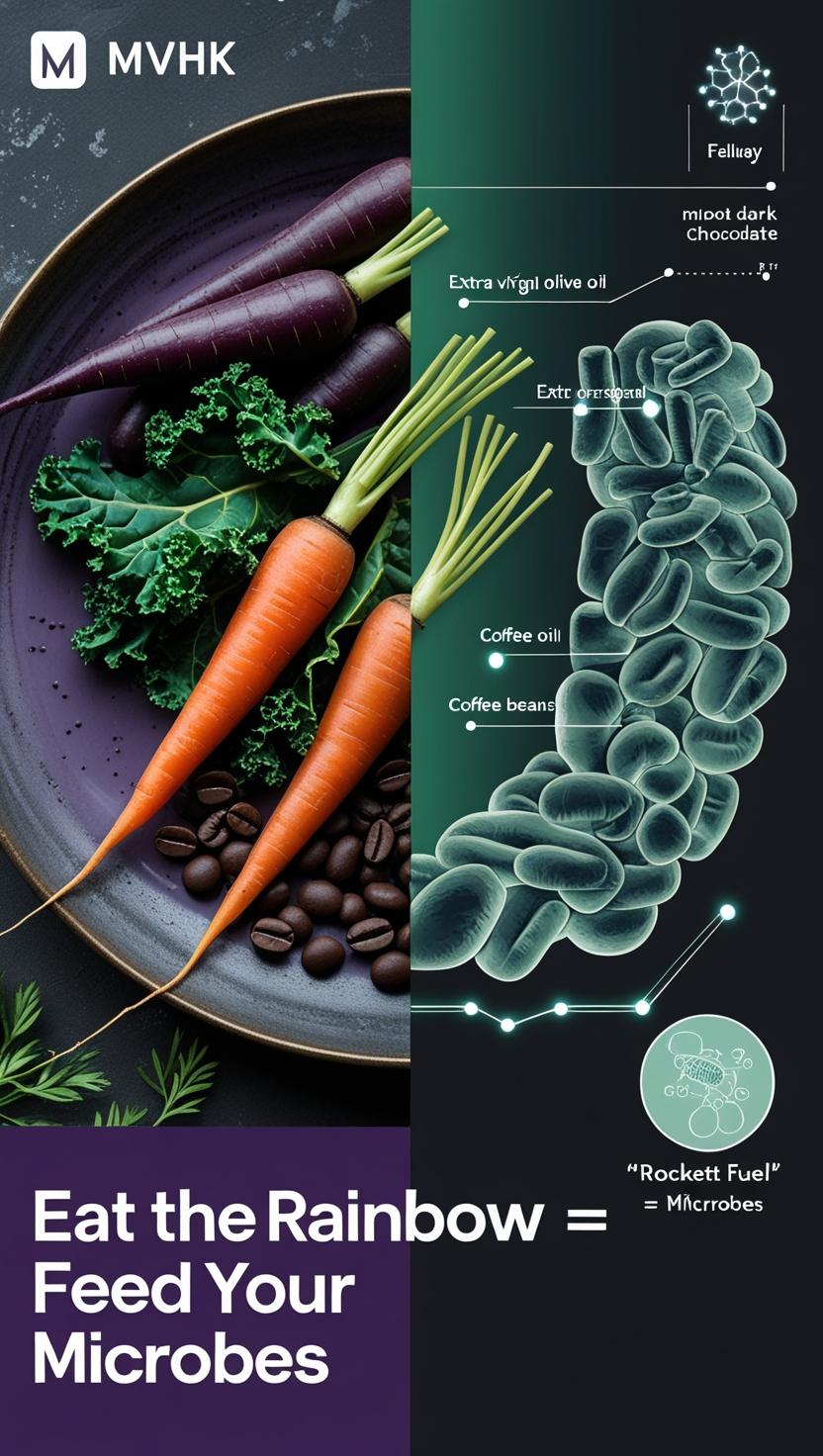
Eat the Rainbow for Gut Health: How Polyphenols Supercharge Your Microbiome
The phrase “eat the rainbow” isn’t just Instagram-worthy advice—it’s actually a gut-health science strategy rooted in 2025’s biggest trend: biometric personalization. From purple carrots to bitter greens and 85% dark chocolate, polyphenol-rich foods don’t just look good—they feed the trillions of microbes that power your health.
Emerging research shows that polyphenols—natural defense compounds found in plants—are rocket fuel for your gut bacteria, especially the ones linked to stronger immunity, better mood, and longevity.
Let’s explore the science behind how these colorful compounds elevate your microbiome—and exactly how to use them in your daily diet.
🎯 The Science Behind Polyphenols and Gut Health
Latest Research
A landmark 2024 study published in Nature Microbiology revealed that individuals with the most diverse gut microbiomes had diets consistently high in polyphenol intake—primarily from vibrantly colored vegetables, bitter greens, and fermented beverages like coffee. Researchers tracked microbial diversity across 3,000 participants using biometric wearables and fecal sequencing, showing a direct correlation between polyphenol concentration and key bacterial species like Akkermansia and Faecalibacterium.
Mechanisms
Polyphenols act as prebiotics—compounds that nourish your gut bacteria. Unlike fiber, polyphenols are poorly absorbed in the small intestine, allowing them to travel to the colon, where they interact with gut microbes. In this symbiotic exchange, your microbes metabolize polyphenols into short-chain fatty acids (SCFAs) like butyrate, which lower inflammation and boost gut barrier integrity.
Additionally, certain polyphenols selectively increase beneficial bacteria while suppressing pathogenic strains, essentially reshaping the microbial landscape toward optimal health.
Expert Opinions
Dr. Megan Rossi, gut health researcher and author of Eat Yourself Healthy, states:
“Polyphenols are one of the most exciting gut health tools we have—they act like microbe whisperers, helping the good guys flourish while keeping inflammation in check.”
💪 Implementation Guide
Getting Started
Start by incorporating one polyphenol-rich food per meal. Diversity matters more than volume, so aim to vary colors daily. Use the Polyphenol Power Plate rule: include at least 3 colors on your plate from different plant categories—root veg, leafy greens, fruit, seeds/spices.
Polyphenol All-Stars:
- Purple carrots: 9–10x more polyphenols than orange carrots
- Kale & bitter greens: Swiss chard, dandelion, arugula
- Extra virgin olive oil: Cold-pressed and unfiltered
- Dark chocolate: 85% cacao or higher
- Coffee: Black or lightly brewed with no sweeteners
Progression Strategies
- Rotate food colors weekly: purple (eggplant, blueberries), green (spinach, broccoli), red (beets, red cabbage)
- Batch-prep kale chips or EVOO-drizzled roasted carrots
- Add a square of dark chocolate to your midday snack for a microbiome boost
- Use biometric apps (like Zoe or DayTwo) to track how your gut responds to polyphenols
Common Mistakes
- Sticking to the same fruits/veggies every week = limited microbe diversity
- Overcooking vegetables = polyphenol degradation
- Buying refined oils or sweetened chocolate reduces bioavailability of beneficial compounds
- Ignoring bitterness: That sharp taste? It’s a polyphenol-rich signal your gut microbes love
🚀 Advanced Techniques
Personalization
Gut health is no longer one-size-fits-all. Biometric analysis through wearables and microbiome testing can now identify your unique microbial needs. For instance, some individuals respond better to cocoa flavanols, while others thrive on lignans from flaxseed.
Technology Integration
Use AI-driven food tracking apps like Zoe, Oura, or InsideTracker to:
- Measure post-meal glucose and gut response
- Map microbiome shifts over time
- Personalize your polyphenol-rich food intake
Sustainability
Focus on seasonal and local rainbow foods to ensure sustainability. Grow your own bitter greens or source from local farmers markets. Dark chocolate and EVOO from regenerative agriculture sources further support long-term health—both yours and the planet’s.
📊 Results & Success Stories
Case Studies
Jillian, a 42-year-old runner with IBS, incorporated a rainbow bowl habit and tracked results with the Oura ring. After 6 weeks, her microbiome analysis showed a 33% increase in SCFA-producing bacteria and decreased gut inflammation markers.
Measurable Outcomes
Studies show that consistent intake of polyphenol-rich foods can:
- Increase gut microbial diversity by 25–30%
- Boost SCFA production by up to 40%
- Reduce GI inflammation and bloating within 4–6 weeks
Community Feedback
Thousands of users in polyphenol-focused health programs (like the American Gut Project) report improved digestion, mood stability, and even skin clarity. Social media forums around “#RainbowEating” have exploded with daily food swaps and gut health wins.
🎯 Action Plan: Start Today
Week 1–2: Foundation
- Add 1 polyphenol-rich item per meal (e.g., kale in eggs, blueberries in oats, dark chocolate at night)
- Track gut reactions (bloating, energy, mood) in a food journal or app
- Drink 1–2 cups of black coffee daily if tolerated
Week 3–4: Progression
- Build full rainbow meals with 3+ colors
- Introduce bitter greens and fermented sides (kimchi, pickles)
- Upgrade your olive oil to raw, organic EVOO
Long-Term Maintenance
- Rotate at least 30 unique plant types per month
- Periodically test your microbiome through digital kits
- Keep a 3-color minimum rule daily to ensure microbial strength
📚 FAQ Section
Why do polyphenols matter for gut health?
Polyphenols feed your beneficial gut bacteria, boosting diversity and reducing inflammation, which enhances digestion, immunity, and mood.
How can I tell if a food has high polyphenols?
Look for deep color, natural bitterness, or plant-based pigmentation (anthocyanins, flavonoids). Labels like “cold-pressed,” “raw,” and “dark” often signal higher levels.
How should I implement this if I’m busy?
Meal-prep rainbow salads, keep dark chocolate and EVOO on hand, and use apps like Yuka or Foodvisor to make fast grocery decisions.
How long does it take to see gut changes?
Most people notice improved digestion within 2–4 weeks, with full microbiome changes showing in 8–12 weeks with consistent intake.
Is it safe to consume bitter foods or dark chocolate daily?
Yes—when eaten in moderation and with clean sourcing (organic, unsweetened), these foods provide lasting gut support and antioxidant benefits.