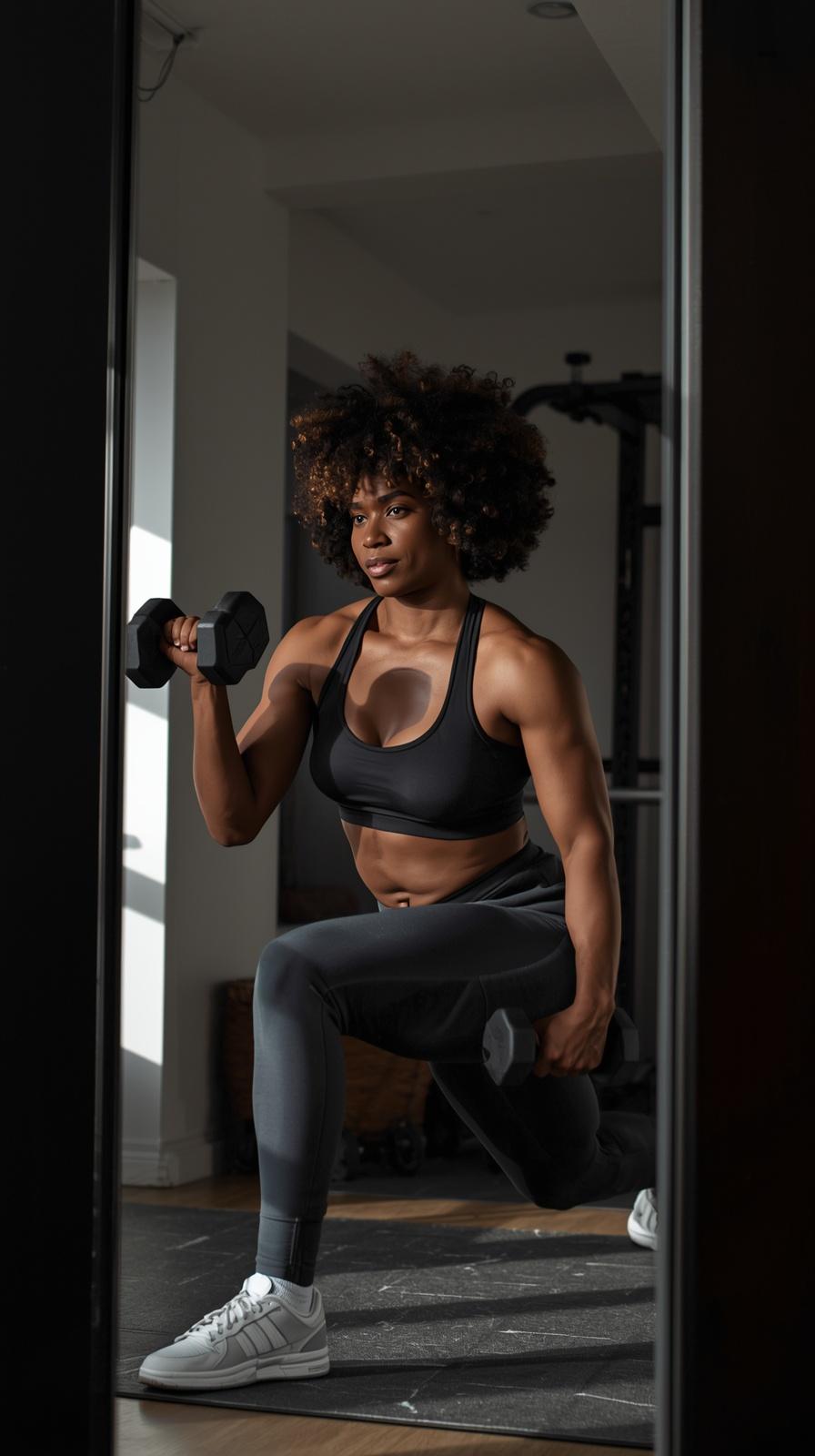
Transform Your Core: The 5-Step Dumbbell Workout Rivalling Pilates
💡 Key Takeaways
- Combines resistance training with deep core activation
- Improves muscle preservation and functional longevity
- Enhances posture, balance, and coordination
- Targets stabilizer muscles often missed in traditional workouts
Introduction
This 5-step dumbbell core workout delivers Pilates-level activation while adding resistance to accelerate strength gains. Unlike traditional ab routines, it targets deep stabilizing muscles responsible for posture, balance, and long-term spinal health—key factors in longevity and muscle preservation.
Use these adjustable dumbbells to scale resistance effectively at home
What Is the Science Behind Dumbbell Core Training?
Dumbbell-based core exercises increase neuromuscular activation compared to bodyweight alone. External resistance forces the body to stabilize dynamically, engaging:
- Transverse abdominis (deep core stabilizer)
- Obliques (rotation + anti-rotation)
- Erector spinae (postural support)
This improves muscle preservation, a critical longevity marker, and enhances metabolic efficiency through greater muscle recruitment.
How Do You Apply This Workout Correctly?
Perform 3–4 times per week:
- Dumbbell Dead Bug – 10 reps/side
- Weighted Russian Twist – 12 reps/side
- Dumbbell Plank Drag – 10 reps/side
- Standing Dumbbell Rotation – 12 reps
- Dumbbell Side Bend – 12 reps/side
Guidelines:
- Slow tempo (3–4 seconds per rep)
- Controlled breathing
- Focus on tension, not speed
A high-quality exercise mat improves stability and reduces injury risk
What Advanced Strategies Improve Results?
- Use unilateral loading for asymmetry correction
- Add pauses to increase time under tension
- Train in a fasted state for improved metabolic flexibility
- Combine with mobility work for full functional gains
What Results Can You Realistically Expect?
Within 4 weeks:
- Improved posture and spinal alignment
- Noticeable increase in core strength
- Better balance and coordination
- Reduced lower back discomfort
4-Week Practical Action Plan
Week 1–2: Learn movement patterns
Week 3: Increase weight slightly
Week 4: Add tempo control + pauses
Frequently Asked Questions
Is this better than Pilates?
It provides similar benefits with added strength stimulus.
Do I need heavy weights?
No—moderate resistance with control is ideal.
How long does it take?
10–20 minutes per session.
References
- Journal of Strength & Conditioning Research
- Sports Medicine Core Stability Studies
- Longevity muscle preservation data