Push-Up Progression for Beginners at Home
Push-ups are the gold standard of bodyweight exercises — and for good reason. They improve upper body strength, require zero equipment, and can be done literally anywhere. But here’s the thing: many beginners struggle to do even one.
That’s where a proper push-up progression comes in.
This guide walks you through a 5-step workout that builds strength, endurance, and perfect form — all from home. Whether you’re starting from your knees or already repping standard push-ups, you’ll find your entry point here.
🎯 The Science Behind Push-Up Progressions
Latest Research
A 2023 study from Sports Medicine Open found that progressive bodyweight training, like push-ups, can improve upper body strength and endurance comparably to traditional weightlifting — when done with proper form and increasing intensity.
Mechanisms
Push-ups primarily target the pectorals, deltoids, triceps, and core. As you shift angles or add speed (as in clap push-ups), you recruit different muscle fibers — making the exercise scalable and increasingly effective.
Expert Opinions
Dr. Brad Schoenfeld, PhD, emphasizes that “Progressive overload applies to bodyweight exercises too. With push-ups, elevation, tempo, and volume are all ways to increase demand on the muscles.”
💪 Implementation Guide
Getting Started
Choose the variation you can perform with at least 5-8 clean reps. This ensures you’re starting at the right level without risking injury or discouragement.
The 5-Step Progression:
- Knee Push-Ups – Ideal for true beginners. Keep hips tucked, and lower your chest to the ground.
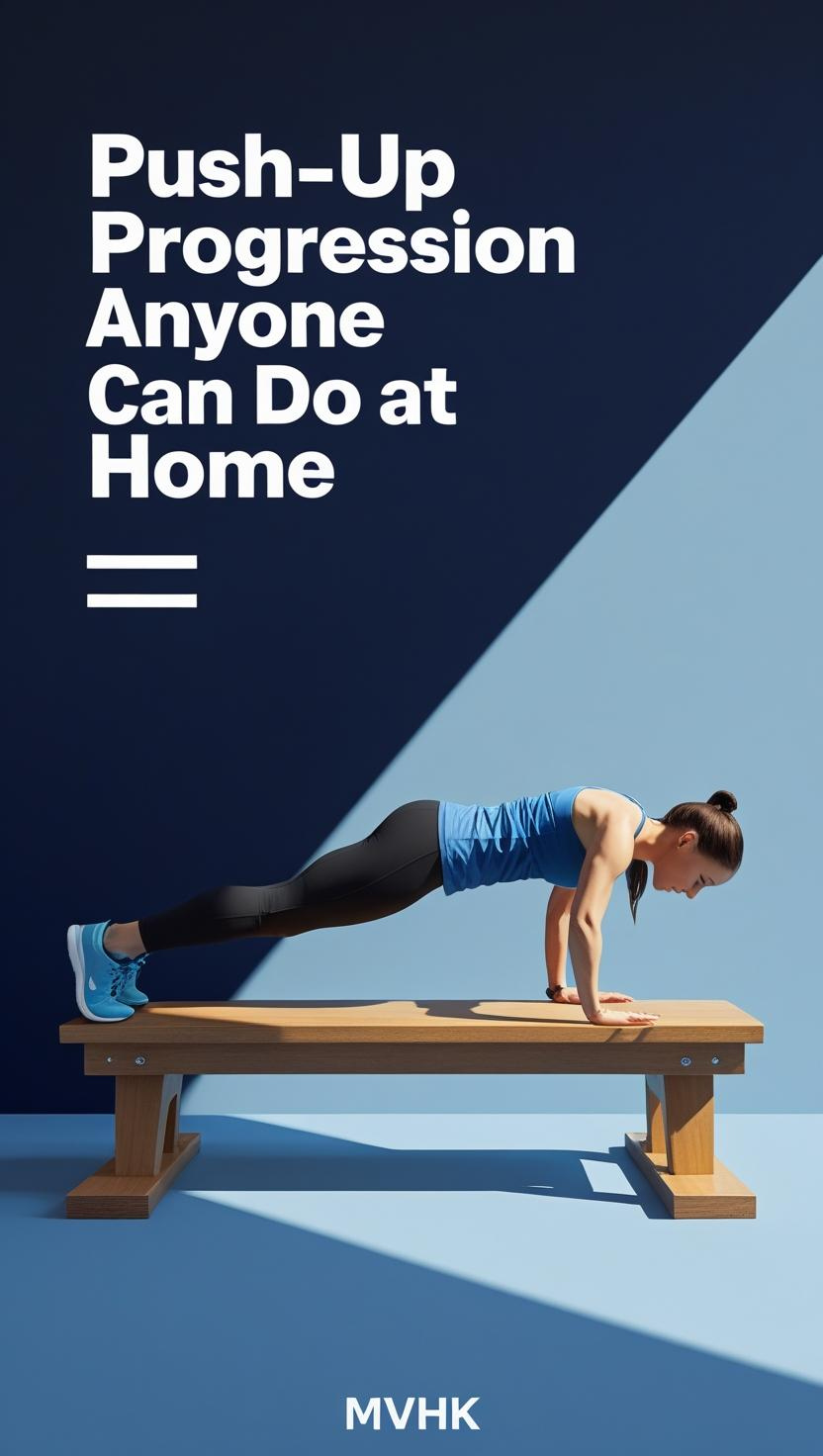
- Incline Push-Ups – Hands on a surface (bench, table, wall). Reduces resistance for better form.
- Standard Push-Ups – Elbows at 45 degrees, tight core, chest touches the floor.
- Decline Push-Ups – Feet elevated to increase load on shoulders and chest.
- Clap Push-Ups – Explosive power, plyometric push-up to build upper-body explosiveness.
Progression Strategies
- Work up to 3 sets of 12-15 reps with 2-3 minutes rest between.
- Once you can do this with good form, move to the next level.
- Don’t rush – joint strength, especially in shoulders and wrists, takes time.
Common Mistakes
- Letting hips sag (causes lower back strain)
- Elbows flared too wide
- Rushing reps without full range
- Not resting enough between sets
- Skipping progressions (e.g., going straight to decline)
🚀 Advanced Techniques
Personalization
- Mix tempos: slow eccentrics (lowering phase) increase muscle control
- Pause reps at the bottom to increase time under tension
- Add resistance bands or weight vests as you advance
Technology Integration
- Use AI-assisted apps like Freeletics or Trainerize to track progress
- Video form checks using mobile motion analysis apps
Sustainability
- Pair push-ups with a mobility warm-up
- Program 3x/week, with one rest day between
- Cycle progressions every 4-6 weeks to avoid plateaus
📊 Results & Success Stories
Case Studies
A 45-year-old remote worker began with incline push-ups in Week 1. Within 8 weeks, she progressed to 15 standard push-ups per set and noticed a measurable reduction in shoulder tension and better posture.
Measurable Outcomes
- Increased core stability
- Noticeable upper body tone
- Improved muscular endurance
- Better shoulder health (especially from proper scapular control)
Community Feedback
Reddit and fitness forums show hundreds of transformations from users following simple at-home progressions. Most report increased confidence and motivation to move on to other strength routines.
🎯 Action Plan: Start Today
Week 1-2: Foundation
- Choose your starting point
- Practice 2-3x/week
- Focus on form, breath, and rest
Week 3-4: Progression
- Increase volume or reps
- Shift to next variation when ready
- Track recovery and soreness
Long-Term Maintenance
- Include push-ups in a full-body circuit
- Reassess every 4-6 weeks
- Add variation: diamond, wide grip, slow tempo, explosive, etc.
📌 FAQ: Frequently Asked Questions
What’s the best push-up for beginners?
Knee push-ups or incline push-ups are safest and easiest. Start here and master full range of motion before progressing.
Can push-ups build muscle without weights?
Yes. Progressive overload through angle, tempo, and volume builds muscle, especially in the chest, arms, and core.
How do I know when to progress?
When you can do 3 sets of 12-15 reps with clean form and minimal fatigue, it’s time to level up.
How long until I can do standard push-ups?
Most beginners can achieve standard push-ups within 4-6 weeks with consistent training.
Are push-ups safe for shoulder pain?
If done with proper alignment and progression, push-ups can improve shoulder health. But avoid if pain worsens — consult a physical therapist.
- PubMed Study on Progressive Bodyweight
- Harvard Health: Bodyweight Benefits
- Mayo Clinic: Push-Up Safety Tips