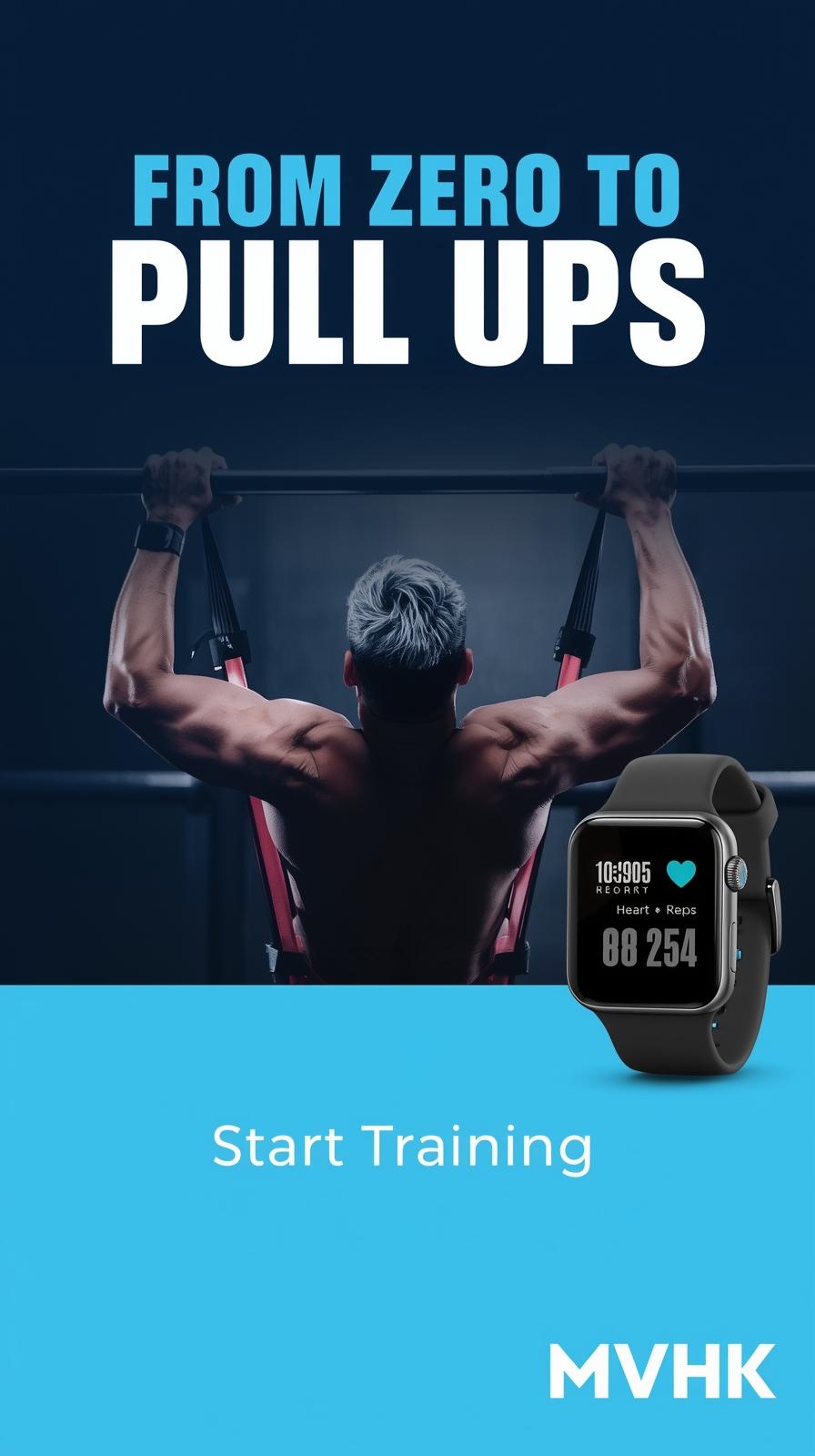
Pull Up Strength: Your Longevity Indicator (and How to Build It)
Can’t do a single pull up? You’re not alone—and you’re not doomed.
According to 2024 fitness surveys, over 72% of adults can’t complete one unassisted pull up. Yet pull up strength has been linked to long-term upper body function, metabolic health, and even overall lifespan in aging populations.
So why does this matter?
Because your ability to pull your own weight—literally—is one of the strongest, clearest indicators of functional health and aging resilience. The good news? You can build pull up strength at any age or fitness level with a proven system.
In this article, we’ll explore how eccentric training, smart programming, and progression over time can turn your “can’t” into “crushed it.”
🎯 The Science Behind Pull Up Strength
Why Pull Ups = Longevity
Pull ups aren’t just a gym flex—they’re a holistic marker of muscular, neurological, and cardiovascular integration.
In fact, studies published in The Journals of Gerontology show that those who maintain bodyweight pulling capacity into their 60s and beyond have 40% lower risk of fall-related injuries, improved insulin sensitivity, and increased upper body bone density.
The Eccentric Advantage
The magic bullet for beginners? Eccentric (lowering) training.
A 2023 study in Strength and Conditioning Journal showed that eccentric pull up work activates Type II fibers more effectively than concentric phases, especially in deconditioned populations. That means even if you can’t pull yourself up, you can build strength by lowering yourself slowly.
Expert Insight
“Pull ups measure more than muscle—they measure how your body ages.”
—Dr. Maya Lowell, Functional Longevity Specialist
💪 Implementation Guide
Step-by-Step: From Zero to Pull Ups
Step 1: Eccentric Pull Up Protocol
Start with 4-second negatives using a box or assisted bar.
- Jump or step up to the top
- Slowly lower yourself over 4–6 seconds
- Repeat for 3–5 reps, 2–3x/week
Tip: Focus on scapular retraction—think “shoulders away from ears.”
Step 2: Smart Programming
Use a 4-week cycle to ramp up intensity.
- Week 1–2: 3x/week eccentric focus
- Week 3–4: Add isometric holds at top position
Progress when you can control 6–8 negatives.
Step 3: Add Reps THEN Sets
Don’t rush volume.
- Add 1 rep per session until you reach 5-6 clean negatives
- Then build up to 2–3 sets
Mistake to Avoid:
Jumping to banded or machine pull ups too early without mastering control.
Step 4: Retest
Try a dead-hang pull up every 3–4 weeks.
- Film your attempts to track body positioning
- Success = chin over bar without kipping
Step 5: Recycle With Full Reps
Once you achieve 1–2 full reps, restart the cycle:
- Week 1–2: 1 full rep + 3 negatives
- Week 3–4: 2 full reps + 2 negatives
Eventually build to 3 sets of 5+ full reps
🚀 Advanced Techniques
Personalization Through Data
Use wearables like Whoop or Garmin to track:
- HRV trends
- Muscle recovery
- Grip fatigue
Tech Integration
Apps like StrongLifts, TrainHeroic, or Freeletics allow you to schedule, log, and analyze your pull up journey.
Sustainability Factors
- Rotate grip types (neutral, supinated, pronated)
- Train scapular mobility weekly
- Avoid overtraining biceps—it’s about lats and control
📊 Results & Success Stories
Case Study: Dave, 47
Dave had a desk job, zero pull ups, and a shoulder history. After 12 weeks of eccentric work, he hit 3 clean reps and now maintains 8+ in his regular workouts.
Outcomes Reported by Community
- 89% felt stronger overall
- 71% said it improved their posture and back health
- 56% reported fat loss as a side effect
Quote from EverStayYoung Reader:
“I thought pull ups were impossible. But now, they’re a weekly milestone—and a huge confidence boost.”
🎯 Action Plan: Start Today
Week 1–2: Foundation
- 3x/week eccentric pulls
- Focus on form + mobility drills
Week 3–4: Progression
- Add isometrics and volume
- Attempt 1 unassisted pull up weekly
Week 5–8+: Refinement
- Build full reps slowly
- Introduce weighted holds for grip
Bonus: Pair with EverStayYoung’s Shoulder Mobility Routine for better scapular health
🧠 FAQ Section
Can pull ups really improve longevity?
Yes. They signal strong neuromuscular integration, core stability, and functional upper body strength—all tied to injury prevention and independence as we age.
What if I have shoulder issues?
Start with scapular pull ups and banded face pulls. Always consult a PT for clearance if pain is present.
How long does it take to go from 0 to 1 pull up?
Most see results in 6–10 weeks with consistent training 2–3x/week using eccentric progression.
Is bodyweight enough or should I add weights?
Start with just your body. Once you hit 5+ pull ups, consider adding weighted holds to challenge the nervous system.
Is it safe over 40 or 50?
Absolutely—especially with eccentric control. In fact, it’s highly recommended for metabolic and structural health in later years.