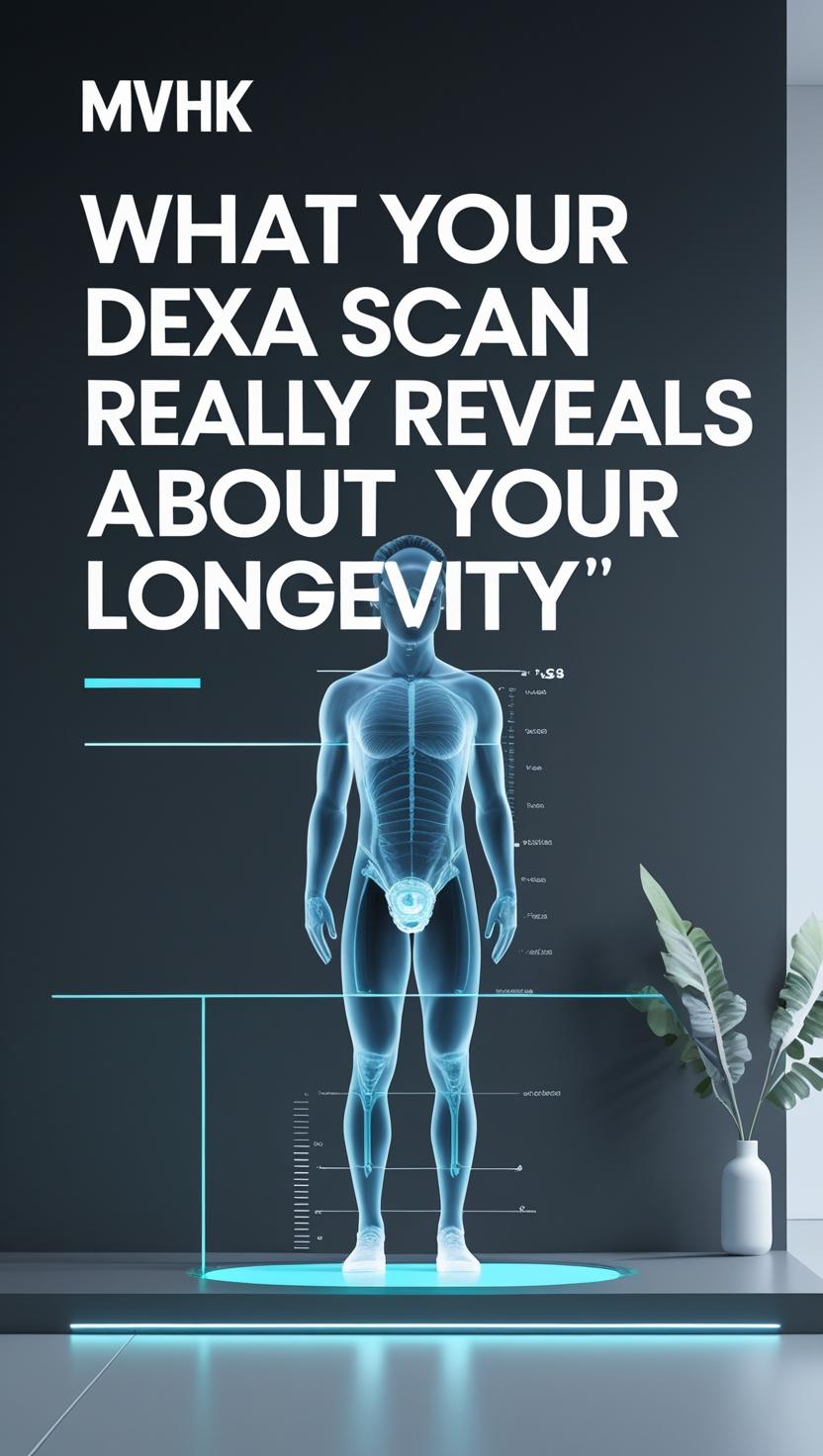
Body Composition and Longevity: Why Your Fat-to-Muscle Ratio Matters More Than Weight
Step on a scale and you see one number. But that number doesn’t tell you how much of your body is fat, muscle, or bone—and in 2025, that distinction could save your life. Body composition, not just weight, is a stronger predictor of long-term health, mobility, and even lifespan. And the gold standard to test it? The DEXA scan.
As more remote workers lead sedentary lifestyles, knowing your body composition becomes critical. From metabolic risk to muscle preservation, your body’s makeup tells a deeper story. This article explores the science, tools, and strategies to balance your fat-to-muscle ratio and build a body that’s not just fit, but future-proof.
🎯 The Science Behind Body Composition and Longevity
Latest Research
A growing body of research shows that excess body fat—especially visceral fat around organs—increases the risk of chronic diseases including type 2 diabetes, cardiovascular disease, and certain cancers. According to the Harvard T.H. Chan School of Public Health, even people within a “normal” BMI can have unhealthy body composition if they carry too much fat and not enough muscle.
In contrast, higher lean mass (muscle, organs, and bone) is associated with greater mobility, better glucose regulation, and reduced mortality risk—particularly in adults over 40. Muscle mass is now considered a key biomarker of longevity.
Mechanisms
Why does composition matter so much? Fat tissue—especially visceral fat—is metabolically active. It produces inflammatory compounds like cytokines and adipokines that disrupt insulin sensitivity, damage blood vessels, and accelerate aging. Meanwhile, skeletal muscle helps regulate blood sugar, burn calories at rest, and protect against injury and falls.
DEXA (Dual-Energy X-ray Absorptiometry) scans provide an accurate picture by showing regional fat, lean mass, and bone density. Unlike BMI, which simply divides weight by height, DEXA tells you what that weight consists of and where it’s stored.
Expert Opinions
Dr. Miriam Sanchez, a metabolic health specialist, states:
“Weight alone is outdated. Two people with the same weight can have wildly different health profiles. Knowing your fat-to-muscle ratio is the true game-changer.”
💪 Implementation Guide
Getting Started
- Schedule a DEXA scan at a certified clinic (many gyms and wellness centers offer mobile units now).
- Learn your body fat %: Healthy ranges are typically 10–20% for men and 18–28% for women, according to the American Council on Exercise.
- Assess lean mass: This gives you a baseline to build on.
Progression Strategies
- Resistance training (3-4x per week) is crucial to build and maintain muscle mass.
- Prioritize protein intake (1.2–1.6g/kg of body weight per day).
- Incorporate microworkouts into sedentary remote work days: 5-minute strength breaks hourly.
- Track changes every 90 days with follow-up DEXA scans.
Common Mistakes
- Relying on BMI or bathroom scales alone.
- Underestimating the effects of visceral fat.
- Ignoring strength training in favor of cardio-only routines.
- Not accounting for sarcopenia (age-related muscle loss) beginning in your 30s.
🚀 Advanced Techniques
Personalization
- Use DEXA data to target specific body regions with fat imbalance (e.g., trunk vs limbs).
- Customize macros based on lean mass.
- Adjust training intensity based on muscle symmetry and imbalances.
Technology Integration
- Sync DEXA scan reports with wearables like Whoop or Apple Health.
- Use apps that combine DEXA and metabolic rate data for meal planning and training periodization.
Sustainability
- Set long-term goals: Maintaining optimal composition is a lifestyle, not a 30-day fix.
- Mix up workouts: Variety prevents overuse injuries and keeps muscle growth responsive.
- Consider coaching or community challenges to stay engaged over time.
📊 Results & Success Stories
Case Studies
- Melissa (42) lost only 8 pounds in 6 months, but gained 6 lbs of muscle and dropped 7% body fat—transforming her metabolic markers.
- Raj (58), a software engineer, reversed prediabetes after understanding his visceral fat risks through a DEXA scan and adjusting diet + activity.
Measurable Outcomes
- Average 4-6% reduction in body fat after 12 weeks of focused strength training and nutrition
- Improvements in bone density scores, especially in perimenopausal women
- Greater mobility and balance markers in adults over 50
Community Feedback
Online forums and remote worker wellness groups report that body composition tracking is far more motivating than scale weight. One user said:
“Seeing my lean mass go up while my weight stayed the same changed everything for me. I finally stopped fearing the scale.”
🎯 Action Plan: Start Today
Week 1-2: Foundation
- Book a DEXA scan
- Record nutrition for 7 days using a tracking app
- Begin 2x/week strength training
- Walk 8,000+ steps daily
Week 3-4: Progression
- Increase strength sessions to 3-4x/week
- Monitor sleep and recovery metrics
- Focus on core and posterior chain (often underdeveloped in remote workers)
Long-Term Maintenance
- DEXA every 6 months
- Adjust training intensity by lean mass changes
- Continue high-protein, nutrient-dense eating
- Embrace functional longevity: move with purpose every day
🔍 Frequently Asked Questions
What’s the best way to measure body fat accurately?
A DEXA scan is the most precise method. It uses low-dose X-rays to differentiate fat, muscle, and bone, providing regional and total body composition data.
Why is muscle mass more important than weight loss?
Muscle supports metabolism, glucose regulation, and mobility. Losing fat while preserving or gaining muscle improves health even if the scale doesn’t move much.
How do I start improving my body composition?
Focus on strength training, protein intake, and reducing processed foods. Track body fat % and lean mass every 3-6 months, not just weight.
How long does it take to see results?
Most people can see measurable changes in body composition within 8–12 weeks, depending on training, nutrition, and consistency.