7-Step Muscle Building Protocol That Actually Worked for Me
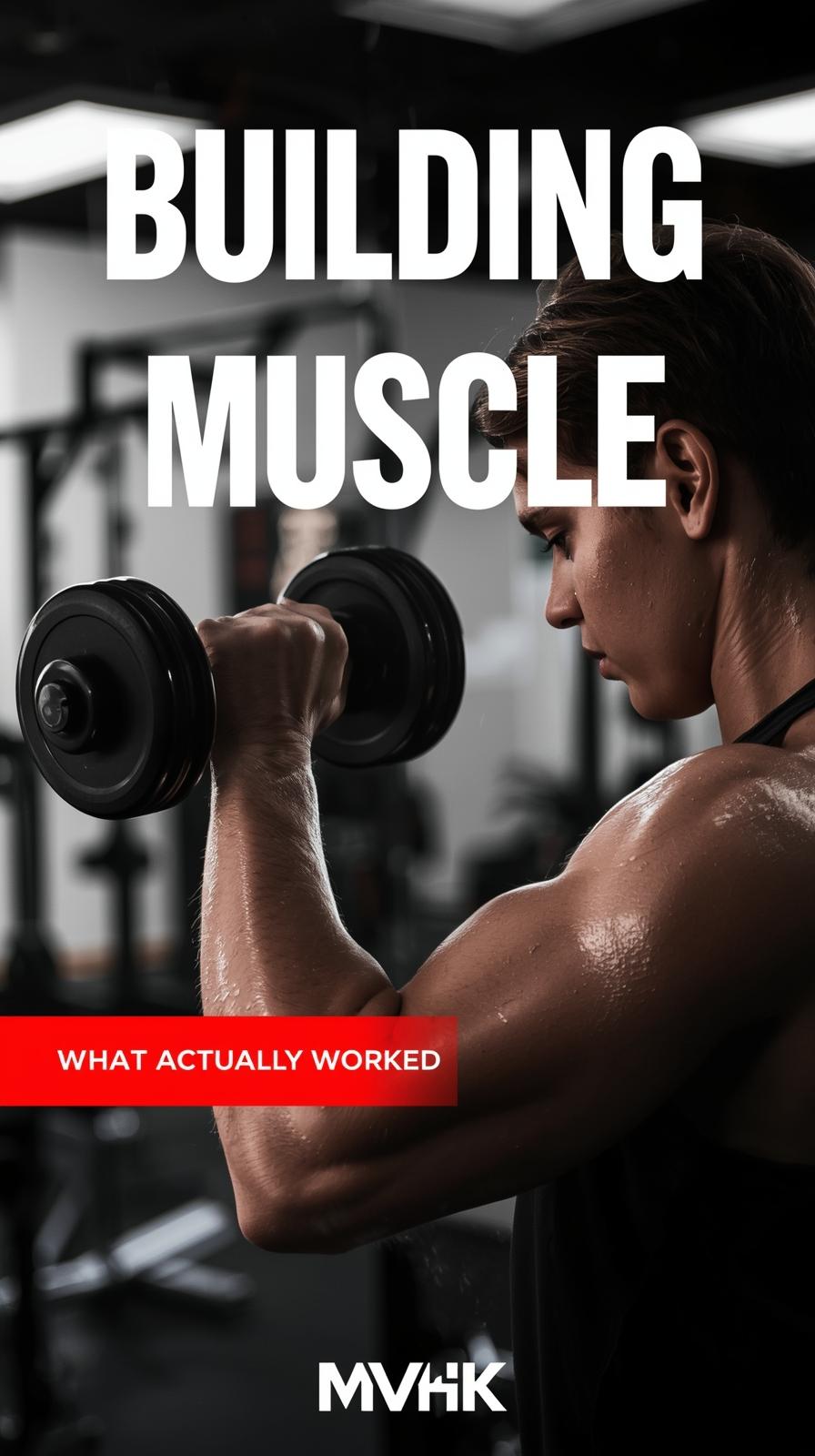
“Building muscle is ridiculously easy.” That’s what I told myself—right before failing the same rep three weeks in a row. If you’ve tried everything—more reps, more sets, even more sleep—and still plateaued, I feel you.
The truth is, building muscle isn’t about complexity. It’s about consistency, personalization, and recovery. This isn’t medical advice—it’s just what worked for me after 5+ years of trial and error, especially during the 2025 trend of biometric personalization.
Here’s my no-BS, 7-step muscle protocol that helped me add lean mass without wrecking my joints, sanity, or lifestyle.
🎯 The Science Behind Biometric Muscle Building
Latest Research
2025’s fitness world is obsessed with bio-individuality—because cookie-cutter plans don’t work. Studies published in The Journal of Strength and Conditioning Research confirm that genetic variability, hormone cycles, and circadian alignment massively influence hypertrophy rates.
Mechanisms at Work
- Progressive Overload works, but only when matched with your CNS recovery rate
- Myonuclear Domain Theory suggests muscles grow best when recovery aligns with anabolic signaling
- Sleep architecture (REM/Deep balance) has direct effects on GH and testosterone production
Expert Opinions
Dr. Stacy Sims (exercise physiologist):
“Every body is different. The secret isn’t doing more—it’s knowing what works for you and doubling down on it.”
💪 Implementation Guide
1. Don’t Train More Than 4x/Week
Why: Muscles grow during rest.
→ Overtraining elevates cortisol and suppresses recovery.
→ I split push/pull/legs/rest and rotate.
2. Lift Heavy as You Can (Safely)
Why: Maximum fiber recruitment = max gains.
→ Stick to 3–6 rep range for core lifts.
→ Track your 3RMs monthly.
→ Use straps, belts, and spotters if needed.
3. Don’t Just “Sleep 7–9 Hours”
Why: Quality trumps quantity.
→ Use a sleep tracker to monitor REM/deep balance.
→ Optimal: 20% REM / 25% Deep
→ Tools: Oura Ring, WHOOP
4. Dieting ≠ Muscle Growth
Why: Undereating halts anabolism.
→ I ate at +10% maintenance with 1g protein/lb lean body mass.
→ Key: Don’t cut carbs too low (glycogen = gym fuel)
5. Track Everything Biometrically
Why: Trends matter more than moments.
→ HRV, morning pulse, recovery score all matter
→ If HRV drops, I skip heavy lifting that day
→ Use AI-tracking via apps like BioCoach or Ultrahuman
6. Accept That Every Body Is Different
Why: DNA, stress, age, and even gut health affect results.
→ Compare yourself to yesterday—not to Instagram.
→ Personal benchmarks > social expectations
7. This Is What Worked for Me (Not Medical Advice)
→ I tested, failed, optimized.
→ Use this as a map, not gospel.
→ Speak to a trainer or doc before making big shifts.
🚀 Advanced Techniques
Personalization
→ I did a DNA fitness panel which revealed fast-twitch fiber dominance and high recovery needs.
→ Adjusted my lifts toward compound, low-volume, high-intensity sets.
Technology Integration
→ Used wearables to assess HRV trends and determine rest days
→ Used macronutrient AI planners to hit micro goals
→ Used progressive overload calculators to plan next week’s maxes
Sustainability
→ Took 1 deload week every 6 weeks
→ Added active recovery (walking, Zone 2 biking)
→ Prioritized joint health with collagen, magnesium, and fish oil
📊 Results & Success Stories
Case Study: Me
- +8 lbs lean muscle in 4 months
- Maintained <12% body fat
- Improved sleep score from 72 → 88
- Bench: 225 → 275
- Pull-ups: 8 → 14 strict reps
Community Feedback
Many of my peers adopted this approach and saw better recovery, better adherence, and no burnout.
→ Real-world, scalable results > viral routines
🎯 Action Plan: Start Today
Week 1-2: Foundation
- Assess sleep, nutrition, and stress
- Begin 4-day split
- Track macros and recovery daily
Week 3-4: Progression
- Test 3RMs
- Increase weights by 2.5–5% weekly
- Adjust meals for recovery needs
Long-term Maintenance
- Re-assess recovery data monthly
- Integrate deload weeks
- Refeed when HRV drops for 2+ days